
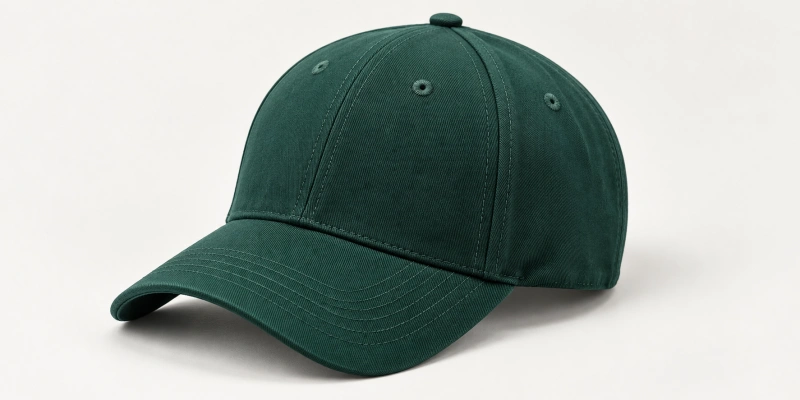
A baseball cap is a hat with a crown that fits over the head and a visor projecting from the front, often called a bill. The form became closely associated with baseball uniforms and later spread into everyday wear. “Baseball hat” and “ball cap” are common names for it. Its panels, crown shape, material, and closure can vary while the front-visor form remains recognizable.
What Makes a Baseball Cap a Baseball Cap?
Look at the overall shape: a crown covers the top of the head, and a visor projects forward from its lower edge. The inside band rests around the head. A bucket hat has a brim around the crown; the familiar baseball cap has a visor at the front and no projecting brim at the sides or back.
Many baseball caps have crowns sewn from several fabric panels, but six panels are not mandatory. The front can be soft or reinforced to hold a more defined shape. The back may adjust with a strap or snaps, stretch to fit, or be made to a fixed size. These choices change how the cap looks and feels without changing its basic form.
A curved visor is common, but a flat or gently curved visor can belong to the same category. A team logo is not required either: an unbranded cap can still be a baseball cap. The defining features are the crown and forward-projecting visor, while the details of construction distinguish one model from another.
Baseball Cap vs Baseball Hat: Are They the Same?
Is “Baseball Cap” Different From “Baseball Hat”?
In everyday English, “baseball cap” and “baseball hat” usually name the same style. “Hat” is the broader term for headwear; a baseball cap is one kind of hat. Neither name tells you whether the crown is structured, how many panels it has, or how the back closes. Those details need separate description.
What Does “Ball Cap” Mean?
“Ball cap” is an informal shorter name for a baseball cap or a closely related style. People may use it for a team cap or a plain casual cap. The term does not specify the number of panels, crown profile, or type of closure.
Why Is It Called a Baseball Cap?
The name comes from the cap’s long association with baseball uniforms. Early clubs wore several kinds of headwear before the forward-billed form became familiar on the field. That association explains the name without establishing one undisputed inventor or invention date. The short history below traces the change in broad terms.
What Are the Main Parts of a Baseball Cap?
Crown and Panels
The crown covers your head. Its fabric pieces, called panels, are joined by seams that help shape the front and sides. Some caps have one broad front panel; others have a seam down the center front. Panel count describes one construction detail, not the complete fit or profile. Internal reinforcement can make the front stand more firmly. A top button may cover the meeting point of the upper seams, though not every cap has one.
Visor, Bill, or Brim
The projection at the front is commonly called a visor or bill. “Brim” is also used, though it can refer to a projecting edge around other hat styles. Many sewn visors have a shaped insert inside a fabric covering; their materials and stiffness vary by design. Width, length, and curve vary as well. For a closer look at the terms, see the bill and brim terminology guide.
Sweatband, Eyelets, Button, and Closure
The sweatband runs along the inside lower edge of the crown and rests against the head. Eyelets may provide openings in the panels, while mesh or other construction can also allow airflow. At the back, a strap or snaps may adjust the fit; a fitted cap has no adjustable closure. Not every cap includes every feature. The dedicated guide identifies the parts of a baseball cap in more detail.
How Baseball Caps Vary by Construction and Fit?
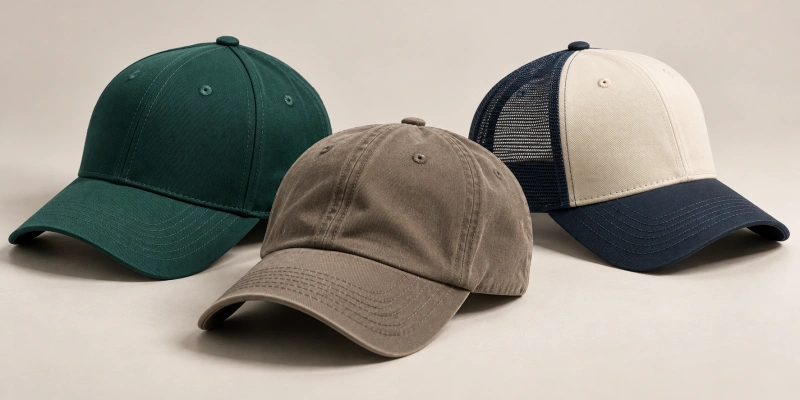
Baseball caps vary across independent design choices. Five-panel and six-panel describe crown construction; structured and unstructured describe front support; low, mid, and high profile describe the crown silhouette. Fitted describes a sized cap without an adjustable closure, while snapback and strapback name closure styles. Mesh-back describes open rear panels.
These labels can overlap: a cap may be six-panel, structured, high-profile, and snapback at once. See the types of baseball caps for a fuller comparison of those combinations.
What Are Baseball Caps Made Of?
Cotton, polyester, nylon, and wool all appear in baseball-cap construction, as do blends. A cap can also combine materials: for example, a woven fabric front with mesh side or rear panels. The outer fabric is only one part of the product. The visor insert, front reinforcement, sweatband, thread, and closure may use other materials, so a single fiber name does not describe the complete cap.
The material influences appearance, but fiber content alone cannot establish a performance claim. A polyester cap, for example, is not automatically moisture-wicking or water-resistant; the finished fabric and construction matter. The materials guide explains what baseball caps are made of in more detail.
How Is a Baseball Cap Made?
A sewn cap typically begins with material selection and components cut to a pattern. Decoration can be applied at a stage suited to the method. The crown panels are sewn, the visor is prepared and attached, and the sweatband and any rear closure are fitted before finishing and inspection. The order can vary with the pattern, equipment, and decoration.
The finished shape reflects the panel pattern, seam alignment, front support, and visor assembly as well as the outer fabric. For a closer look at the production steps, see how baseball caps are made.
How Should a Baseball Cap Fit?
A baseball cap should sit securely without excessive pressure from the sweatband. Circumference matters, but so does crown depth: a cap can have enough room around your head yet still feel too shallow or too deep. Profile affects how the crown sits and looks. The cap should stay in place without tightening an adjustable closure beyond its comfortable range.

On an adjustable cap, check the fit across the usable closure range and how the rear opening sits. On a fitted cap, the finished circumference and crown shape need to suit the wearer because there is no strap to compensate. Read how a baseball hat should fit for fit guidance, or consult baseball cap sizes for measurements and conversions.
How Is a Baseball Cap Different From Related Hat Styles?
Some of these names describe features or variations of the baseball-cap form; others describe a different silhouette. The comparisons below show the basic relationship and link to the dedicated articles for closer detail.
| Style | Relationship to a baseball cap | Detailed comparison |
| Dad hat | Usually a softer, relaxed baseball-cap interpretation; the term suggests a look rather than one mandatory panel count. | Dad hat vs. baseball cap |
| Snapback | Describes a cap with an adjustable snap closure; the crown and visor can still vary. | Snapback vs. baseball cap |
| Trucker hat | A related front-visor cap style commonly identified by mesh rear or side panels; front construction can vary. | Trucker hat vs. baseball cap |
| Golf cap | May share the baseball-cap form; “golf” often describes intended use and product choices rather than an exclusive crown architecture. | Golf cap vs. baseball cap |
| Bucket hat | A different silhouette with a brim extending around the crown instead of only a projecting front visor. | Baseball cap vs. bucket hat |
The labels can also combine. A trucker-style cap, for instance, may have a snapback closure. “Trucker” describes a construction style, while “snapback” identifies the closure. When a precise design matters, describe the crown, visor, materials, and closure separately.
A Short History of the Baseball Cap
Baseball caps developed alongside the sport, though early clubs did not all wear the same headwear. Some nineteenth-century teams wore hats with brims extending around the crown; others wore caps with a forward bill. Surviving accounts and illustrations show several forms, so assigning one definitive “first baseball cap” date would oversimplify the history.
The name became strongly associated with baseball even as similar front-billed caps appeared elsewhere.
The Brooklyn Excelsiors helped popularize a deeper-crowned, longer-billed style in the nineteenth century. Over time, makers altered crown shapes, seams, visor lengths, and materials. The familiar panelled crown emerged through that gradual development; it was not a fixed design shared by every early team. The cap changed as players and manufacturers adapted it for use on the field.
In the twentieth century, professional teams and manufacturers further established the shape. Caps bearing team marks reached fans, and the same forward-billed form spread into casual clothing. It is now used for sports, workwear, promotional products, and everyday dress. The baseball connection explains the name, while today’s baseball cap is a much broader item of headwear than a uniform piece.
From a Baseball Cap Style to a Custom Specification
A style name or reference photo is a useful starting point for a custom cap, but it does not specify the whole product. Panel construction, front support, crown profile, visor shape, closure, material, fit, and logo method each need a clear choice. A sample can then confirm details such as crown depth and finished circumference. If you are developing custom baseball caps, these choices turn a general idea into a brief a maker can assess.
FAQs
Is a Baseball Cap a Hat?
Yes. “Hat” is the broad term, and a baseball cap is a particular close-fitting, front-visor style of hat.
Does a Baseball Cap Need a Team Logo?
No. Logos are common on team and promotional caps, but an unbranded cap with the same crown and forward visor is still a baseball cap.
Is Every Baseball Cap Adjustable?
No. Some have straps or snaps, while fitted caps are made to a specified size without an adjustable rear closure.
What Is the Bill of a Baseball Cap?
The bill is the projecting front visor. It can be flat, gently curved, or more deeply curved depending on the design.
Are All Baseball Caps Six-Panel Caps?
No. Six-panel is a familiar construction, but other crown layouts exist. The panel count describes one design feature, not whether the hat belongs to the baseball-cap family.