
If you are comparing a snapback vs a baseball cap for a custom order, first check what each name is describing. A baseball cap is a broad cap style with a crown and a projecting front brim. A snapback is a cap with an adjustable plastic snap closure at the back. A snapback can therefore be a baseball cap.
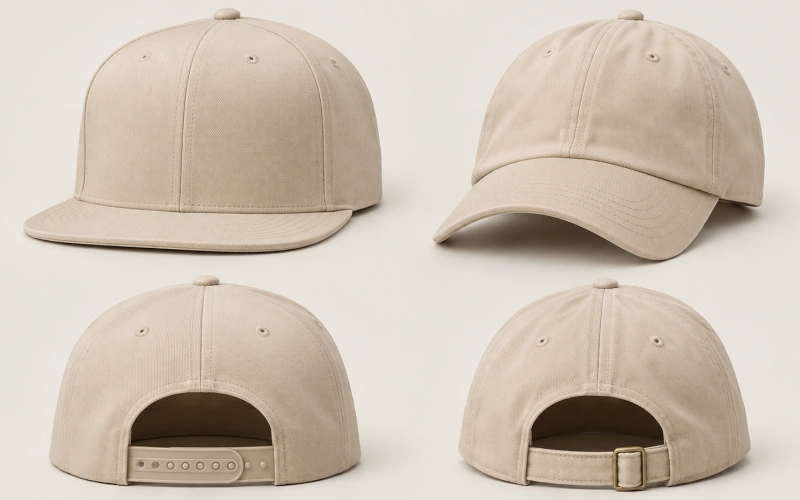
The terms are often set against each other in product listings because buyers picture two familiar looks: a firmer, sometimes flat-brim snapback and a softer, curved-brim baseball cap. Those looks are common examples, not definitions.
For a brand, retailer, or bulk buyer, the useful choice is the complete construction. Decide how the cap should sit on the head, what the front should look like, how the brim should be shaped, and whether a plastic snap closure fits your range. Then compare decorated, wearable samples. This guide gives you a clear vocabulary and a practical approval process without asking you to choose between two categories that can overlap.
The Short Answer: A Snapback Can Be a Baseball Cap
“Baseball cap” identifies the general form. It leaves the panel layout, crown support, profile, brim, and rear adjustment open. “Snapback” identifies the plastic snap fastener and often serves as the name of a product range built around that closure. The two labels answer different questions. If you order a snapback baseball cap, you have specified the basic cap form and its closure, but many design decisions remain.
In everyday retail language, “snapback” may also evoke a high, structured front and flat brim. You can use that look as a reference, but do not assume it is inherent to the closure. HENGXING’s current snapback range includes flat and curved brims, five- and six-panel constructions, and different crown profiles.
Its baseball cap range also lists snapback closures among its options. That overlap is why photographs and specifications are more reliable than a category name alone.
Snapback vs Baseball Cap at a Glance
Read the comparison as a distinction between terms, rather than two mutually exclusive products. A finished cap can meet both descriptions.
| Decision point | Snapback | Baseball cap | What you should specify |
| Core meaning | Plastic snap closure at the rear; also used for a range built around it | Broad crown-and-brim cap style | Cap form and closure separately |
| Rear adjustment | Interlocking snap positions | Snap, strap, hook-and-loop, clip or selected fitted options | Closure type, range and color |
| Brim | Can be flat or curved | Can be flat or curved | Reference shape, width and projection |
| Crown | May vary in height, support and panel count | May vary in height, support and panel count | Pattern, profile and front structure |
| Fit decision | Adjustable only within the selected snap range | Depends on pattern and chosen sizing system | Try the approved construction on intended wearers |
The most consequential difference in a product brief is the rear closure. If two samples differ in crown, fabric and brim as well, any preference may come from those features instead. Record all the differences before deciding that the closure itself caused the result.
Start with the Closure, Then Define the Rest of the Cap
Look at the back of the sample. A classic snapback uses an interlocking plastic strip whose positions let the wearer adjust the opening. Its color can match or contrast with the cap, and the visible rear detail may be part of the design. If you need this closure, write “plastic snap closure” in the specification and approve its color, placement, feel, and usable adjustment range on a physical sample.
A baseball cap can use that same closure. It can also use a fabric strap and metal buckle, hook-and-loop fastening, a webbing clip or a selected fitted construction, depending on the style. The closure affects how wearers adjust the cap and how the back looks.

It does not, by itself, set crown depth or guarantee that one nominal size will suit everyone. If your collection already uses a fabric strap, compare the back view and wear test before changing to a snap closure for visual reasons alone.
Do not treat “adjustable” as a complete fit specification. Ask who will wear the cap, what head-size range the pattern is meant to serve, and how much adjustment remains when the sample fits those wearers. A closure at its last usable position may technically fasten while leaving the crown too shallow, too deep, or unstable.
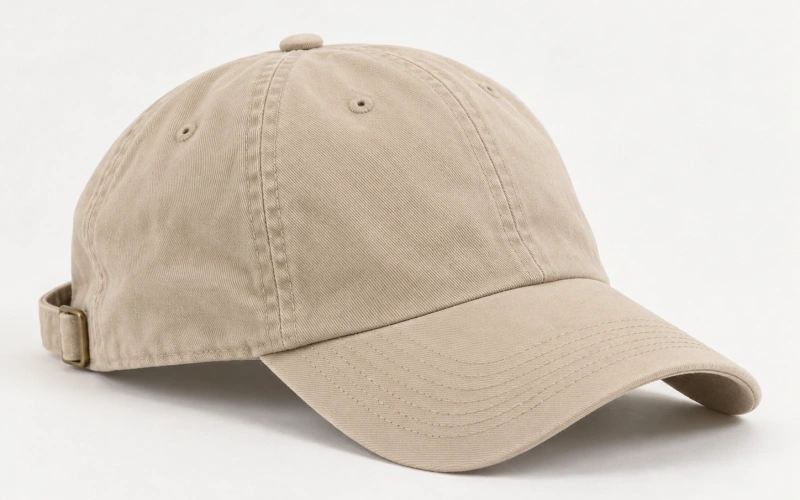
The site’s guide to how a baseball cap should fit provides a fuller wearer check; here you need to verify the particular closure with the particular crown.
Does a Snapback Have to Be Flat and Structured?
No. The familiar streetwear snapback often combines a flat brim, a supported front, and a prominent crown. That is one configuration. A curved-brim snapback retains its defining rear snaps. Likewise, a baseball cap with a flat brim does not stop being a baseball cap. HENGXING publishes both flat- and curved-brim snapback directions, so choose the brim as a separate line in your brief.
The crown also needs its own decision. A structured front uses support to retain a more defined shape; an unstructured front has a softer presentation. Profile refers to the crown’s apparent height and depth. Neither property follows automatically from the snap closure.
A low-profile cap can have rear snaps, and a high, supported baseball cap can use a different closure. If you are translating a reference image into a purchase specification, identify each visible element instead of calling the whole silhouette a “snapback look.”
Panel count is another independent variable. A five-panel front may present a broad uninterrupted area, while a six-panel crown commonly has a center-front seam. The actual pattern, rather than the name alone, determines the front shape and where your logo will sit. HENGXING lists both configurations for its custom snapback hats. Compare decorated samples when the panel seam or front support matters to the artwork.
If your team’s debate is mainly over a straight or rounded visor, use the baseball cap brim guide for the component details. Do not let “snapback vs baseball cap” stand in for a brim comparison; the closure and brim can be combined in more than one way.
How Should You Compare Fit for Your Intended Wearers?
Start with the cap pattern, not the category label. The sweatband circumference, crown depth, front-panel shape, fabric, and closure all affect how a cap sits. Put each sample on wearers who represent the intended size range.
Note whether the band sits comfortably, the crown reaches the expected position, the front holds the intended silhouette, and the cap stays stable during normal movement. Record the snap position or other closure setting for each test.
For an event or merchandise program, a snap closure can make individual adjustment convenient, but “one size fits most” is not a guarantee for every audience. The actual adjustment range and crown pattern need to be checked. For a fitted program, size distribution becomes a separate inventory decision: you will need a size chart and a quantity plan for each size.
Neither option is inherently superior; the right system depends on how the caps will be distributed and whether wearers can try them before selection.
Run the comparison fairly. If you show testers a tall structured snapback and a shallow soft cap with a strap, you are testing several changes at once. If the goal is to choose a closure, keep the fabric, profile, brim and logo as close as the available constructions allow. When a direct match is not possible, write down the differences and ask which aspect drove each response. A simple size and sample record makes feedback useful for revisions.
What Does the Choice Mean for Logo Placement?
The closure at the back does not determine how much usable decoration space you have at the front. Front-panel construction and the artwork method matter more. A supported panel may hold one graphic differently from a softer panel; a center-front seam may affect the placement of small letters or a patch.
Do not assume that every snapback provides a larger logo area than every other baseball cap. Approve the actual logo at its intended finished dimensions on the selected pattern.
Check the front when the cap is worn, not just laid flat. A design that looks centered in a digital mockup may appear too high on a shallow crown or too close to a seam. If you want side or rear branding, review its distance from the closure and adjustment opening. A rear label or small mark can be partly obscured when the snap is set for a particular wearer. Include the intended closure position in the review photographs if rear artwork matters.
If your program uses the same emblem on several cap constructions, make one decorated sample for each rather than transferring a placement measurement without checking it. The baseball cap logo design guide explains the artwork and placement decisions in more depth. This article’s question is whether the chosen complete cap supports your branding and fit requirements together.
Where Does a Trucker Hat Fit in This Comparison?
“Trucker” usually describes a cap construction with mesh rear or side panels and a distinct front section. Many trucker hats use a plastic snap closure, so a single cap may be a trucker, a snapback, and a member of the wider baseball-cap family. These terms are not interchangeable: mesh describes part of the body, while snapback describes the closure. A trucker with a different rear fastening would not automatically become a snapback.
If ventilation, mesh appearance, or a foam front is important to the brief, state that explicitly. Compare the mesh placement, front material, crown profile and closure as a complete assembly. HENGXING’s custom trucker hats range is the relevant route for that construction. Avoid using a mesh-back sample as your only evidence of how all snapback baseball caps will look or fit.
The same logic applies to “dad hat” or “fitted cap.” These names can refer to a soft, relaxed style or a size system, respectively. They do not replace the need to identify the brim, crown, panel layout, and closure on the product you are approving. When a catalog label seems to imply several details, ask for the individual specifications.
Which Direction Fits Your Buying Program?
If you are developing a merchandise collection with a visible snap at the back, make that closure a deliberate part of the design. Consider how it looks in the colorways, how the back label works around it, and whether the same size range suits the intended customers.
Then choose your front profile and brim independently. A structured flat-brim version may be right for one line, while a curved-brim snapback may suit another. Let your reference product and sample review decide.
For corporate, team or event caps distributed to many people, focus on the wear test and ordering process. Will recipients select a size, adjust their own cap, or receive a preassigned item? A plastic snap can simplify individual adjustment for some programs, but a fabric strap or another closure may better match the expected appearance.
Ask a small group of intended wearers to try the candidates and note any size-range gaps before committing to a bulk allocation.
If your team needs maximum flexibility to explore crown constructions and closures, begin with the custom baseball caps range. If the plastic snap and its design language are already decided, use the custom snapback hats range to develop the rest of the specifications. These are different paths into a custom project, not two boxes into which every cap must be sorted.
How to Write a Brief That Prevents the Wrong Sample?
A supplier cannot reproduce a reference from “baseball cap” or “snapback” alone. Send front, side, rear, and underside photographs of a cap that shows your preferred silhouette. If you have a physical reference, identify which details should carry over and which should change. Include the intended wearer group and where the cap will be sold or distributed. That context helps your supplier discuss a suitable pattern rather than guessing from a label.
Write the cap specification in separate fields: crown profile and depth; structured or softer front; five- or six-panel pattern if relevant; fabric and color; brim shape and projection; plastic snap, fabric strap, fitted sizing, or another closure; size range; artwork dimensions and decoration method; labels; and packaging.
If some details are open, mark them as options to sample. Do not leave a flat brim or high crown as an unstated assumption just because you wrote “snapback.”
Ask whether your selected combination can be developed and what the sample will demonstrate. HENGXING’s published customization options include brim, closure, crown, materials, and branding choices, but the compatibility, specifications, quantities, and timing for your design require project review. Avoid copying another style’s minimum order quantity, dimensions or production schedule into this brief.
Give every sample a version ID and maintain a short revision record. If sample A has a curved brim and fabric strap, while sample B has a flat brim and snap, identify both differences. If you change only the closure on the next round, keep the other approved details in writing. Clear versions help design, purchasing, and production discuss the same physical cap.
Approve the Complete Cap Before Bulk Production
The final review should confirm both appearance and wear. Photograph the approved sample from the front, side, and back, including a close view of the snaps or other closure. Check the logo on the actual front panels, the brim shape, the fit at representative settings, the closure’s operation, and any color or trim at the rear. Compare each item with the agreed brief, and mark the accepted sample and its version number.
If you offer both a snapback and a second baseball cap configuration, give each its own specification, sample, SKU, quantity, and quotation. The first version’s approved crown or logo placement does not automatically validate the second. Keep the labels clear on product images and order sheets so buyers know what differs. A consumer-facing name can be short; the purchase order should still carry the complete technical description.
For later colorways, check whether changing the fabric or decoration affects how the crown holds its shape. Decide with the supplier whether another sample is needed. This is more useful than a blanket claim that one category is always easier to produce or more comfortable to wear. Your approved complete cap is the production reference.
FAQs
Are Snapbacks Baseball Caps?
A snapback can be a baseball cap when it uses the familiar crown-and-front-brim form with a plastic snap closure. “Snapback” specifies the rear adjustment; “baseball cap” describes the broader form. Some product catalogs use the labels for separate merchandising collections, so check the actual construction rather than treating the store categories as technical definitions.
Can a Snapback Have a Curved Brim?
Yes. HENGXING lists curved-brim snapback styles. The plastic snap at the back remains the defining closure. If you want a particular curve, supply a reference and approve it on a finished sample. Do not assume that “curved” has a fixed industry measurement or that a flat sample can be hand-bent into a consistent production shape.
Is a Flat-Brim Baseball Cap Always a Snapback?
No. A flat brim specifies the visor shape, not the closure. The cap may have a plastic snap, another adjustable fastening, or a fitted construction, depending on the pattern. Look at the rear of the product or its technical specification before calling it a snapback.
What Is the Difference Between a Snapback and a Fitted Cap?
The main distinction is the sizing system. A snapback has an adjustable plastic closure; a fitted cap is made in designated sizes without a rear adjustment. Crown height, panel count, and brim shape are separate choices. For a fuller comparison of fit, sizing, and rear construction, see our fitted hat vs snapback guide.
Is a Trucker Hat the Same as a Snapback?
No. A trucker hat typically has mesh at the back or sides, while snapback describes the plastic rear closure. Many products have both features, but one does not prove the other. Specify mesh placement, front material, and closure separately when ordering.
Choose the Construction You Can Approve
You do not need to choose between a snapback and a baseball cap as if the labels were mutually exclusive. Decide whether you want plastic snaps, then define the crown, brim, fabric, size range, and decoration around your intended wearer. Send HENGXING a reference cap, artwork, estimated quantities, and the details you want to compare. Review a labeled physical sample before approving the complete cap for a custom order.