
A baseball cap brim is the projecting part at the front of the cap that helps shade your eyes and gives the cap much of its profile. You may also hear it called a bill, visor, or peak. When specifying caps for a brand or buying program, the useful questions go beyond “flat or curved.”
For the limits of that forward shade, see how baseball caps protect from the sun, including which areas of the face, ears, and neck remain exposed.
Decide how far the brim should project, how wide it should appear, how firm it should feel, what should appear on its underside, and whether the approved shape will withstand packing and handling. A reference cap and a finished sample give your supplier a clearer target than a style name alone.
Brim, Bill, Visor, and Peak: Are They the Same?
In a baseball cap specification, brim, bill, visor, and peak often refer to the same projecting front piece. Your buyer may say “bill,” your designer may label it “visor,” and a supplier may use “peak.” When discussing a cap as a whole, however, brim can also refer to the projecting edge of a different hat style. Put a photo or drawing beside the term in your brief so the intended part is unmistakable.
You should also distinguish the brim from the crown. The crown is the part that covers the head; its front panels may be reinforced or soft. The brim has its own internal support and shape. A cap with a soft crown can still have a comparatively firm brim. If you need the names of the other cap components, our parts of a baseball cap guide covers the full construction without turning this brim specification into a general cap glossary.
What Is a Baseball Cap Brim Made Of?
Think of the brim as a layered assembly. The upper surface is the visible fabric on top, while the underside may use matching fabric or a contrasting color. Between these outer layers sits an insert that helps establish the brim’s firmness and outline. Stitching holds the layers together and contributes to the finished appearance. The exact materials and construction depend on the selected style, so a photograph of the outer fabric cannot tell you what is inside.
If your brief calls for a “soft brim,” explain what you want the wearer to feel and how much flex you expect. Softness is not a single material specification. The insert, its thickness, the fabric, and the assembly can all change the result. Ask for the proposed construction and test a finished sample. Do not infer that every unstructured cap has a soft brim: “unstructured” normally describes the front of the crown, not the insert inside the projecting visor.
Fabric choice affects the visible finish, particularly where the top and underside meet. A washed fabric may give the cap a relaxed surface character, whereas a smoother fabric can make a clean edge or contrasting color more prominent. Decoration on or near the brim requires a separate review of placement and material suitability.
For a wider explanation of shell fabrics and internal components, read what baseball caps are made of; for this order, approve the actual brim assembly in your sample.
Flat, Curved, and Slightly Curved Brims
A flat brim presents a straighter front line when viewed from the side. A curved brim follows a more pronounced arc. A slightly curved brim falls between those two directions, although the terms do not define a universal degree of curvature. Compare caps on the same crown pattern where possible. Otherwise, differences in crown height and front-panel support can make the brim appear more or less prominent than it actually is.
Use the finished look as the decision point. A flatter brim can create a more angular silhouette; a stronger curve can make the front appear more compact.
Neither shape determines the cap’s panel count, crown structure, or wearer fit. If the brief is specifically to source a flat-brim product, review the flat brim baseball caps collection for that style. If your brief is broader, the custom baseball caps range is the place to discuss available brim and crown combinations.
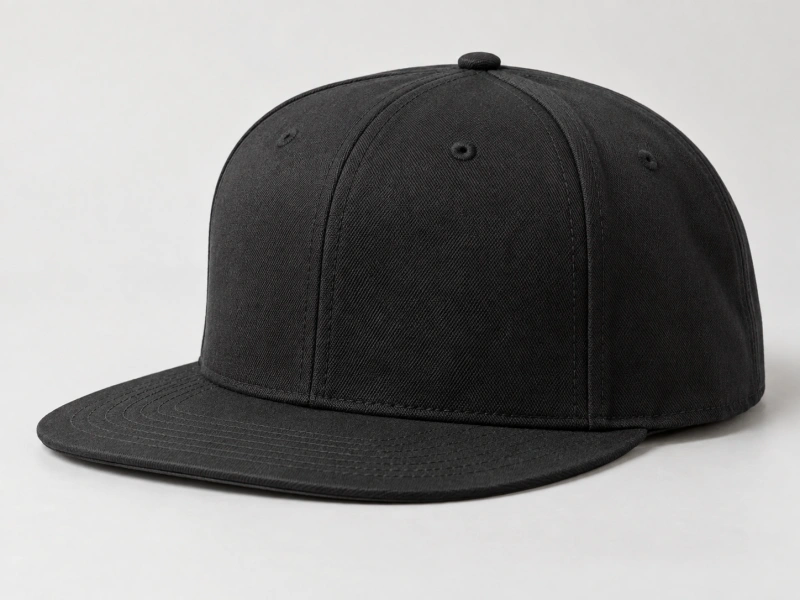
You may see “pre-curved” in a product description. Treat it as the shape supplied in the finished cap rather than as an instruction to bend the brim yourself after delivery. If two buyers use different meanings for “slight curve,” send a side-view reference and have the supplier compare the proposed sample with it.
Approve the shape on the intended cap because the brim’s angle against the crown matters as much as the curvature visible when the cap is laid flat.
Short, Standard, Long, and Wide Brims
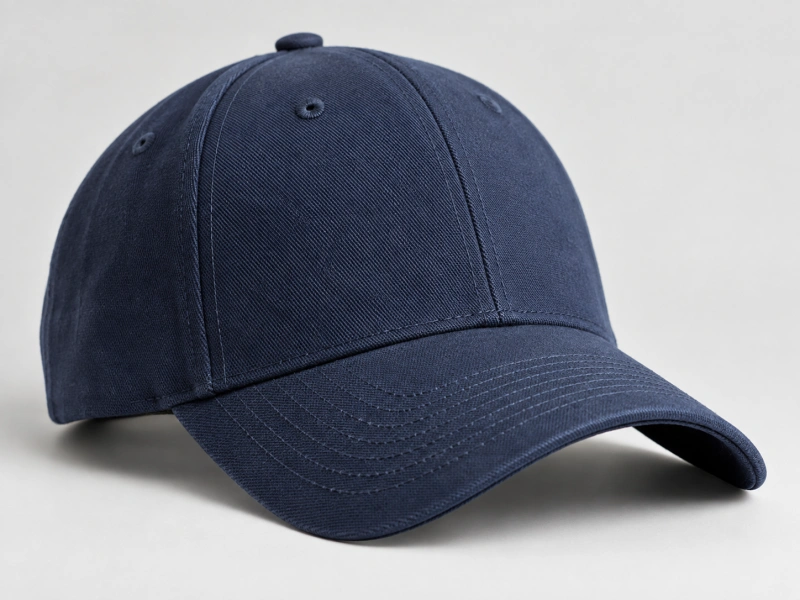
Length and width describe different dimensions. Brim length is commonly discussed as the projection from where the brim joins the crown to its front edge. Width describes the span across the brim, usually considered in relation to the brim shape and the cap front. State exactly where and how you measured when dimensions are critical. A short brim is not automatically narrow, and a wide brim is not necessarily long.
“Standard” is useful conversational shorthand, but it is not an agreed dimension across all patterns and suppliers. Compare the proposed style with a physical reference or an annotated photograph before specifying a target measurement. If you request a shorter projection, check how much shade you still want and whether the cap looks balanced on the intended crown.
If you request an extended brim, inspect its side profile and how it sits when worn. For a wider option, consider its front outline as well as the width at the attachment point.
Searches for a short-brim baseball cap often reflect a preference for a compact look rather than a precise length. Hengxing has shown a short-brim style in historical product material, but that does not establish a current stock pattern or standard size. If a short, long, or wide brim is central to your collection, ask which current patterns can support it and request the actual dimensions and a sample before approving your artwork or quantities.
The same rule applies when you order several colorways. A small difference in projection can make one color look like a different style, especially when the crown fabric and brim fabric contrast. Record the approved shape and measurement method for each style. Do not combine a short-brim sample from one crown pattern with a standard-brim measurement from another and assume the result will match.
Underbrim Color, Sandwich Edges, and Stitching
The underside of the brim becomes visible when the wearer tilts the cap or when the product is photographed from below. You can request a matching underbrim or specify a contrasting color. A green underbrim, for example, is a design choice that should be defined with a color reference, not treated as a universal baseball cap feature. If underside printing or embroidery is part of your concept, check the placement and chosen fabric on a decorated sample.
A sandwich brim adds a visible contrasting band at the edge between the upper and lower surfaces. Specify the intended color, how much of the band should show, and which approved sample defines the result. The appearance is affected by the edge profile and the materials used in that particular construction. A digital rendering alone may not show how the band appears in side view or after the brim has been curved.
Edge stitching is another visible detail. Rather than asking for “normal stitching,” send a close-up photograph and describe the stitch color and visual spacing you expect. The number of stitch rows and their positions should be confirmed for the selected style; do not assume every pattern shares the same default.
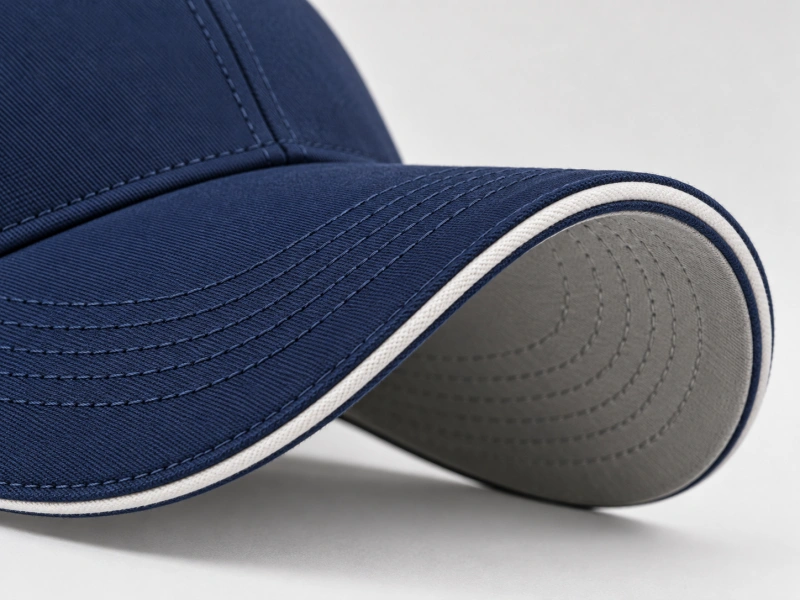
Hengxing’s customization options include underbrim contrast, sandwich details, and stitch choices, subject to review of the actual combination. These details can change how the cap appears from a distance even when its crown and logo remain the same.
How Brim Choices Affect the Finished Cap?
You can narrow the options by starting with the intended use and then evaluating the cap as a whole. A retail collection may need a consistent silhouette across several colors. A promotional program may prioritize a broadly familiar fit and a sample that can be reproduced consistently. If your artwork sits on the crown, the brim still changes the visual balance below it.
A bold upper-brim fabric can compete with a small front logo, while a contrasting underside may work well in product photos but be barely visible in a straight-on view.
Use the following comparison as a briefing aid, not as a list of fixed product specifications. Length, width, and curve are separate decisions, and their combinations depend on the current pattern.
| Brim Direction | What You Notice | What to Confirm on a Sample |
| Flat | Straighter side profile and more angular front | Relationship to crown height; finished angle; edge details |
| Slightly curved | Moderate arc without a pronounced bend | Side-view reference; consistency across colorways |
| Curved | More rounded front silhouette | Desired arc; symmetry; appearance when worn |
| Short projection | More compact front extension | Projection measurement; shade requirement; crown balance |
| Extended projection | More forward reach | Projection measurement; visual balance; packing protection |
| Wide front | Broader outline across the face | Width measurement; attachment shape; fit with the chosen crown |
If you are comparing two directions, keep the crown, fabric, and artwork as consistent as possible. A sample comparison can then show what the brim itself contributes. Compare the cap both on a wearer and off the head: a photograph of a cap lying flat often hides the angle at which the brim leaves the crown.
What to Specify Before Sampling?
Give your supplier enough detail to build a meaningful first sample. You do not need to guess an industry-wide standard measurement. Identify the reference, indicate which features must match, and mark any open choices for discussion.
- Cap reference: provide front, side, and underside photographs, or a physical cap. State whether the crown style is fixed.
- Brim shape: choose flat, slightly curved, or curved, with a side-view reference for the target arc.
- Brim size: state the desired projection and width, including your measurement points and any acceptable visual variation already agreed.
- Firmness: describe the intended feel and ask which insert construction is proposed for the selected pattern.
- Surfaces: specify the top and underbrim fabrics or colors, plus any contrasting or printed artwork.
- Edge: describe the sandwich color and visible thickness, if applicable; provide a stitch-color reference and confirm the proposed edge stitching.
- Order context: give quantities by style and color, the destination market, and target delivery timing so sampling and packing can be discussed for the actual project.
Send the reference cap, artwork, and these fields through the custom baseball caps inquiry route. Ask the supplier to flag combinations that require a different pattern or a separate sample. A request such as “wide, soft, flat, and heavily decorated” spans several construction decisions; it is more useful to identify which features are essential than to assume they can all be combined without trade-offs.
How to Check the Approved Brim Sample?
Inspect the sample from the front, side, and underside, then evaluate it while worn. From the side, compare the curve and the angle where the brim meets the crown with your reference. From the front, check whether both sides look symmetrical and whether the width suits the chosen crown. From below, inspect the color, any decoration, and how the edge finish appears at the sides.
Next, examine the stitch lines and sandwich detail, if specified. Check the appearance of the finished edge rather than judging only a flat material swatch. Gently assess firmness as you would during normal handling, but avoid turning a sample check into a destructive bend test unless the method has been agreed in advance. Ask the supplier to confirm the insert and construction if the feel differs from the brief.
Record the approved photos, measurement points, and any changes before bulk production. Keep one physical approved sample as the visual reference if your process allows it. Discuss packing that protects the approved brim shape during shipping; an approved curve is of little use if cartons compress the front of the cap. The actual construction, tolerances, and packing method should be confirmed for the selected order rather than taken from a generic guide.
FAQs
Is the Brim the Same as the Bill of a Baseball Cap?
Usually, yes. Bill, visor, peak, and brim can all describe the projecting front part of a baseball cap. Usage varies by region and supplier. When you send a production brief, add a photograph or drawing and identify the top, underside, and edge separately to avoid confusing the requested detail with a crown or closure feature.
What Is Inside a Baseball Cap Brim?
An internal insert generally helps the brim hold its outline, with fabric covering its upper and lower surfaces. The insert’s material and firmness vary by style. You cannot establish its composition from a product image or from the fact that a cap has an unstructured crown. Request the construction details for the chosen sample if they matter to your order.
Is a Flat Brim Better Than a Curved Brim?
Neither is inherently better. Compare the front silhouette you want with the crown, artwork, and wearer fit. A flat brim gives a straighter profile; a curved one gives a more rounded look. If a flat brim is your principal product requirement, compare the dedicated flat-brim baseball cap styles and approve the complete cap rather than a detached brim.
Can You Change the Curve of a Finished Cap Brim?
Some finished brims may allow limited reshaping, but the result depends on the insert and assembly. Do not assume that a flat sample can be hand-bent into the same shape as a sample approved with the intended curve. For a bulk order, specify the intended finished curve before sampling and approve the supplied shape instead of relying on alteration after delivery.
What Counts as a Short Brim Baseball Cap?
“Short” is relative to the reference cap and crown pattern. This guide does not set a single length that defines all short-brim caps. Mark the projection from the crown attachment to the front edge on your reference, ask how the supplier measures its current pattern, and judge the balance on a worn sample.
Does a Wide Brim Mean a Long Brim?
No. Width refers to the span across the front; length refers to how far the brim projects forward. You can specify either dimension separately, but availability depends on the selected style. Include both measurements or a traced reference when your design depends on the distinction, and confirm the front outline on a physical sample.
Can the Underbrim Be a Different Color?
Contrast underbrims are among Hengxing’s published customization directions. You should still confirm the fabric, color reference, and availability for the cap you select. If you want printing or embroidery underneath, include the artwork at its intended size and ask for a decorated sample before committing to a larger order.
Choose a Reference Cap and Confirm a Sample
The most reliable baseball cap brim brief begins with a cap you can show, an agreed side-view shape, and clear notes about length, width, firmness, underside color, and edge finish. Use the sample to approve how those choices work together on the intended crown.
When you are ready to discuss an order, send your reference, artwork, quantity, and destination through the custom baseball caps page so the current pattern and available combinations can be confirmed.