
If you are developing a cap for a brand or sourcing caps in volume, knowing the correct names of each component makes design and purchasing discussions much clearer. You can describe the shape you want, specify logo placement, and evaluate a sample against a clear specification.
The main parts of a baseball cap are the crown and its panels, the brim, top button, eyelets, rear closure, and the interior sweatband and seam taping. Seams, labels, and decoration areas also affect the finished product. The sections below explain what each part does and what to check before approving a custom order.
Baseball Cap Parts at a Glance
| Part | Location | Why It Matters |
| Crown and Panels | Fabric body above the brim | Defines the cap shape, profile, and front logo area |
| Front Support | Inside the front crown, when specified | Helps a structured crown retain its outline |
| Brim or Visor | Projects from the crown | Affects the silhouette and provides shade |
| Eyelets and Top Button | Crown sides and top | Provide finished details at selected crown openings and the apex |
| Sweatband and Seam Taping | Inside the crown | Affect fit, interior finish, and visible inside branding |
| Closure | Rear opening, when present | Determines how the fit is adjusted or finished |
| Labels and Decoration | Inside and on selected exterior areas | Carry product information and brand artwork |
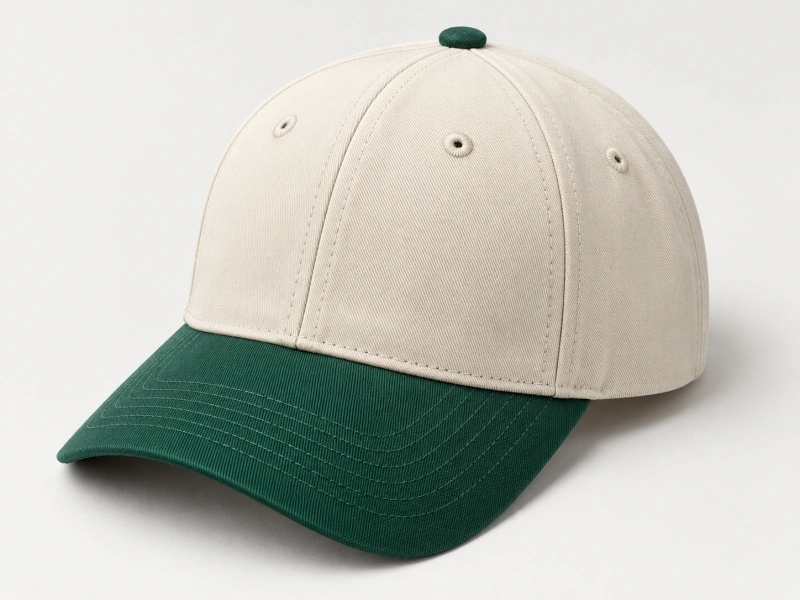
Think of this as an anatomy map rather than a fixed bill of materials. Two caps can share the same basic components and still differ significantly in fit, front shape, fabric, and decoration. When you customize a baseball cap, specify the details that are essential to your project and confirm the final combination on a physical sample.
The Crown: Shape, Height, and Front Structure
The crown is the fabric body that forms the upper portion of the cap and covers the head. Its pattern and height establish much of the finished silhouette. A baseball cap crown may be constructed from five or six main panels, but panel count alone does not indicate whether the front is firm, how high the cap sits, or how it will fit the target wearer. These characteristics should be specified separately.
Crown Profile
Crown profile describes the crown height and how the cap sits on the head. Low, mid, and high are useful shopping and product-development terms, but they are not standardized measurements across manufacturers. If your design depends on a precise crown height, define the measurement points and approve a physical sample.
Compare low-profile baseball caps and high-crown baseball caps when crown height is the primary variable you are evaluating. Either profile can be specified independently of the amount of front-panel support.
Structured and Unstructured Fronts
A structured crown uses support in the front panels to maintain a more defined outline. An unstructured front is softer and follows the head more closely. Supported front panels can also provide a more stable surface for visible branding, although decoration quality still depends on the pattern, fabric, and artwork.
If your reference photo shows a more upright front, review structured baseball caps; if it shows a relaxed crown, compare unstructured baseball caps. Check the inside construction of a sample rather than judging front support from a photograph alone.
You may hear the term buckram used for a stiffening layer in some caps. Buckram is a front-support material, not another name for the insert inside the brim. The exact support material and stiffness should be confirmed for the selected style; the generic term “structured” does not, by itself, define a factory specification.
Panels, Seams, and the Front Logo Area
Panels are shaped fabric pieces sewn together to form the crown. Their seams hold the pattern together and influence how the cap curves around the head. On many six-panel caps, a seam runs down the center front. A five-panel pattern can arrange the front differently, but a five-panel construction does not guarantee a single uninterrupted logo area or the same usable logo dimensions across styles.
For decoration, the key question is where the seams fall relative to the logo. A narrow wordmark may fit cleanly on one pattern but cross a seam on another. Ask for the usable decoration area on the actual cap, provide artwork at the intended finished size, and inspect a decorated sample.
If the panel layout is still open, compare 5-panel baseball caps with 6-panel baseball caps before choosing the pattern. Panel count and crown profile should be evaluated together, but they remain separate design decisions.
Seam placement also affects the interior appearance. Selected panel seams may be covered with taping to create a cleaner finish and, where specified, carry a repeating brand pattern. Avoid approving front-logo placement from a flat mockup alone: the cap’s curvature, seam placement, and fabric can all affect the final appearance.
Top Button and Eyelets
The small fabric-covered piece at the top is commonly called the top button or squatchee. It finishes the point where the crown panels meet on designs that include one. Some styles omit it, so do not assume every cap in a range will have a top button. Its color can match the crown or be used as a small contrast detail.
Eyelets are openings in selected crown panels that allow airflow. They may be finished in different ways depending on the pattern and material. Number and placement vary: six eyelets are not standard on every six-panel cap, and a five-panel design does not automatically require five.
HENGXING lists buttons and eyelets among the trim details that can be reviewed for customization. For a bulk order, use the approved sample to confirm their position, finish, and color rather than carrying specifications over from a different product.
The Brim, Visor, or Bill
Brim, visor, and bill are common names for the projecting front component of a baseball cap. In this article, “brim” refers to that component. It affects both the cap’s silhouette and the shade it provides. A flat brim and a pre-curved brim can make the same crown look like two different products; small differences in length, width, and curvature can also change the result. If a straight brim profile is central to your brief, compare flat brim baseball caps before finalizing a sample.
Upper Brim, Underbrim, and Edge Stitching
The upper brim surface is visible from above, while the underbrim, also called the undervisor, is the underside. You can specify a matching underside or discuss a contrasting color, print, or branding treatment. A sandwich brim uses a contrasting layer or color that is visible along the edge. Visible rows of stitching finish the brim and affect its appearance, but no single stitch-row count should be assumed for every style.
When specifying a custom brim, define its length, width, curve, internal stiffness, underside, and edge finish. The internal brim material influences how the brim holds or changes shape and is separate from the support used in the front crown. Ask the factory to confirm the insert material and construction for the sample you select. Do not treat the brim dimensions or stitch count from a previous product as a universal production standard.
Sweatband, Inner Taping, and Fit
The sweatband runs around the inside edge where the cap meets the forehead. Its construction contributes to fit and wearing comfort. Material, color, and printed branding can be discussed for a private-label project, but performance claims, such as a specific moisture-wicking or cooling result, require evidence for the selected material. When reviewing a sample, check whether the band lies smoothly, whether any seams feel bulky, and how the cap fits at the front and sides.
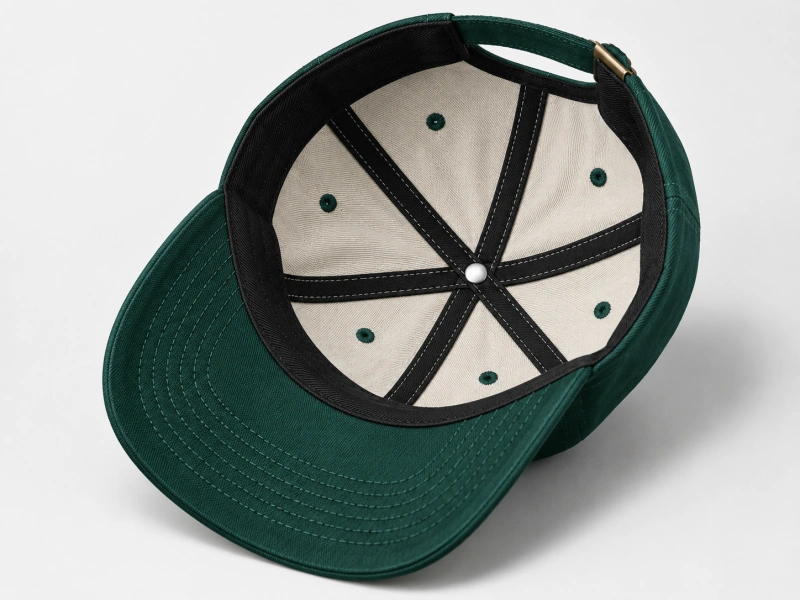
Inner seam taping covers or finishes selected joins inside the crown. It can coordinate with the cap color or carry a repeating pattern or brand name. Check legibility and alignment on the approved sample, particularly when the interior finish is important to retail presentation. The sweatband and seam taping are easy to overlook in a front-view mockup, yet they are among the first details a buyer sees when handling the cap.
Rear Closures and Sizing
The closure is the fit-adjustment system at the rear of the cap, where adjustable styles have an opening or fastening. A snapback uses interlocking plastic snaps; a fabric strap may use a metal buckle or slider; hook-and-loop and webbing-clip systems use different adjustment mechanisms.
Stretch-fit and some fitted caps use other fit constructions, sometimes without a conventional adjustable rear closure. HENGXING lists these as customization directions, with availability depending on the selected cap.
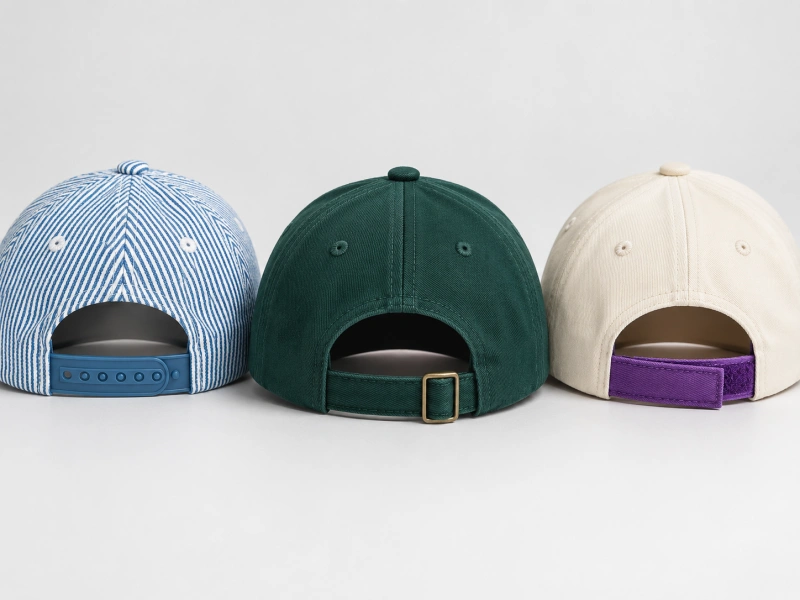
| Closure / Fit Type | What You Should Specify | What to Check on the Sample |
| Plastic Snapback | Color, rear opening, and adjustment range | Snap engagement and rear appearance |
| Fabric Strap and Buckle | Strap fabric, hardware finish, and adjustment range | Slippage, excess strap length, and comfort |
| Hook-and-Loop or Webbing | Fastener or clip type and rear finish | Ease of adjustment and contact with hair |
| Stretch or Fitted | Target wearer and size distribution | Actual fit across the agreed size range |
Choose the closure based on the target wearer and distribution plan, rather than appearance in a front-view photo. If the order covers several markets or teams, define the target size range and ask how the proposed pattern will be sampled. “One size” is not a substitute for a measured fit review.
Labels, Branding, and Decoration Areas?
A private-label cap may include woven, printed, heat-transfer, size, or care labels, depending on the project. These can be positioned at selected locations inside the cap. Brand presentation may also include a hangtag, barcode label, insert, or retail packaging, but these are separate specifications from the cap’s construction. Confirm any required material, care, and origin information for the destination market before approving the label artwork.
On the exterior, consider the front, sides, rear, and, where applicable, the brim. Flat embroidery, 3D puff embroidery, patches, printing, and heat transfer have different artwork and fabric requirements.
A structured front may suit one branding treatment, while a softer front may require a different logo size or application method. If embroidery is central to the brief, explore embroidered baseball caps after selecting the crown pattern, then check stitch placement and legibility on an actual sample. No generic diagram can establish the maximum logo size for every cap.
How Do the Parts Affect Your Custom Cap Order?
The most useful specification connects related components rather than listing options in isolation. A high crown, soft fabric, and raised front logo may create different constraints from a low crown with a flat patch. Likewise, brim curvature, closure type, and size range need to work with the selected crown pattern. Give the factory your priorities, then use the sample to verify whether the combination produces the intended result.
| Decision Area | Information to Send with Your Brief |
| Style and Fit | Reference photo or sample; target wearer; target size range |
| Crown | Five- or six-panel construction; profile; structured or unstructured front |
| Brim | Flat or curved; target length and width; underside and edge details |
| Materials and Trims | Fabric; colors; button; eyelets; sweatband; seam taping |
| Closure | Fastener type; color; hardware; adjustment requirements |
| Branding | Logo file; finished size; placement; labels; packaging |
| Order | Quantity per color; destination; target date; repeat volume |
If you are still deciding on one specification, state that clearly. A reference product and final-size artwork can help resolve open points during development. The full custom baseball caps range is the commercial starting point for discussing the pattern, materials, and quotation; this anatomy guide is intended to help you prepare the brief accurately.
What to Check Before Approving a Sample?
An approved sample should answer more than “Does the logo look right?” Place it next to your reference image and inspect the cap from the front, side, rear, and inside. Record all requested changes in writing, then ask for the agreed version to be used as the reference for bulk production.
- Crown: Compare height, shape, panel seams, and front support with the agreed brief.
- Fit: Check the intended wearer, sweatband feel, and closure adjustment.
- Brim: Confirm its curve, length, underside color, and visible stitching.
- Trims: Inspect the button, eyelets, inner taping, and any contrast details.
- Branding: Check logo size, placement, legibility, and label finish.
- Materials and Packaging: Confirm fabric hand, approved color, and packaging instructions.
For repeat programs, keep the approved specification and sample details with the purchase order. Ask how any later changes in fabric, decoration, or fit will be documented; even a small substitution can alter the appearance of the finished cap.
FAQs
What Are the Main Parts of a Baseball Cap?
The main external parts are the crown and panels, brim, top button, eyelets, and rear closure, where one is used. Inside, you will typically find a sweatband, seam finishing or taping, and labels. A cap may also carry embroidery, patches, or printing. The exact combination depends on the pattern, so confirm each visible and internal detail on the approved sample.
Are Bill, Brim, and Visor Different Parts?
For a baseball cap, bill, brim, and visor commonly refer to the same projecting front component. “Underbrim” or “undervisor” refers to its underside. In a purchase specification, choose one primary term and define any special underside, edge, or curve details so the factory and buyer are referring to the same component.
What Makes a Baseball Cap Structured?
A structured cap has support in its front crown panels, which helps the front retain a defined shape. An unstructured cap has a softer front that follows the head more closely. Structure is independent of panel count and crown height. Check the front construction and silhouette on a physical sample, especially when the logo depends on a firm decoration surface.
Does a Five-Panel Cap Always Have More Room for a Logo?
No. Five-panel and six-panel designations describe how the crown is assembled, but the usable decoration area depends on the actual front pattern, seam placement, height, and fabric. Many six-panel caps have a center-front seam; five-panel layouts vary as well. Provide the artwork at its intended finished size and approve a decorated sample before finalizing the design.
What Does the Sweatband Do?
The sweatband sits along the inside edge of the crown where the cap contacts the forehead. It contributes to fit and comfort and can be coordinated with selected colors or branding. Its performance depends on material and construction, so don’t assume a moisture-wicking rating from the word “sweatband.” Review the proposed sweatband in the actual sample.
Which Closure Should You Choose?
Choose based on the intended fit and desired rear appearance. A plastic snapback adjusts in fixed increments; a strap-and-buckle closure provides a different rear look; hook-and-loop and webbing systems offer different adjustment and handling characteristics. Stretch and fitted styles require specific size planning. Check the proposed closure on the selected cap and test it across the wearer range you expect.
Turn the Anatomy into a Better Cap Brief
Once you can name the parts of a baseball cap, you can make clearer decisions about shape, fit, and branding. Start with the crown and brim, then specify the closure, interior finish, and logo placement. Send your cap style, target quantity, artwork, delivery country, and the component details that matter most. HENGXING can review the proposed combination and use a sample to confirm the final construction for your custom order.