
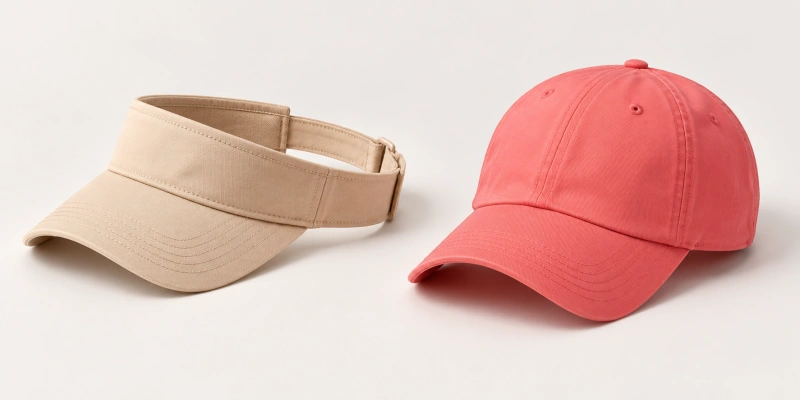
In a visor vs. baseball cap comparison, the main difference is the crown. A standalone visor leaves the top of your head open; a baseball cap covers it with fabric. Both have a front brim that can shade part of your face. Your choice depends on scalp coverage, comfort during your activity, hairstyle, and, for a custom order, where the artwork needs to go.
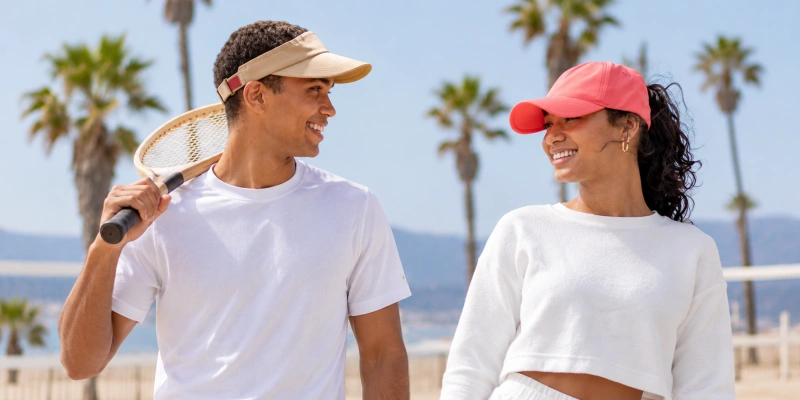
Quick Answer: Visor vs Baseball Cap
Choose a visor if you want the top open and don’t need the headwear to cover your scalp. Choose a baseball cap if you want a crown and more potential space for decoration. The brim, fit, and fabric of the specific product still matter.
| Feature | Standalone visor | Baseball cap |
| Top | Open; a band sits around the head | Crown covers the top of the head |
| Scalp coverage | Top remains exposed | Crown covers most of the top; openings and fabric vary |
| Face shade | Front brim; shade depends on its shape and wearing angle | Front bill; shade depends on its shape and wearing angle |
| Ventilation | Top exposed to air; band affects comfort | Depends on fabric, eyelets, mesh and construction |
| Sweat | Sweatband design and fabric matter | Sweatband design and fabric matter |
| Hair | Open top may suit some updos | Rear opening may suit some ponytails; crown fit matters |
| Weather | Little cover from above | Crown offers more cover from above; neither style is inherently waterproof |
| Logo area | Front band; other placements depend on the design | Front crown plus possible side and back areas |
| Common uses | Running, golf, court sports, outdoor events | Sports, casual wear, uniforms, team and promotional programs |
A note on the word “visor”: here it means a complete, open-top piece of headwear. The projecting front piece of a baseball cap may also be called a visor, bill, brim, or peak. If you mean that component rather than the open-top style, see our guide to baseball cap brims, bills, and visors.
What Is a Visor? What Is a Baseball Cap?
A sports or sun visor has a front brim attached to a headband, without a full crown. Band height and closure vary by style. For more on visor shapes and uses, read what a visor is.
A baseball cap has a crown made from panels, a forward-projecting bill, and a lower edge that rests around your head. Some caps adjust at the back; fitted versions rely on a selected size. The panel layout, front support, and crown depth change its shape without changing its basic identity. For a fuller definition, see what a baseball cap is. Our guide to the parts of a baseball cap explains the construction details if you need to specify them.
7 Key Differences Between a Visor and a Baseball Cap
1. Crown and Scalp Coverage
A visor leaves your hair and most of the top of your scalp uncovered. A baseball cap adds fabric over that area, although the size of its rear opening varies. That physical coverage does not establish a tested UPF rating: UV protection depends on the material and construction.
If sun exposure is the main concern, examine the actual fabric and coverage rather than treating any cap as a rated protective product. Neither standard style covers the ears or neck, so consider those exposed areas when planning for strong sun.
2. Ventilation and Heat Release
A visor exposes the top of your head to moving air, which some wearers prefer during exercise. It will not necessarily feel cooler in every setting: sunlight reaches the exposed scalp, while cap fabrics, mesh panels, and ventilation openings vary. The visor’s band and sweatband also affect comfort. Try the finished styles in the conditions in which you plan to wear them.
3. Face Shade and Weather Coverage
Both styles have a front brim. How much of your face it shades depends on its dimensions and curve, your wearing angle, and the position of the sun. A cap’s crown adds a layer above the scalp and may block some light rain, depending on the fabric; a visor leaves the top exposed. Neither silhouette by itself guarantees waterproofing or complete sun protection.
4. Sweat Management
A visor usually places its inner band against your forehead; a baseball cap normally has a sweatband around the lower inside edge of the crown. Either may absorb sweat or help keep it out of your eyes, depending on the band’s material, width, and fit. Check the actual sweatband and wear a sample while moving. An open top alone says nothing about moisture-wicking performance.
5. Hair Compatibility
A visor leaves space above the band for some ponytails, buns, and fuller hairstyles. A baseball cap may accommodate a ponytail through its rear opening, but that opening and the crown depth determine where the hair can sit. Try each style with the hairstyle you will actually wear; check band pressure, crown fit, and whether the brim stays at a useful angle.

6. Fit and Stability
Neither style is inherently more secure. On a visor, check band pressure, the adjustment, and whether the brim shifts when you move. A wide or firm brim can change the balance at the front, so assess it on the head rather than on a table. On a cap, check circumference and crown depth as well as the closure; a shallow crown can ride up even when the back feels tight.
A rear adjustment does not compensate for a poorly shaped band or crown. Try the intended activity and, if relevant, a breezy setting before approving the fit.
7. Branding and Customization Area
A visor concentrates attention on its front band. A tall graphic or small lettering may need simplification to remain legible there. A cap’s crown offers more potential placements, but a front seam, panel curvature or fabric can limit the usable space and decoration method. Assess the artwork at its intended size on a decorated sample.
Visor vs Baseball Cap by Activity
The activity tells you which tradeoff matters. Use this table as a starting point, then compare the actual brim, materials, and fit; a style name alone cannot settle those details.
| Use | A visor can make sense when… | A baseball cap can make sense when… |
| Running | You want the top open and the band stays secure. | You want crown coverage and a light, secure fit. |
| Golf | You favor an open-top feel and a visor brim that suits your sightline. | You prefer scalp coverage and a familiar club or team cap look. |
| Tennis/pickleball | You want an open top, and the brim stays steady through quick movement. | You want a crown and a fit that stays put during play. |
| Everyday outdoors | You value an open hairstyle or less fabric above your head. | You want more top coverage for walks, travel, or casual wear. |
| Teams / promotions | An athletic, open-top silhouette suits the audience and artwork. | A traditional cap and broader decoration options suit the program. |
If you will spend hours in strong sun, this comparison has a limit. The brim on either style does little for the ears and neck. The CDC’s sun-safety guidance recommends a brim all the way around for greater coverage and additional protection for areas a baseball cap leaves exposed. A visor also leaves the top of your head uncovered. Consider shade, clothing, and sunscreen for exposed skin according to the conditions.
Which Should You Choose?
Use your main requirement to make the first cut, then test the fit of the specific style.
Choose a Visor If…
- You prefer an open top and do not need the style itself to cover your scalp.
- Your hairstyle needs space above the band, and that band fits comfortably.
- The selected brim and sweatband suit your activity, and the smaller logo area works for your design.
Choose a Baseball Cap If…
- You want fabric over most of the top of your head and like a full-crown look.
- You need more potential front, side, or back area for branding, subject to the cap’s construction.
- A suitable crown depth, size, and closure keep the cap comfortable and stable.
If both still seem suitable, wear samples with your usual hairstyle during the intended activity. Check whether the brim stays in position, the band feels comfortable, and the top coverage suits the conditions. For a branded order, compare your actual artwork on both silhouettes.
For Brands: Custom Visor vs Custom Baseball Cap
For a brand, team, or wholesale program, compare the two shapes against the same wearer and artwork. An open-top visor may suit a sport-focused brief, while a baseball cap offers a full-crown silhouette and more potential logo positions.
If the merchandise needs to work across several settings, specify who will wear it and for how long: a short sporting event and an all-day outdoor uniform can call for different priorities. The final choice depends on the audience, fit, and approved sample.
Use the same reference artwork to compare a visor band with the proposed cap panels. Confirm the logo’s legibility, available height, and any seam interference. If you need both silhouettes in one collection, a shared color palette can make them look related, but do not assume one artwork size or placement will transfer unchanged. Review front and side views of each decorated sample.
Then check the wear details that differ: visor band pressure and brim balance versus cap depth and crown profile. Materials, colors, and decoration methods must be confirmed for the selected construction rather than assumed from a style name.
HENGXING supports drawing-based, sample-based, and full headwear customization. For a project involving both styles, compare samples against the same use and artwork. Confirm each specification, quantity, and schedule before a bulk order. Explore custom visors and custom baseball caps for the relevant product details.
FAQs
Is a Visor the Same as the Visor on a Baseball Cap?
No. A standalone visor is an open-top piece of headwear; the visor on a baseball cap is its projecting front bill. In a supplier brief, say “open-top visor” or “cap bill” to make the intended item clear.
Is a Visor Cooler Than a Baseball Cap?
The exposed top can feel more ventilated, but there is no universal temperature ranking. Sun exposure, cap ventilation, fabric, and band fit all affect comfort. Compare samples in your intended conditions.
Which Gives More Head Coverage?
A baseball cap covers more of the scalp with its crown. Neither standard style covers the ears or neck, and the open top of a visor leaves more of the scalp exposed. Physical coverage does not establish a UPF rating.
Is a Visor Better for Running, Golf or Tennis?
Either can work. Choose by the amount of top coverage you want, then test fit, brim position, and sightline during the movements of your sport.
Which Has More Room for a Custom Logo?
A cap generally has more potential area because of its crown; a visor has a shallower front band. Available placements still depend on seams, curvature, and decoration method. Approve the logo on a sample at its intended size.
Conclusion
If scalp coverage matters, start with a baseball cap; if an open top suits your activity and hairstyle, consider a visor. Either way, choose from the finished fit and materials rather than the category name. For a custom program, compare both samples with your artwork before deciding.