
The main difference between a low crown and a high crown hat is the visible height and shape of the crown—the part that covers your head above the brim. A low crown follows a shorter outline, while a high crown rises farther above the brim and tends to make the front more prominent. Neither label tells you the hat’s head circumference, whether its front is reinforced, or how it will fit every wearer.
If you are choosing headwear for a brand, a team, or a retail range, that distinction is a starting point rather than a complete specification. You need to look at the cap on a person, check its actual measurements, and judge the finished logo in place. This guide uses baseball caps as its main example, then shows how the same profile decision can appear in other cap styles.
Quick Comparison: Low vs High Crown
Use this comparison to narrow your design brief. It describes common visual tendencies, not fixed industry measurements or a promise that every low- or high-crown pattern behaves the same way.
| Feature | Low crown | High crown |
| Outline | Shorter crown silhouette, often closer to the head | Taller, more visible crown above the brim |
| Front appearance | Lower-looking front; the effect also depends on support and panel shape | More prominent-looking front; angle and firmness still depend on the pattern |
| On-head impression | Can look compact; actual fit requires a size and depth check | Can look more pronounced; height does not set circumference |
| Logo presentation | Check available panel space and how artwork meets the brim or seams | Check the actual usable panel area; visible height alone is not a logo-size guarantee |
| Ordering decision | Best when the approved sample matches your desired shorter outline | Best when the approved sample matches your desired taller outline |
For a fair comparison, keep the hat style, head-size range, fabric, panel layout, and brim as similar as you can. If you compare a soft cotton five-panel cap against a stiff six-panel cap with a different brim, you are seeing several design changes at once. The crown may be only one reason the hats look different.
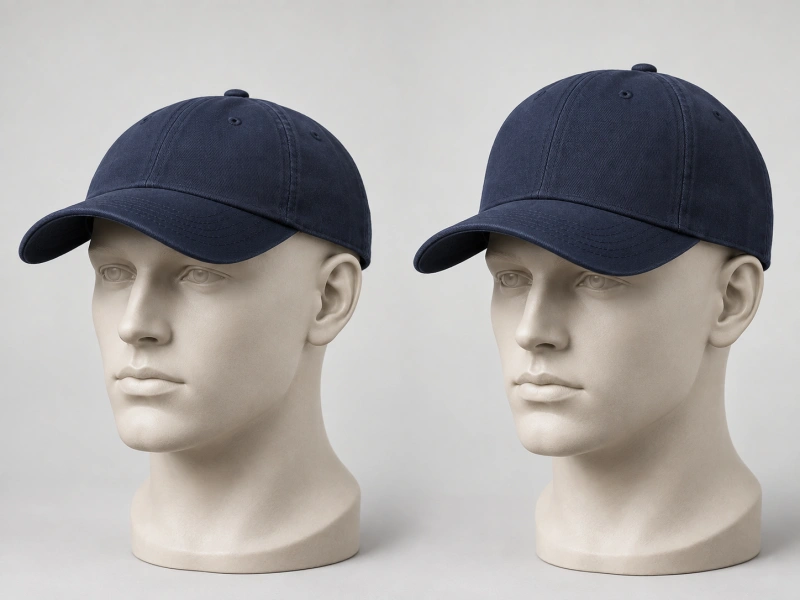
What Do Crown and Profile Mean?
The crown is the portion of a hat above its brim. Profile describes how high that crown appears when the hat is set down or worn. In cap discussions, “low crown” and “low profile” usually point to a shorter silhouette; “high crown” and “high profile” usually point to a taller one. You may also see a mid-profile or regular-profile option between them. These are useful shopping and design labels, but brands and factories do not all assign the same numerical threshold to each label.
This is why a low-profile hat vs. high-profile hat search is largely the same comparison as low crown vs. high crown hats. Before agreeing on a style, ask what the supplier is measuring and compare samples under the same conditions. A profile name on a listing is less useful than a front and side view of the actual pattern you intend to buy.
Crown Height Is Only One Construction Choice
It helps to separate four decisions. Crown profile concerns the visible height and outline. Structure concerns whether the front panels have support and hold their shape. Panel count concerns seam layout. Brim shape concerns the visor below the crown. A high crown can have a flat or curved brim; a low crown can have a supported or softer front.
A snapback closure tells you how the hat adjusts at the back, not how tall the crown is. For snapback-specific examples, compare snapback crown profiles and how high, mid, and low crowns combine with different panel layouts, front structures, and brim shapes. If those terms are new to your team, the parts of a baseball cap guide makes it easier to name each feature in your brief.
An A-frame is also a panel construction, not a universal label for high crown. Likewise, “dad cap,” “trucker,” “fitted,” and “snapback” can describe styling or closure while leaving the exact crown height open. Treat these names as clues about a design and verify the profile of the specific sample.
How Crown Profile Changes the Look and Fit
Viewed from the side, a low crown usually creates a shorter arc from brim to top. A high crown makes the upper portion of the cap more visible. From the front, the height and angle of the panels affect how much of the hat you see above the brim. Your choice may change the visual weight of a small badge or a large embroidered mark, but the effect depends on the complete cap and where it sits on the wearer.
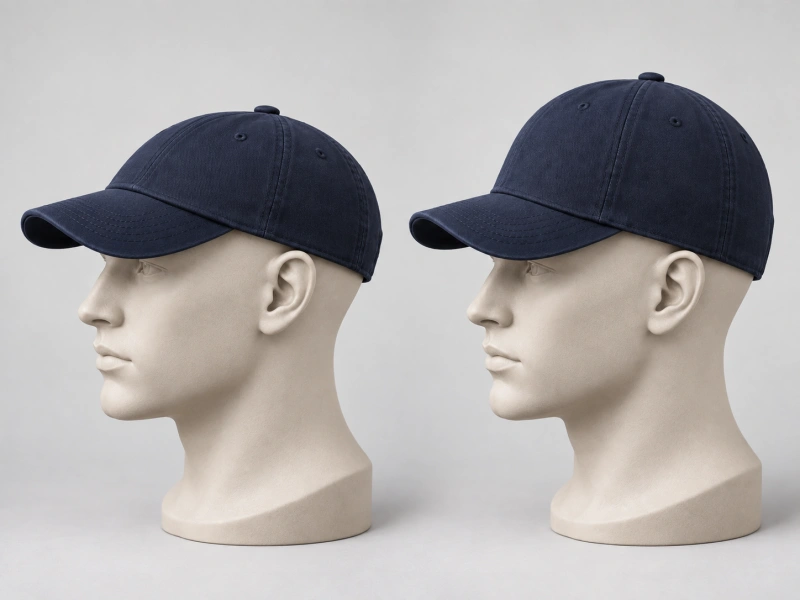
Try both profiles at a normal wearing position. Look in a mirror or take front and side photos at the same distance. A cap photographed flat on a table may look different once the crown settles on a head. If you are reviewing samples for a wider audience, have more than one wearer try each cap and ask for consistent feedback on forehead position, depth, pressure, and the preferred appearance.
Record the observations rather than declaring one profile universally flattering.
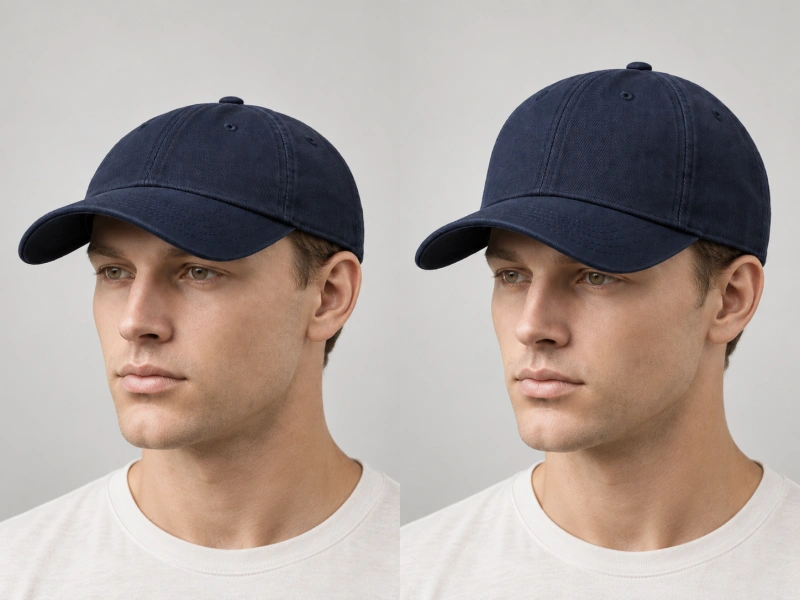
Crown Height Does Not Equal Head Size
Head circumference is the distance around the intended fit line. Crown depth describes how the cap extends over the head. Front height describes a selected measurement of the crown above the brim. Closure adjustment can widen or tighten a cap within the pattern’s intended range.
These are related in wear, but they are not interchangeable measurements. A taller crown does not automatically fit a larger head, and a lower crown does not automatically fit a smaller one.
If the cap is too loose around your head, a taller or lower front will not solve that circumference problem. If the cap feels shallow, check depth and the shape of the whole crown rather than judging only the center front. If the back adjustment reaches its end before the cap fits, review the pattern and closure range. You can use the baseball cap sizes guide to organize size and fit questions before you request a sample.
How to Compare Measurements Without Misleading Yourself?
Ask the maker to identify the measurement points before you compare numbers. For example, are you measuring straight up at the center front or following the panel’s curve? Is the cap set flat, worn on a form, or laid out after being shaped? Are you measuring the crown from the brim seam or from another point? Use the same tool and method on both samples, and note the wearer size or hat block if one is used.
A measurement taken along a curve should not be compared directly with a straight-line value.
Keep fabric, front support, and brim conditions in your notes. You may still choose the profile by eye, but consistent measurements let your supplier understand which part of the look you want repeated. If you cannot get comparable samples, avoid turning an unlabeled photo into an exact height claim.
How Profile Affects Logo Placement?
A high crown may give the front more visible height, but visible height is not the same as usable decoration space. Panel seams, the shape of the front, fabric behavior, and any reinforcement affect where your artwork can sit. The bottom of an embroidery design may crowd the brim; its top may run into the crown curve. A low crown can also carry a clear, well-sized logo when its panel and decoration method suit the artwork.
Start with your finished artwork dimensions rather than asking for the largest possible logo. Place a paper print at scale on the actual cap or review a digital placement proof based on the selected pattern. Check the distance to the brim and top edge, the center seam if there is one, and how the front looks when worn.
For embroidery, inspect narrow letters and dense fills; for a patch or print, check the attachment or transfer method against the chosen material. The baseball cap logo design guide covers artwork and placement decisions in more detail.
A useful approval photo shows the decorated sample from directly in front and from the side at the normal wearing angle. If the two profiles use different panel layouts, judge each logo on its own cap. You cannot assume the same file and placement coordinates will produce an equally balanced result on both.
Examples Across Hat Styles
Baseball Caps: The Most Useful Starting Point
Baseball caps give you a clear way to isolate profile. You can start with similar six-panel caps, keep the brim and closure consistent, and compare their front and side outlines. After that, decide whether you prefer a supported front or a softer one.
If a taller silhouette suits your range, high crown baseball caps provide a product direction to discuss. If you prefer a shorter outline, compare low-profile baseball caps. Those category pages address customization choices; this article is here to help you make the comparison first.
HENGXING has documented earlier design examples at both ends. A past high-crown six-panel cap used a structured front, flat brim, and snapback closure. A different earlier low-crown example used five panels, a supported front, mesh at the back, and a curved brim; another past low-crown design used a softer six-panel cotton construction.
These are historical references to possible combinations, not a matched test set or a current stock catalogue. Because their materials, panel layouts, and brims also differ, you should not attribute every difference between them to crown height.
Trucker, Snapback and Fitted Caps
A trucker cap can have a taller or lower-looking front depending on its pattern; its mesh back alone does not define profile. A snapback can also vary in crown height because the word refers to its adjustment closure. A fitted cap has no adjustable back closure, but it still needs a chosen crown shape and a suitable head-size range. If you brief any of these as “high profile,” attach a reference and specify the fit separately.
Other brimmed hats can have a low or high crown too, but the proportions and measuring points may change with the style. For a mixed headwear collection, compare crown profiles within each hat family before concluding a baseball cap sample to a completely different silhouette.
Which Crown Should You Specify for a Custom Order?
Choose the profile that works for your audience and visual brief, then verify it on a sample. You may prefer a low crown for a quieter, closer-to-head outline or a high crown when the upper shape should read more clearly from a distance. Those are design preferences, not rules about age, face shape, head size, or product quality. If your brand has a reference cap, it is more informative than a profile label on its own.
Build a Brief Your Supplier Can Actually Use
Your first message should say what you are trying to match and which details can change. Include the following information:
- A front and side photo or a physical sample, with the desired profile identified.
- The hat style and intended use, such as team merchandise, resale, or event headwear.
- Your target head-size range, preferred crown depth, and closure adjustment needs.
- The crown and front-height measurements you have, including how you measured them.
- Front support, panel layout, fabric hand feel, brim shape, and closure preferences.
- Your logo file, proposed decoration method, and intended finished placement.
- Estimated quantities by color or style, delivery market, and target date.
If you do not yet know whether five or six panels will support the look, mark that choice as open. The same goes for flat versus curved brim, closure hardware, and fabric weight. The point of a brief is to show the supplier which features must match and which can be resolved during sampling. Current minimum quantity, timing, and any combination limits should be confirmed against your specific order rather than borrowed from an older listing.
Approve Shape, Fit and Branding Together
When the sample arrives, repeat the front and side photos used in your original comparison. Check crown height and depth using the agreed measurement path. Then look at the cap on wearers from your target size range, test the closure, and inspect the brim shape.
Finally, review the decorated front at its finished scale. A good profile choice can still fail your brief if the logo sits awkwardly, the cap fits poorly, or the sample’s front is firmer than you expected.
Write down the approved measurements, material, panel construction, decoration position, and any changes before you place the bulk order. Keep the accepted sample as the visual reference. If you want to discuss profile alongside the rest of your design, send your references through the custom baseball caps page.
FAQs
Are Low Crown and Low Profile the Same Thing?
In most cap descriptions, both terms point to a shorter crown silhouette. Suppliers can use the labels differently, so compare the actual sample and measurement method before treating two products as equivalent.
Is a High Crown Hat Always Structured?
No. High crown describes the height and outline; structured describes front-panel support. The features often appear together in a particular design, but one does not define the other. Check both in your specification.
Does a High Crown Fit a Bigger Head?
Not necessarily. The head-size range, crown depth, and closure determine how a cap fits. A taller-looking front cannot tell you the circumference or whether a particular person will find the cap comfortable.
Is There a Standard Crown Height for Each Profile?
There is no single measurement you can apply to all low-, mid-, and high-profile hats. Patterns and measuring methods differ. Ask for the maker’s measurement points and compare samples using the same method.
Can a Low Crown Cap Still Hold Embroidery?
Yes, if the actual panel and artwork work together. Check the finished size, seam positions, brim clearance, and decoration method on a sample. Do not infer the usable area from the profile label alone.
How Do You Choose Between Two Supplier Samples?
Photograph both from the same angles, measure them with the same method, and try them on wearers within your target size range. Compare fit and decorated appearance separately from crown silhouette, then approve the sample that matches your full brief.
Make the Decision on a Real Sample
You can identify a low or high crown by its outline, but you can only approve a production choice after you check the specific pattern, fit, and logo. Use profile terms to start the discussion, share a clear reference, and record measurements someone else can reproduce. That gives your supplier a practical brief and your team a benchmark you can judge against before the full order goes ahead.