
If you are deciding between a flat brim and a curved brim for a custom cap, start with the look you want people to see, then test that look on the actual cap you intend to buy. A flat brim gives the front a straighter, more horizontal outline; a curved brim follows an arc across the front.
That difference can change how broad or compact the same cap appears. It does not, on its own, tell you how the crown fits, how the front is supported, or which closure the cap uses. For snapback-specific combinations, compare snapback brim styles and how flat or curved brims can pair with different crown profiles and panel layouts.
For a brand or bulk buying program, the most useful flat brim vs curved brim comparison keeps the rest of the cap consistent. Put both versions on the same crown pattern with the same fabric, artwork, color, and closure wherever the design permits. Then ask your intended wearers and buyers which complete cap suits the brief. The sections below give you a practical way to make that decision and record it before production.
Flat Brim vs Curved Brim: The Short Answer
Choose a flat brim when a straighter edge and more angular front profile are central to your design. Choose a curved brim when you prefer a rounded front outline. If neither direction is clearly right, compare both as finished samples. A small change in curve can be more useful than treating the choice as two rigid categories: “slightly curved” is also a possible design direction, but there is no universal angle attached to that phrase.
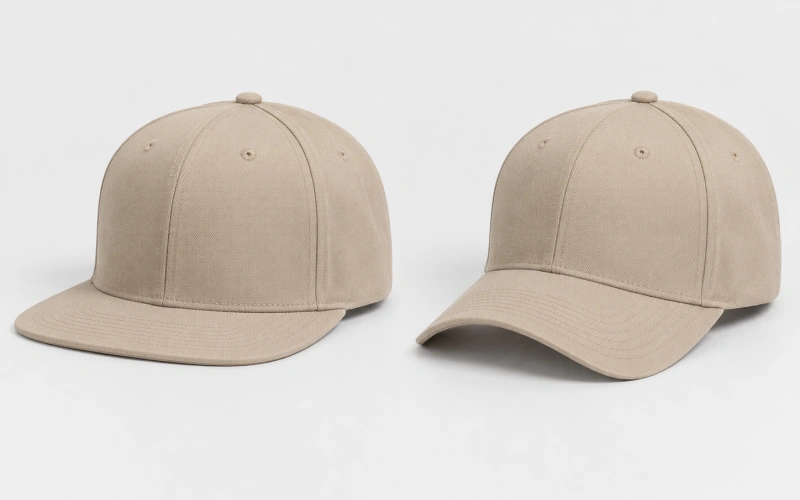
You may also hear flat bill and curved bill. In a baseball cap brief, bill and brim commonly refer to the projecting front piece. Whichever term your team uses, show the intended shape with a reference cap or clear front and side photographs. The name alone will not establish how much curve you expect in the delivered product.
Flat vs Curved Brim at a Glance
Use this comparison as a starting point, then judge the actual samples. It describes likely visual differences, not guaranteed comfort, sun coverage, or consumer preference.
| Decision point | Flat brim | Curved brim | Confirm on the sample |
| Front outline | Straighter line across the front | Visible arc across the front | Front and above views at the same angle |
| Side silhouette | Often reads as broader and more angular | Often reads as more rounded or compact | Side views on the same wearer |
| Brand direction | Can support a deliberately graphic, straight-edged look | Can support a softer, familiar cap profile | Fit with your collection and actual audience |
| Logo impression | Same front artwork may look different beside a straighter brim | The arc can change the visual balance below the logo | Decorated samples at identical logo size |
| Specification | “Flat” still needs an approved reference shape | “Curved” needs a target degree of curve | Approved sample, photographs and measurement points |
A comparison using two unrelated caps is less reliable. A high supported crown next to a soft low crown can make the brim difference look larger than it is. If the samples are different products, list every difference before you attribute a preference to the brim. The goal is to decide what your buyer is responding to, rather than merely picking a favorite photograph.
What Changes—and What Does Not
Changing the brim curve changes the cap’s visible outline. Depending on the selected pattern and finishing method, it may also change how the brim meets the crown and how it looks when worn. The amount of shade, perceived comfort, and fit are not determined by curve alone.
Brim projection, width, fabric, crown depth, sweatband, and the individual wearer matter too. If any of those outcomes are important, test it on the intended sample instead of assuming one shape always performs better.
The crown remains a separate design decision. A flat brim does not mean a high crown, and a curved brim does not mean an unstructured cap. Either direction may be paired with different panel layouts and front support when the chosen construction allows it. A five-panel cap, for example, describes its panel arrangement; “flat brim” describes the front projection. The same applies to six-panel designs and to low or high crown profiles.
Closures are independent as well. A snapback describes an adjustable rear closure, not a required brim shape. HENGXING’s published snapback options include flat and pre-curved directions. A strap closure or fitted size does not automatically tell you what curve the brim should have. Keep the crown, panel layout, closure and brim in separate lines of your brief so that a supplier does not have to infer one from another.
For a deeper explanation of the component, its terminology and construction choices, see the baseball cap brim guide. Here the decision is how to compare two finished caps for one buying program.
Which Brim Direction Fits Your Program?
Your distribution channel and intended wearer can help set a hypothesis. They do not prove that every person in that group will prefer the same brim. Start with a representative reference cap, a defined audience, and a question you can answer by reviewing samples.
Brand Collections and Graphic Merchandise
If your brand brief calls for a strong horizontal line, a flat brim may be the first direction to sample. It can work especially well when the brim is meant to be a visible part of the cap’s styling rather than a background detail.
But a fashion reference image may also include a taller crown, firmer front, or larger logo. Keep those details separate in your review. Ask whether your team still prefers the flat brim when the remaining design is held constant.
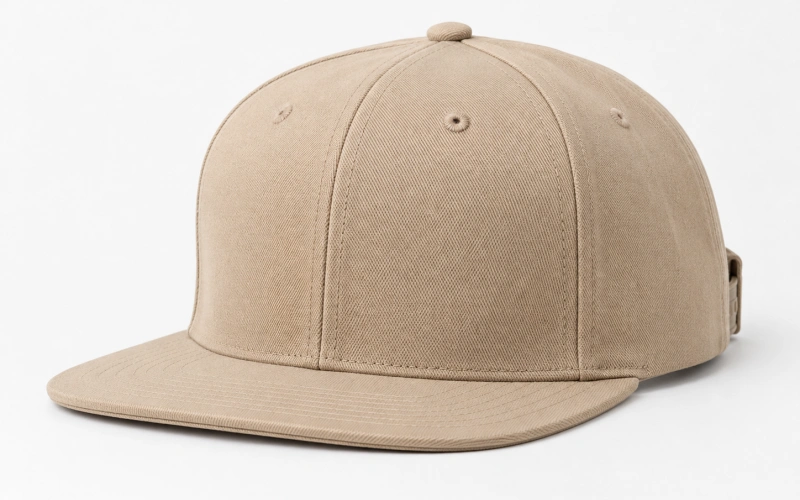
If the decision is already made and your project needs flat-brim product configurations, review HENGXING’s flat brim baseball caps separately. That product page is the place to discuss the complete style and quotation. This comparison helps you decide whether the direction belongs in the range in the first place.
Team, Event, and Everyday Programs
A curved brim may be a sensible first sample when your reference merchandise has a rounded baseball cap outline. Check what your team actually means by “classic”: one buyer may expect a mild curve, while another expects a visibly deeper arc. Ask wearers to evaluate the cap as supplied, with its actual front support and size, rather than trying to turn a flat sample into the desired finish by hand.
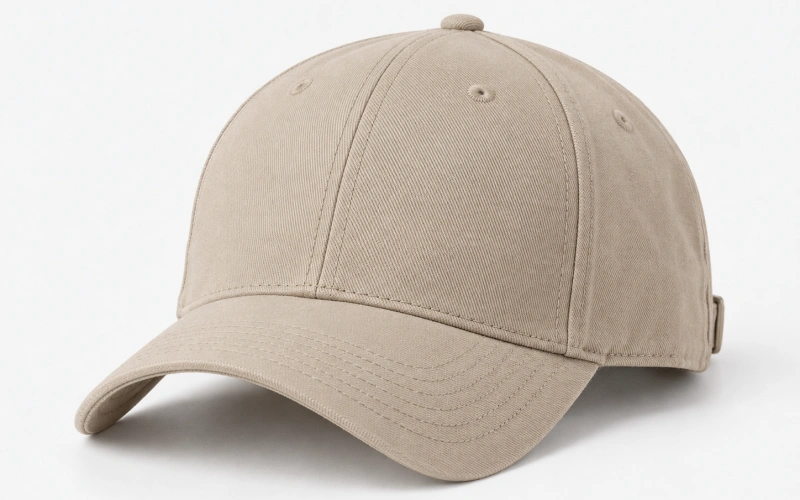
For a team or event, show the decorated sample beside other uniform or merchandise pieces. A brim that looks right in isolation can feel out of place next to the graphics, color palette, and clothing in the program. Record feedback from people who represent the intended audience instead of relying only on the design team’s preference.
Mixed Audiences and Promotional Distribution
If your program serves several wearer groups, neither brim shape is automatically the universal choice. A small sample review can expose a split: perhaps one group responds to the angular profile while another favors a gentler arc.
State how the caps will be distributed and whether multiple versions are operationally useful. If recipients cannot choose, you may prefer one broadly acceptable approved design. If they can choose, discuss separate versions with the supplier and assess the added SKU and approval work.
The question is not “Which brim is better?” It is “Which finished cap suits this audience, this artwork, and this channel?” That question gives your team criteria it can actually test.
Compare Samples on the Same Cap Base
A controlled A/B review is the clearest way to isolate the brim decision. Ask whether the selected cap pattern can be sampled in both shapes. If it can, request version A with the flatter brim and version B with the intended curve. Keep the crown pattern, panel count, front support, fabric, color, closure, sweatband, and decoration the same wherever feasible.
If a construction change is needed to make a version work, record it; you are then comparing complete alternatives, not a single changed variable.
Give each sample a version ID. Photograph it from the front, side, above, and underside, at the same distance and lighting. Add worn views on the same person or display form. An isolated front image can hide the side profile, while a close crop can exaggerate the difference. Label the photographs so reviewers know which physical sample they judged.
Put the same artwork in the same nominal position on both. Then ask reviewers to rate the whole silhouette, the relationship between logo and brim, how the cap sits on the head, and its suitability for the intended collection. Collect short reasons alongside preferences. “B looks less wide on our target wearer” is more useful for the next revision than “B wins.” If you use several wearers, record which sample and size each person tried.
HENGXING’s custom baseball caps page describes the broader cap options and project discussion. Send your reference cap, artwork, and intended quantity when asking whether a matched two-version sample comparison is feasible for your construction. Do not assume both versions will share a price, minimum order quantity, or development schedule before the project is reviewed.
Check Logo and Underbrim Details
Brim shape can change the visual frame beneath a front logo, but it does not automatically create more decoration area on the crown. The front panel and its construction determine the main logo surface. Compare the same logo at the same finished size on the two samples.
Look at the cap from the distance at which a customer will see it, then check the stitching, print, or patch up close. A mockup may be useful for direction; use a decorated physical sample for approval.
Look underneath as well. A contrast underbrim can be conspicuous on a flatter brim from certain viewing angles, while a curved brim may show it differently. The effect depends on the actual curve and how the cap is worn. If you specify a contrast color, print, sandwich edge, or other trim, review it on both finished versions. HENGXING lists brim and underbrim details among its customization options, subject to the selected hat style and project review.
Examine the edge stitching and the transition where the brim joins the crown. If the decorative concept relies on a particular visible line, photograph that line from front and side views and mark the approved sample. Do not presume that an embellishment that reads well on one shape will have the same effect on the other. Keep any revised artwork or color reference with the corresponding sample ID.
Specify the Chosen Brim Before Bulk Production
Once your team chooses a direction, turn “flat” or “curved” into an approval record. Begin with the physical sample and its version number. Add front, side, and underside photographs, plus a note identifying the approved curve as worn and as laid out for inspection. A word such as “medium curve” may help discussion, but the accepted sample is a clearer reference.
Record the brim’s forward projection and front width with agreed measurement points if those dimensions matter to the design. Ask your supplier how its pattern is measured before writing a number into the brief. Note the desired hand feel or stiffness, top and underside fabrics and colors, edge stitching, sandwich details, and any decoration on or under the brim.
The precise insert, tolerances, and compatible combinations need confirmation for the specific cap; do not copy a number from an unrelated style.
Keep the rest of the approved cap with that brim record: crown pattern and height, support, panel layout, size range, closure, logo file and placement, labels and packing instructions. A change in fabric or construction after approval can affect the finished appearance.
If you revise one of those items, identify the change and decide whether another sample is required. The production reference should be the agreed complete cap, not a loose brim or an unmarked reference photo.
Before you sign off, check the sample from all viewing angles and on an intended wearer. Confirm the artwork, underbrim, curve, and fit together. State which sample version is approved and which older versions are superseded. This simple record gives your purchasing, design and supplier teams one shared target for the order.
Can You Offer Both Versions?
You may decide that both flat and curved brim caps belong in the same program. Treat them as two defined versions, even if most other details match. Give each a SKU or unambiguous internal identifier and a separate approved sample. Record each brim shape, logo placement, underbrim treatment and packaging detail against the correct version. If colorways vary, specify which color is available in which shape.
Discuss estimated quantities for each version before requesting a quotation. Two smaller allocations can have different material, sampling, or production implications from one larger design. HENGXING can review your project brief, but feasibility, pricing, minimum quantities, and timing should be confirmed for the proposed configurations.
If your goal is to offer a choice to buyers, make sure the order form and product images identify the two versions clearly; “same cap, different brim” may hide other sample differences.
One practical approval sheet can list version A and version B side by side. Attach the labeled photographs and sample IDs, then obtain approval for each. If a later change affects only one version, update that record without silently changing the other. This approach is useful even if your team ultimately selects just one version: the rejected sample remains a documented comparison, not an ambiguous reference for future orders.
FAQs
Is a Flat Brim Hat the Same as a Snapback?
No. Flat brim describes the front brim shape; snapback describes a plastic adjustable closure at the back. A snapback can have a flat or pre-curved brim depending on the design. State both choices in your brief, along with the crown profile and panel layout, rather than relying on “snapback” to specify the complete cap.
Does a Curved Brim Change the Cap Size?
Brim curve by itself does not define the head opening or size. A different complete cap pattern, crown depth, sweatband, or closure can change the way a cap fits, however. When you compare flat and curved versions, try both in the intended size and note any construction differences. Approve the fitted sample rather than inferring fit from its brim.
Can You Bend a Flat Brim After Delivery?
Some finished brims may allow limited reshaping, but the result depends on their insert and assembly. Hand-bending a bulk order is not a reliable substitute for specifying the intended delivered shape. If you want a curved result, request and approve a sample in that curve before production. The baseball cap brim guide explains this limitation in more detail.
Which Is Better for a Logo: Flat or Curved?
Neither shape is inherently better for every logo. The main decoration surface is the crown’s front panel, while the brim influences the composition beneath it. Put the same artwork at the same finished size on both versions and compare decorated samples. Check the result worn, from the front and at a normal viewing distance.
How Should You Approve Two Versions for One Order?
Give each version its own ID, labeled photographs, and physical approval sample. Record the intended brim curve, all other agreed details, quantities, and packaging separately. If one version changes after review, issue a new version number and state which earlier sample it replaces. Confirm the commercial terms for each configuration before ordering.
Request a Brim Sample Review
Send HENGXING a reference cap or clear front, side, and underside images, your artwork, intended wearer group, estimated quantity, and the brim directions you want to compare. Explain whether your team is choosing one cap or considering two versions.
You can discuss the complete design through the custom baseball caps range; if your decision is specifically a flat-brim product, see the flat-brim baseball caps options. Agree on the sample scope and approval criteria before treating either version as the production target.