
Yes. Baseball caps protect from sun exposure in the areas they cover or shade. The crown covers the top of your head, and the front bill shades part of your forehead and nose. A standard cap still leaves your ears, much of the sides of your face, and the back of your neck exposed. Fabric performance varies too. The practical answer is partial protection, not complete coverage. ARPANSA’s guidance on hats explains why.
If you wear a cap for outdoor work, sports, or everyday use, look at both the shade it casts and the fabric over your scalp. A longer bill may change the shade at the front; it cannot cover your ears. A UPF rating, when verified for the relevant material, tells you about UV transmission through that material. It does not rate the skin left uncovered by the hat.
What Parts of Your Head and Face Does a Baseball Cap Protect?
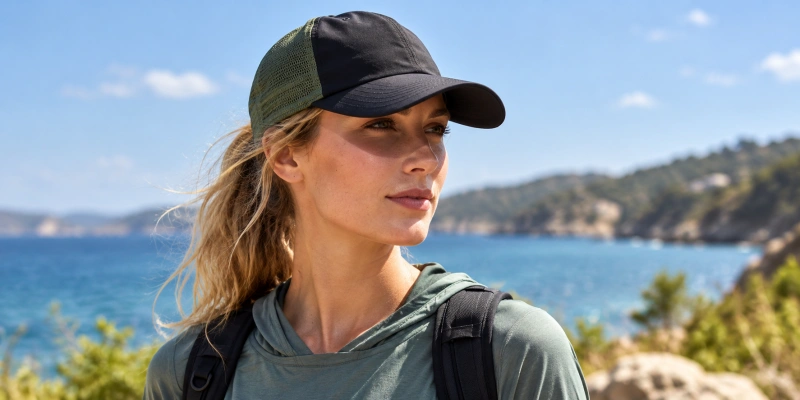
The crown sits over the scalp while the bill projects forward. The crown covers skin beneath its panels, subject to the fabric’s UV transmission. The bill blocks some direct sunlight from the front, but the shadow shifts as the sun moves or you tilt your head. No part of a standard front bill wraps around the ears or neck.
| Body Area | Typical Baseball Cap Coverage |
| Scalp and top of head | Covered by the crown where fabric is present; UV transmission depends on the panels. |
| Forehead | Usually gets direct shade from the front bill. |
| Eyes and nose | Often receive some forward shade; the amount changes with angle and fit. |
| Cheeks and sides of face | Limited and variable shade, particularly away from the center front. |
| Ears | Generally exposed on a standard cap. |
| Back of neck | Generally exposed without a separate flap or other covering. |
| Chin and lower face | Little direct shade from a typical front bill. |
The pattern matches ARPANSA’s comparison of hat styles: the cap studied shaded the forehead and nose more than the cheeks, ears, chin or neck. A headform study using UV-sensitive badges also found that peaked baseball-style caps protected the nose better than other facial sites. These are measurements of particular designs and positions, not protection scores for every cap on sale.
How Much Sun Protection Does a Baseball Cap Provide?
There is no single protection number for every baseball cap. You need to consider the skin shaded by the bill, the skin covered by the crown, and the UV that can pass through its fabric. A rating for one of those things cannot stand in for the others.
Shade From the Crown and Bill
The bill’s shadow depends on the angle of sunlight and how low the cap sits. It does not seal off the shaded area: scattered or reflected UV can still reach the face. On cloudy days, indirect UV makes the protection from a hat less predictable, as ARPANSA explains. Ventilation holes and open crown panels also interrupt the fabric covering your scalp.
UV Transmission Through the Fabric
UPF, or Ultraviolet Protection Factor, describes how much UV radiation passes through tested material. SPF is a sunscreen rating; the shade cast by a bill does not give the hat an SPF. A UPF result for the crown fabric also says nothing about the uncovered ears and neck.
Cotton, polyester, and nylon are fiber names, not measured UV ratings. Weave or knit structure, openings, color, layers, and the finished configuration can change performance. ARPANSA tests fabrics and hats for UPF, which is why a specific claim should be backed by a report that matches the material or product being sold. Without that evidence, “UPF 50+” or a UV-blocking percentage would be guesswork.
Is a Baseball Cap Enough Sun Protection?
No, not by itself when meaningful sun exposure is expected. A standard baseball cap leaves the ears and back of the neck exposed, and the front bill cannot shade all of the face at every sun angle. Even a well-fitted cap with a tested crown fabric does not cover skin outside its silhouette.
ARPANSA advises using hats with other sun-protection measures; the CDC’s sun-safety guidance specifically says that baseball-cap wearers should cover the ears and back of the neck with clothing, use sunscreen, or stay in shade.
If you need shade at the sides and back, consider a hat with a suitable surrounding brim. Sunglasses help protect the eyes, while clothing and sunscreen can address exposed skin. A cap may still be the preferred uniform or everyday style; plan those other measures around the areas it leaves open.
What Makes One Baseball Cap Better for Sun Protection Than Another?
If you are choosing a cap for sun exposure, compare the actual construction on a wearer, not only a style name or front-view photo. The following features affect coverage or the evidence available for a performance claim.
Bill Projection, Shape, and Position
A farther-projecting bill may put more of the forehead or nose in shade at one sun angle, yet give less shade as the light moves. Width and curvature also change the shadow near the sides of the face. Put a sample on a wearer and check it from the front and side. The baseball cap brim guide explains the construction and measurement terms.
Do not convert research on a wide brim running around a hat into a claim about a front-only bill. The Diffey and Cheeseman study discussed brims greater than 7.5 cm for reasonable coverage around the nose and cheeks; that finding does not make a 7.5 cm baseball-cap bill a complete sun-protection design.
Crown Panels and Fabric Construction
Check which panels are solid, which are open, and how the cap fits over the scalp. A solid front with mesh side and back panels does not cover the entire head in the same way as a cap with solid panels throughout.
Dense, tightly woven material is generally a better starting point for UV screening than visibly open material, as the CDC explains for sun-safe clothing and hats. Still, density or thickness by eye cannot establish a particular UPF number. For a fuller discussion of fiber and panel choices, see baseball cap materials.
Verified Performance and Wearable Fit
If the purchase brief requires a UPF claim, identify the exact tested fabric or finished cap, colorway, and relevant components in the report. Confirm that the documented result applies to the version you intend to order.
Treat a supplier swatch, an unrelated cap, or a different color as a prompt to check scope rather than proof for every variant. Fit matters too: a cap pushed high on the head or worn backward changes where the front bill shades. A stable sample that wearers can position as intended makes the construction easier to evaluate.
Do Mesh Baseball Caps Protect From the Sun?
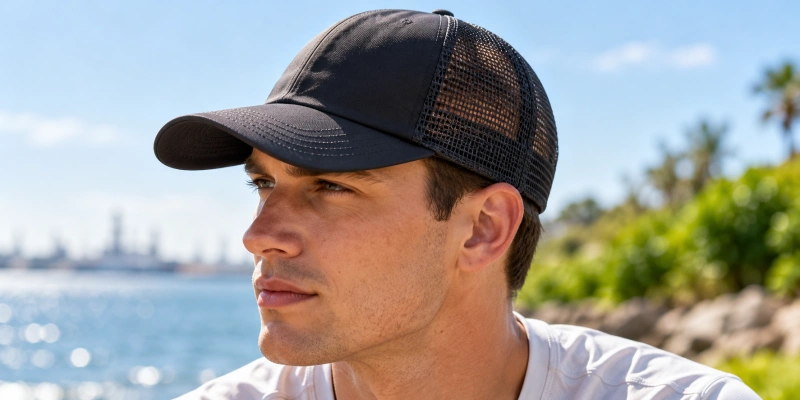
Partly. On a mesh-back or trucker-style cap, the front bill can still shade part of the face, and a solid front panel can cover part of the scalp. The open mesh behind or beside it has gaps, however. You should not assume that those panels screen UV in the same way as a solid, tightly constructed fabric. How much UV a particular mesh transmits depends on its actual construction and, where a rating is claimed, test results.
“Mesh cap” may mean a solid front with mesh sides and back, or a crown with much more open material. Compare the panel layout on the actual sample: where does the mesh begin, how open is it, and what skin sits beneath it? Mesh can provide ventilation, but that benefit cannot establish a UV rating. CDC guidance favors tightly woven materials over those with visible gaps for sun protection.
Baseball Cap vs Bucket Hat for Sun Protection
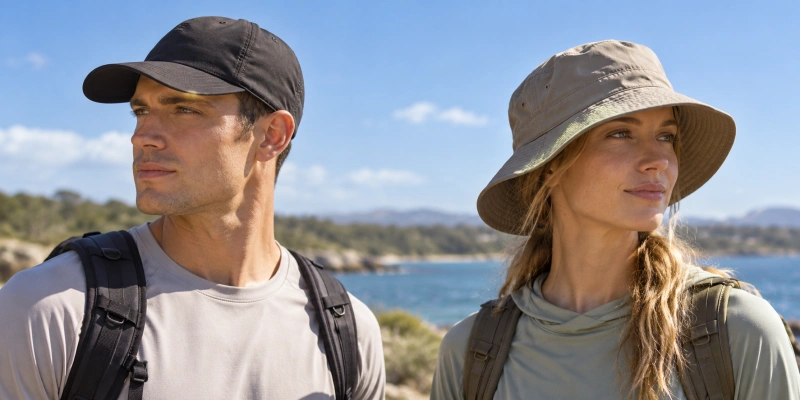
A standard baseball cap directs its shade mainly forward. A bucket hat has a brim around the crown and can shade more of the sides and back, provided the brim is broad enough and sits in a useful position. A narrow fashion bucket brim should not automatically be treated as protective, and neither shape establishes a fabric UPF rating.
ARPANSA favors wide-brimmed bucket styles over a baseball cap when broader facial, ear, and neck shade is the goal. See its comparison.
Our baseball cap vs bucket hat comparison covers the broader differences in fit, shape, and branding area.
How to Specify a Baseball Cap When Sun Exposure Matters?
For a brand, team, or wholesale order, turn “sun protection” into details that a sample and specification can actually confirm. Start with the intended setting and how long wearers may be outdoors. Then describe the coverage you need without promising more than a front-bill cap can deliver.
- Bill: State the desired projection, width, curve, and how the approved sample should sit when worn. Ask for dimensions from the same measurement points on each sample.
- Crown and panels: Identify solid and mesh panels, ventilation openings, lining, and the size and depth range. Review the cap on representative wearers, including side and back views.
- Fabric: Give composition and construction or an approved swatch, then ask whether any sun-performance requirement applies to each fabric, color, and component.
- Claim and evidence: If marketing copy will state a UPF rating, agree on the applicable test method, report scope, tested material or finished hat, and how each variant will be documented before approving that claim.
- Sample review: Check the final arrangement in wear, not just a flat material swatch. Recheck coverage if you change the bill, panel layout, fabric, or mesh after approval.
HENGXING can discuss cotton, polyester, nylon, and mesh choices, as well as drawing-based or sample-based customization. Confirm the combination on a sample and obtain a report for the relevant material or design before making any UPF claim. If side and rear shade is essential, a different hat shape may serve the program better.
FAQs
Does a Baseball Cap Still Help on a Cloudy Day?
It can cover the scalp and cast some shade, but clouds do not remove UV exposure. Indirect and scattered UV can reduce the benefit of shade from the bill. Judge the cap by the skin it covers and use other protection when conditions call for it. ARPANSA discusses this limitation.
What Changes if You Wear the Bill Backward?
The crown still covers the same panels of your head, but the bill now shades behind you instead of in front of your face. If forward facial shade is the reason you chose a baseball cap, wear the bill facing forward.
Does a UPF-Rated Cap Protect Your Ears and Neck?
A UPF rating applies to the tested material or product described in the report. It cannot cover skin outside the hat. A standard baseball-cap shape still leaves the ears and back of the neck exposed, even when its crown fabric has a verified rating.
Does a Darker Cap Fabric Always Block More UV?
Color can affect UV transmission, and the CDC notes that a darker hat may offer more protection. But color alone does not tell you the UPF of a specific cap. Compare test results for the actual fabric and color if a rated claim matters.
Discuss Your Custom Cap Specification
If you are developing an outdoor cap program, send HENGXING your reference design, intended use, bill and panel preferences, material choices, quantities, and any required UPF documentation. We can review the construction and sampling needs for custom baseball caps and identify which performance questions need evidence before they become product claims.