
A snapback hat is an adjustable cap with two plastic straps at the back. One strap has raised studs, the other has a row of holes, and pressing them together changes the hat’s circumference. That closure—not the brim shape or crown height—is what makes a cap a snapback.
The familiar version has a firm, fairly tall crown and a flat visor, but that is only one combination. A snapback can be low profile, unstructured, curved-brimmed, five-panel, six-panel, or mesh-backed. If you want to compare the types of snapback hats by panel layout, crown profile, structure, brim shape, and back construction, see our full classification guide.
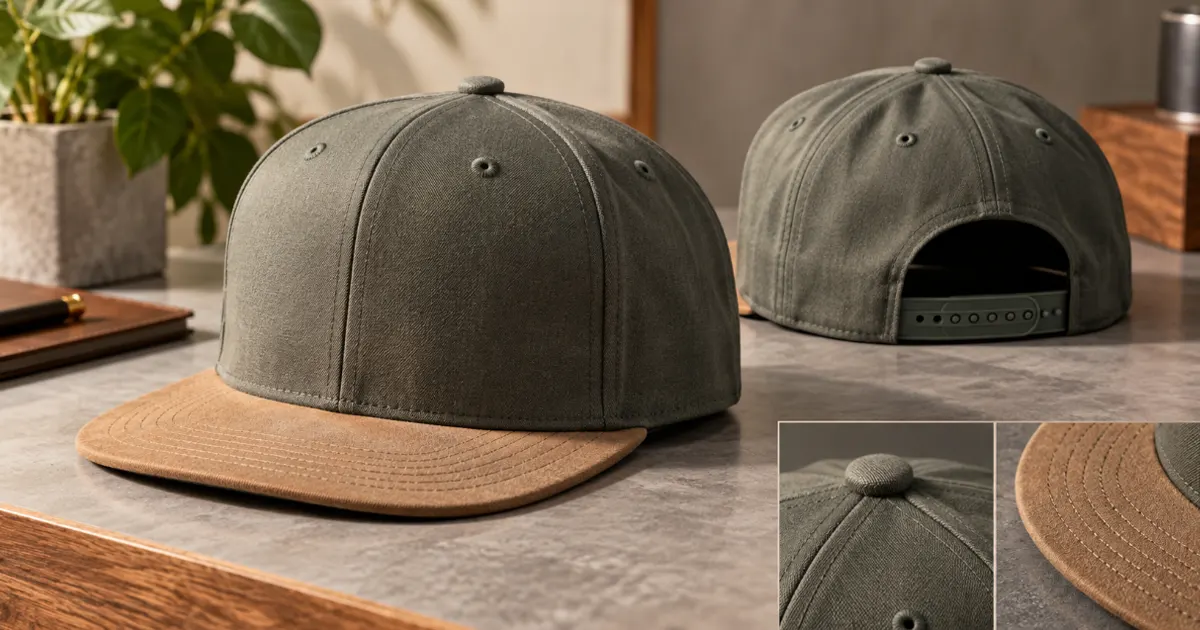
Snapback Features at a Glance
| Part | Common choice | What can vary |
|---|---|---|
| Closure | Two interlocking plastic straps | Color, flexibility, number of positions, and opening shape |
| Crown | Structured, mid- or high-profile | Low profile and unstructured versions also exist |
| Panels | Five or six | Seam layout and front-panel shape |
| Visor | Flat or lightly curved | Pre-curved visors are also possible |
| Material | Cotton or polyester twill | Canvas, wool blends, nylon, corduroy, foam, and mesh |
| Fit | Adjustable circumference | Crown depth and head shape remain fixed by the pattern |
The Snap Closure Defines the Hat
The name comes from the quick snapping action at the back. Moving the connection by one or more positions makes the sweatband circumference smaller or larger. Compared with a buckle or fabric slider, the setting is easy to see and usually stays in a fixed hole until you change it.
Adjustment has limits. The closure changes circumference, but it does not change crown depth, front angle, or the width across your temples. If the crown is too shallow, opening the snap may stop the band from feeling tight while the cap still perches high. If the crown is too deep, tightening the closure can leave excess fabric above or behind your head.
A comfortable setting should hold the hat without pinching. The back opening should remain balanced, and the plastic tabs should not dig into your head. Check the fit a few positions on either side of the middle rather than assuming every setting feels the same. If you are comparing this adjustable closure with a fixed-size cap, see our fitted hat vs snapback comparison for the differences in sizing, fit, and rear construction.
Crown Structure and Profile
Many snapbacks have buckram behind the front panels. Buckram is a firm backing that helps the crown stand upright instead of collapsing against your forehead. It gives the cap a crisp face and supports bold embroidery or patches.
That construction is common, not mandatory. An unstructured snapback uses the same closure with a softer crown, so the fabric follows your head more closely. A lightly supported crown sits between the two. The structured vs unstructured hat guide explains why support and crown height should be judged separately.
Profile describes how high and deep the crown sits. A high-profile snapback leaves more visible space above the visor and creates a stronger, more vertical front. A low-profile version slopes back sooner and feels less bulky. Neither profile is universally more comfortable; the better choice depends on your head shape, hair, and how much room you like above your forehead.
5-Panel vs 6-Panel Snapbacks
A 5-panel snapback often uses one broad piece across the front. With no full-length center seam, wide prints, patches, and horizontal logos have a cleaner path across the middle. The crown may be a shallow camp shape, a tall pinch front, or a foam-front trucker construction.
A 6-panel snapback has two front panels joined by a vertical seam. The wedge-shaped pieces usually create a rounder baseball-cap silhouette. Centered embroidery can cross the seam, although tiny letters and perfectly straight lines may show more movement where the fabric layers meet.
Panel count does not settle the fit. Side-panel angle, rear depth, front height, and the visor-to-crown relationship matter just as much. Compare the actual shapes in the 5-panel vs 6-panel hat guide.
Does a Snapback Have to Have a Flat Brim?
No. A snapback can have a flat, gently curved, or pre-curved visor. “Snapback” tells you what happens at the rear of the cap, not at the front.
A flat visor reinforces the sharp, streetwear-oriented silhouette many people associate with snapbacks. A curved visor frames the face more closely and can make the same crown feel more familiar and athletic. Some flat visors can be shaped by the wearer, but the board, stitching, and original construction affect how well the curve holds.
The visor also changes perceived fit. A wide, flat visor can make the front look broader, while a stronger curve draws the edges inward. If a cap feels right but looks wrong, the issue may be visor width or curve rather than crown size.
How Should a Snapback Fit?
The sweatband should sit level and feel secure without leaving strong pressure at your temples or forehead. The crown should reach the top of your head as intended rather than hovering above it or collapsing into it. At the back, the opening should not spread so far that the rear panels pull into sharp diagonal lines.
Head circumference is only the first check. Two people with the same measurement can prefer different snapbacks because one has a rounder head, more hair, or a higher crown preference. If you are between comfortable settings, a different crown block may work better than forcing the closure tighter.
People sometimes call snapbacks “one size fits all,” but “adjustable” is more accurate. Every closure has a usable range, and the fixed crown pattern still has to suit the wearer.
Materials and Mesh-Back Variations
Cotton twill gives a snapback a familiar matte surface and a substantial hand. Polyester twill can feel smoother and helps maintain a clean uniform appearance. Canvas is usually firmer and more textured; wool blends can add warmth and a classic sports feel; nylon can create a lighter, more technical direction. Weave, weight, finish, and lining change the result as much as the fiber name.
A mesh-back snapback replaces solid side and rear panels with open mesh. Air moves through the back more directly, and the mesh often helps the crown keep a recognizable trucker shape. Because many trucker hats also use a plastic snap, one cap can belong to both categories. The difference is easier to see in the article on what a trucker hat is.
Do not assume that synthetic fabric automatically makes a snapback quick-drying, waterproof, or UV-protective. Those properties depend on the specific fabric construction, finish, and finished product. The hat materials guide separates material names from actual performance claims.
Logo and Decoration Options
Structured fronts usually give embroidery a stable base. Flat embroidery works for many letterforms and emblems, while 3D puff adds height to bold shapes. Fine text, narrow gaps, and small details tend to suit flat embroidery or a woven patch better than thick foam embroidery.
Five-panel fronts reduce center-seam interference, but the assembled panel is still curved. Six-panel snapbacks can carry excellent embroidery, although the seam adds thickness under the center of the design. Patches, screen printing, and heat transfers each react differently to fabric texture, coatings, foam, and crown curvature.
Look at a decorated cap from normal viewing distance, not only in a close-up. A technically neat logo can still appear too tall for a low crown, too narrow for a high front, or visually off-center once the visor curves below it.
Snapback vs Other Baseball Caps
| Style | What defines it | Main difference from a snapback |
|---|---|---|
| Dad hat | Soft low crown, curved visor, and usually a fabric strap | The relaxed feature bundle matters more than a snap closure |
| Fitted cap | Closed back in a specific size | No adjustable rear closure |
| Trucker hat | Solid front with mesh side and rear panels | Mesh construction defines the category; many truckers are also snapbacks |
| Strapback | Fabric or leather strap with a buckle or slider | Adjusts without interlocking plastic tabs |
How to Choose a Snapback
Start with crown fit. Decide whether you like a close, sloping front or extra room above your head, then choose structure. A firm front gives you a sharp shape; a soft front looks quieter and folds more easily.
Next, choose the visor and material for the way you will wear the hat. A curved visor and soft twill suit an easy everyday look. A flat visor and firm front create more visual weight. Mesh changes ventilation, while dense canvas or wool blends feel more substantial. Finally, make sure the logo scale belongs on that exact crown rather than forcing the crown around the artwork.
What You Find Inside a Snapback
The outside gives a snapback its silhouette, but the interior often explains how it feels. The sweatband forms the lower edge around your head. Its thickness, stiffness, and ability to manage moisture can make two similar-looking caps feel noticeably different.
Seam tape covers or reinforces the joins inside the crown. Eyelets create small ventilation openings, while the top button finishes the point where crown panels meet. On a structured cap, buckram sits behind the front fabric. Some designs also use foam, lining, or backing under the logo, which can make the front feel thicker than it appears.
The snap closure sits beside the rear opening, so its shape affects comfort when the hat is worn backward. Flexible plastic usually follows the curve of the head more easily than a thick rigid tab. Hair also passes through the opening differently depending on its height, width, and the position of the closure.
Snapback Fit Problems and What They Mean
| Fit problem | Likely cause | What to try |
|---|---|---|
| Pressure at the temples | Band is tight or crown is too narrow | Open one snap position; if pressure remains, try a broader crown |
| Cap sits above the top of the head | Crown is too shallow | Choose a deeper mid- or high-profile shape |
| Too much empty space above the head | Crown is too deep or tall | Try a lower profile with a faster backward slope |
| Rear panels pull into diagonal lines | Closure is near the edge of its useful range | Try another crown size or pattern instead of forcing the setting |
| Snap tabs press when worn backward | Closure is stiff or opening sits low | Compare softer hardware or a differently shaped rear opening |
| Visor looks tilted | Crown, center seam, or visor angle is unbalanced | Check the cap from the front before reshaping the brim |
If opening one position makes the hat loose but the tighter setting hurts, the issue may be the spacing between snap holes rather than your head measurement. A different closure or crown block can give you a better middle ground.
When a Snapback Works Best
A structured high-profile snapback suits a bold silhouette. The upright front keeps a large emblem visible, while the adjustable back avoids the exact size commitment of a fitted cap. This combination has strong visual presence, so it may feel too tall if you prefer a cap that disappears into your outfit.
A mid-profile snapback is easier to blend into everyday wear. It keeps the familiar closure but reduces the space above the head. With a slightly curved visor, it can look closer to a classic sports cap than a flat-brim streetwear style.
Low-profile and unstructured snapbacks feel softer and less formal. They work well when you want quick adjustment without the crisp front of a traditional snapback. Mesh-back versions make sense in warm settings or whenever the trucker look is part of the design, although the mesh hand and front material still influence comfort.
For outdoor movement, look beyond the closure. A lighter shell, secure crown depth, flexible visor, comfortable sweatband, and controlled ventilation matter more than the fact that the hat snaps at the back.
How to Care for a Snapback
Start with the care label because the shell, visor board, plastic closure, logo, and any coating may react differently to water and heat. Spot cleaning with mild solution is often safer than soaking a structured crown. Scrubbing across raised embroidery can roughen thread or distort the surrounding fabric.
Keep the front supported while the cap dries. A damp structured crown can take on dents if it is pressed flat, and strong heat may affect plastic hardware, adhesives, coatings, or visor shape. Air-dry the cap in its natural form rather than forcing it into a dryer.
If you curve a flat visor, make gradual adjustments. A sharp bend can create a crease in the board or make the visor asymmetrical. Work from the center toward the sides and compare both edges as the curve develops.
FAQs
Why is it called a snapback?
The name refers to the plastic straps that snap together at the back of the cap.
Are snapback hats adjustable?
Yes. The rear tabs provide several circumference settings, but the crown depth and shape do not change.
Are all snapbacks high profile?
No. High-profile structured versions are common, but snap closures also appear on low- and mid-profile caps.
Can a snapback have a curved brim?
Yes. The visor can be flat, lightly curved, or pre-curved because brim shape is separate from the closure.
Is a snapback the same as a trucker hat?
Not always. A trucker has mesh side and rear panels. It is also a snapback only when it uses the plastic snap closure.
Do snapbacks fit every head?
No adjustable cap fits every head equally well. The snap changes circumference, while crown depth, width, and profile remain fixed by the pattern.
Conclusion
A snapback is defined by its adjustable plastic closure, while the crown, panels, visor, material, and fit remain separate choices. HENGXING can combine those details into custom snapback hats for a specific collection or design direction.