
Pull a beanie over your head until its edge rests comfortably on your forehead. Adjust the sides to cover your ears when you need warmth, or wear the edge higher for an exposed-ear look. Smooth any extra fabric toward the back so it drapes naturally instead of bunching on top.
A good fit stays in place when you move without squeezing your forehead. Check it from the side as well as the front, since extra length often becomes visible at the back. Once you have that fit, a cuff, a higher position, or a longer crown can change the look in seconds.

How to Wear a Beanie Properly?
Step 1: Position the Beanie on Your Forehead
Pull the beanie on until its front edge rests on your forehead without digging in. Look straight ahead in a mirror and move it a little higher or lower. If it covers your eyebrows or crushes your bangs, slide it back. If it keeps riding up, the opening may be too tight or the hat too short for the position you want. Showing more forehead is fine as long as the beanie still stays put.
Step 2: Adjust the Cuff and Ear Coverage
If the beanie has a cuff, even out the fold so one side does not sit higher than the other. In cold weather, pull the sides over your ears if the hat is deep enough. A shorter style can sit above the ears, but it will provide less coverage. Check the back edge, too: it should follow the position you set at the front. If a short hat will not reach your ears comfortably, choose a deeper one rather than stretching it down.
Step 3: Shape the Crown Without Excess Bunching
Smooth the fabric from front to back with your hand. A little space at the crown is fine, but a lump on top often means the extra length needs to move backward. For a neater fit, gently pull down the back edge and flatten the crown. For a looser look, let the extra fabric fall behind your head. Turn your head once to make sure the beanie remains secure.
4 Practical Ways to Wear a Beanie
The difference between these looks is the position of the lower edge, the fold, and the extra fabric at the crown. Some beanies can be worn more than one way.
1. The Close-Fitting, Pulled-Down Look
For a close fit, set the lower edge level across your forehead and pull both sides down evenly. A cuffless beanie makes a smooth outline, though a cuffed one can also sit close to the head. If you want coverage, choose a hat deep enough to reach over your ears without pulling tight at the crown.
Smooth the top with your palm so it follows your head instead of standing upright. The result is a tidy shape that works with a casual jacket or coat. If the hat feels strained when you pull it down, a deeper fit will be more comfortable.
2. The Classic Single-Cuff Look
Fold the lower edge up once and keep the cuff even all the way around. Set the front where it feels comfortable, then straighten the fold at the back. Because the cuff uses some of the hat’s length, the same beanie may sit higher than it does unfolded. Try it on before deciding whether it still covers your ears enough.
You can make the fold deeper if there is enough length, but leave room for the crown to settle. Look at the fit from the side and adjust the cuff until it sits evenly. An unfolded edge may feel better on some days; the fold is an option, not a rule.
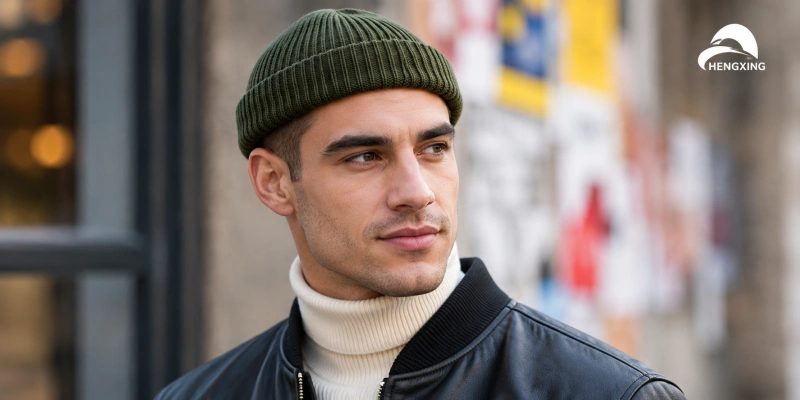
3. The High-Fit Fisherman Look
Set a short beanie or compact cuffed style high on your head, with its edge above or around the upper part of your ears. Center the front and adjust the back until the hat feels stable. There should be little spare fabric at the crown. If it slips upward whenever you move, try a different opening or body depth instead of pulling the fold tighter.
The ears are often exposed in this look, so it suits milder conditions better than a hat pulled down for coverage. A fisherman beanie can be made short from the start; it does not have to be a long beanie folded twice.
4. The Relaxed Slouchy Look
Choose a longer beanie and set its lower edge in a comfortable, secure position. Pull the spare fabric toward the back and let it fall naturally instead of stacking it on top. You can fold up the edge once if the hat is long enough, or leave it unfolded for a softer line.
Look at the back in a mirror. If the slouch pulls the front off your forehead, shift some fabric forward or try a shorter hat. If it stands straight up, the knit may be too firm to drape. The edge should stay in place while the crown falls behind your head.
For a closer look at the shapes themselves, see our guide to different types of beanies.

How to Wear a Beanie With Different Hairstyles
How to Wear a Beanie With Long Hair
Leave your hair down as you pull the beanie on, letting it fall outside the hat. Bring some forward on each side or leave it behind your shoulders. Free any strands caught under the back edge, then adjust the front so it does not press hard against your hairline. With long, straight hair, leaving some visible around your face can soften the outline.
For a low ponytail, tie your hair at the nape and let it come out below the back edge. Place a low bun below that edge, too; if it pushes the hat upward, move the bun lower or wear your hair loose. A high ponytail or topknot will usually sit awkwardly under a standard beanie, so choose another hairstyle or a hat designed with an opening. Check the side and back before you go out to make sure the hat sits on your head rather than on the hair tie.
How to Wear a Beanie With Short Hair
With short hair, small changes at the front make a visible difference. Set the beanie high enough to show the amount of fringe you like, then check both temples. Leave a little hair visible near the ears or tuck it in for a cleaner outline. If the hat pushes your hair in the wrong direction, take it off, rearrange your hair and put it back on gently. Try both a high fit and a lower one to see which feels right.
How to Wear a Beanie With Curly Hair
Ease the beanie over your curls rather than pulling it down hard. Leave enough room at the crown and let some curls show at the front or sides if you like. If the edge presses too firmly at the hairline, wear it a little higher or try a roomier fit. Lift the hat off instead of dragging it through your curls, then arrange them with your fingers. A beanie can still flatten hair after a while; a gentler fit simply gives you more room to work with.
How to Wear a Beanie With Bangs
Arrange your bangs first and place the front edge behind the part you want to show. Lower the beanie from above without dragging it through your hair. Sweep longer bangs to one side if they get caught; for shorter bangs, try wearing the hat a little higher. Make sure the back still feels secure after moving the front.
How to Style a Beanie With Everyday Clothes
A close-fitting beanie looks neat with a simple coat or plain jacket. A higher fisherman fit can work with relaxed streetwear when you want more hair to show. In cold weather, choose enough ear coverage first, then check that the hat and scarf sit comfortably together.
A slouchy beanie pairs easily with softer, roomier layers. If you are wearing a hood, look at the back of the hat as well: a long slouch can bunch underneath it. You can keep the color quiet or use the hat as a brighter accent. For full clothing combinations, see our beanie outfit ideas.
Common Beanie-Wearing Mistakes and How to Fix Them
If the edge hides your eyebrows, lift it enough to reveal them. If the crown forms a lump, smooth the extra knit backward; if it still piles up, choose a shorter hat. A beanie that keeps riding upward may be too short or tight for the low position you want. One that drops over your eyes may be too loose or too deep. Neither problem is solved by repeatedly tugging it into place.
If you feel pressure along your forehead, take the hat off and try a roomier fit. If your hair looks flat, leave more of it visible at the front and avoid pulling the hat down farther than you need. Think about the weather, too: a high fit leaves the ears exposed even when the knit itself feels warm.
FAQs
Should a Beanie Cover Your Ears?
For cold weather, covering the ears usually makes more sense. Choose a beanie deep enough to reach them comfortably, including at the back. If the weather is mild or you prefer a high fit, the ears can remain exposed. The right position depends on the coverage you need.
How Do You Wear a Beanie With Glasses?
Put on your glasses, then set the beanie edge above the arms of the frames or lightly over them—whichever feels comfortable. If the knit presses the arms against your temples or shifts the frames, raise the edge slightly. A thick cuff may need to sit higher. If the frames have wide arms, leave more space at the temples. Turn your head to make sure both the glasses and hat stay in place.
How Do You Keep a Beanie From Slipping?
An even cuff and a secure back edge help the hat stay put. If it still rises off your ears or slips over your eyes, its depth, opening size, or stretch may not suit the way you want to wear it. Try another fit rather than making an uncomfortable one tighter.
How Can You Wear a Beanie Without Flattening Your Hair?
Arrange your hair before putting the hat on and avoid trapping a bun under a close crown. Wear it a little higher when you do not need full coverage. After removing it, lift your hair at the roots with your fingers. Some flattening is normal, especially after wearing a snug beanie for a long time.
What Makes a Beanie Fit Differently? A Manufacturer’s Note
Beanie length, cuff depth, and knit structure all change the fit. A longer body can fall backward; a deeper cuff leaves less length above the fold. The knit’s stretch and recovery affect how the edge holds around the head. A pom-pom adds a visual detail, but does not create another way to wear the hat.
If you are developing a beanie range, try these details on a physical sample in the position your customers are likely to wear it. HENGXING can discuss the construction and sampling of custom beanies for that intended fit.