
Before you approve a custom hat sample, identify the physical sample and the versions of the tech pack, artwork, materials list, and measurement rules used to make it. Compare the hat with those references, record any differences, and decide whether to approve it, request a revision, or put the decision on hold.
Recheck any corrections before written sign-off. The factory then needs to confirm that its production files and purchase order match the approved version before bulk production begins.
Use the tables below as a working checklist and approval record. They are examples you can adapt to your order, not a fixed tolerance or sampling policy. Measurements, tolerances, sampling times, and fees are agreed for each project.
What Is Custom Hat Sample Approval
Sample approval records your decision about a specified version of the hat. It should state the style, colorway, size, decoration, and components you reviewed, along with any agreed exceptions. A “looks good” email is hard to act on if the buyer and factory have different versions of the artwork.
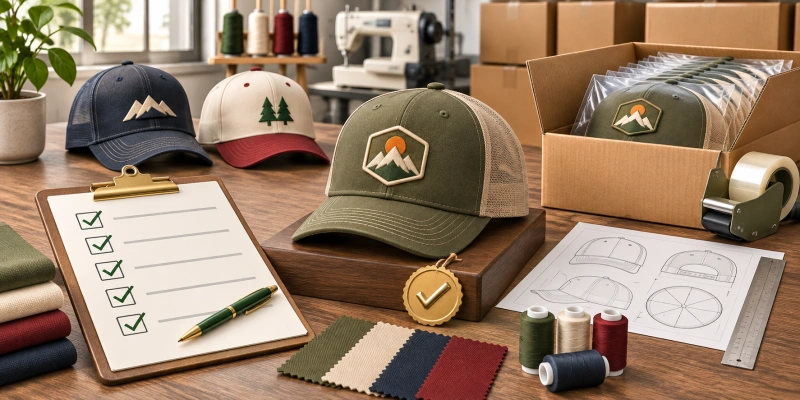
Understanding the Different Sample Approval Stages
| Review item | What you can judge | What it does not establish |
| Digital proof | Artwork wording, layout, intended logo size and placement shown in the drawing | Finished crown shape, hand feel, fit, and decoration on the actual material |
| Decoration sew-out, where used | Stitch appearance, color direction, and legibility on the chosen test material | Fit and full construction of the assembled hat |
| Physical pre-production sample | The assembled hat’s shape, fit, materials, brim, closure, decoration, and finishing | Every unmade colorway, size, packing combination, or unstated tolerance |
An approved digital proof guides sample making; approval of the assembled hat comes later. The retained physical reference after final approval is often called a golden sample. Production checks also rely on the written specifications and order requirements. HENGXING describes material, pre-production sample, in-line, final, and packing checks in its quality control process.
What to Prepare Before Reviewing a Custom Hat Sample?
Put the sample beside the latest agreed documents. Read its tag or accompanying note for the style number, sample ID, version, colorway, and date. Sample and artwork versions can have different numbering. What matters is whether the record links this sample to the correct artwork revision. If the sample was made from artwork R1 but the latest agreed artwork is R3, clarify which one you are being asked to approve.
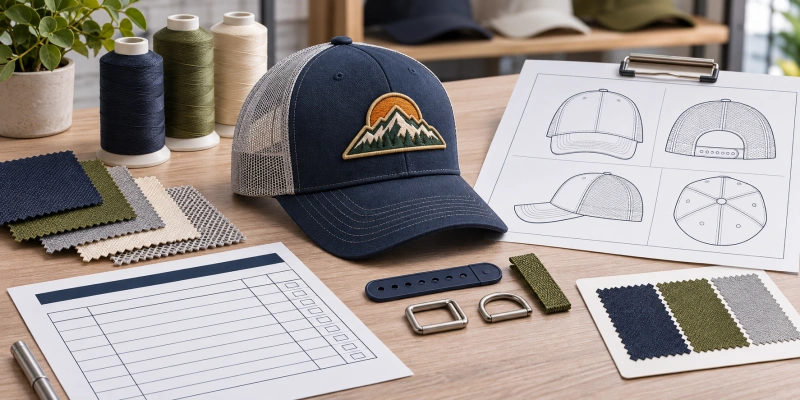
Required Documents and Approval References
| Reference | Version or identifier to record | What it controls |
| Tech pack or specification | Revision and date | Construction, size points, measurement method, agreed tolerances |
| Artwork and decoration instructions | File revision | Spelling, logo size, position, colors, and method |
| Bill of materials or component list | Revision | Fabric, mesh or yarn, closure, sweatband, labels, and trims |
| Agreed color and material reference | Swatch or reference ID | Shade, texture, and material selection |
| Packaging and purchase order details | Revision or PO number | Labels, assortment, quantities, and packing instructions |
Record the measurement points and method. A crown height measured along a seam cannot be compared with a vertical height taken from another starting point. For color, agree on the reference and viewing conditions; a physical swatch may be more useful than a phone image.
If a critical reference is missing or two approved documents conflict, mark the decision Hold and request a corrected file set. HENGXING can review project-specific inspection criteria and tolerances before production.
Checks for Approving a Custom Hat Sample
Work through the hat in the same order each time and record the sample ID on every review sheet. Mark each checkpoint Pass, Issue, Hold, or Not Applicable. Add actual measurements or a numbered photo for any issue. Use the overall Approve, Revise, or Hold decision after reviewing all checkpoints.
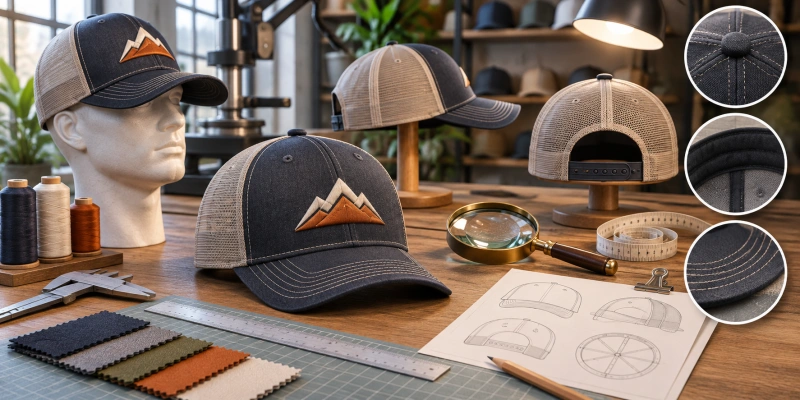
Reviewing Fit Construction and Branding
| Checkpoint | Approval reference | What to record |
| Sample identity | Style, ID, version, colorway, size | Exact match or missing label |
| Crown and fit | Approved silhouette, panel layout, fit target | Front, side, and worn views; fit notes |
| Named dimensions | Tech pack, measurement points, agreed tolerances | Target, actual, method, result |
| Fabric and color | Materials list and agreed swatch | Fabric feel and visible shade difference |
| Brim or visor | Shape, length, curve, stiffness, underbrim | Profile and any left/right difference |
| Logo and decoration | Approved artwork and method | Spelling, size, position, clarity, finish |
| Closure and interior | Component list | Closure function, sweatband, taping, comfort |
| Labels and packaging | Approved label files and packing instructions | Wording, placement, missing or substitute items |
Try the hat on an agreed fit model or head form when fit matters. Record the size and closure setting so the next reviewer can reproduce the observation. For detailed inspection of a baseball cap, use the baseball cap quality checklist.
Checks for Different Hat Styles
For a trucker hat, check the front panel shape, mesh selection, and the seam joining them. For a dad hat, check the soft crown, any specified wash or finish, and the curved brim on the wearer. For a snapback, test the closure and compare the brim with the specified profile. For a beanie, check the knit, cuff or hem, fit, and recovery after a try-on. Use the specifications agreed for each style and material.
Making the Sample Approval Decision
The decision should tell the factory what happens next. “Approved except for the logo” could be read as permission to start production while the logo remains wrong. Record the issue, its owner, and how the correction will be checked.
Sample Approval Decision Matrix
| Decision | Use it when | Next action |
| Approve | The identified version meets the agreed critical requirements and no blocking issue is open | Sign off its scope and version; complete a separate production file check |
| Revise | A defined difference needs correction and another review | Log the issue, required change, evidence, owner, and next version |
| Hold | A reference is missing or contradictory, or feasibility remains unresolved | Clarify the standard or technical option before deciding |
State the scope of approval. “Navy, adult size, front embroidery, V3” does not cover a red colorway, a youth pattern, or a different back logo unless you say so. One physical sample may represent several variants if you agree which details they share and how the differences will be checked. If your project permits “approved with changes,” document each change, its owner, the required evidence, and when it must be closed. An unresolved critical change blocks production release.
How to Request Sample Revisions and Recheck the Results?
Send one revision list tied to the current sample ID. “Move the logo down a little” leaves the target open to interpretation. Name the artwork revision, the measurement landmarks, and the desired result. Attach a clear photo with the affected area marked; include a ruler when it helps show the agreed measurement.
Writing Clear Measurable Revision Feedback
Copy this Approval and Revision Record into your project file. Keep one issue per row and retain earlier versions of the record, so a logo correction does not erase a previous brim change.
| Project and style | Sample ID/version/colorway | Tech pack/artwork / BOM versions | Review date/reviewer |
| [Project/style] | [ID / V / color] | [Revisions] | [Date/name] |
| Issue ID and checkpoint | Reference, target, and actual | Required action and owner | Evidence, next review and closure |
| [01 / front logo] | [Artwork R__ / agreed position / observed position] | [Specific adjustment / named owner] | [Photo ID / sew-out or sample/date / open or closed] |
| [02 / fit] | [Measurement point and method/target / actual] | [Specific adjustment / named owner] | [Measurement sheet / sample version / date / open or closed] |
Complete the record with: Decision [Approve / Revise / Hold]; approved exceptions [ ]; buyer approver, date, and confirmation channel [ ]; golden sample location [ ]; factory production release [Pending / Released by and date]. The final field records a separate factory action.
Illustrative example: “Sample HX-DEMO-01 V2; artwork R3; front logo is 3 mm from the position specified in this project’s drawing; Revise; adjust and submit agreed evidence for review.” This is a fictional case. The 3 mm difference is not a HENGXING tolerance.
When Is Another Physical Sample Needed?
Choose the next review method according to the change. A typo in artwork can be corrected on a new digital proof before decoration is made. A stitch change may need a new sew-out. A changed crown pattern, fabric, fit, or logo position on an assembled hat is usually easier to judge on another physical sample. Photos or video may be enough for a narrow visual correction if you and HENGXING agree to that method for the order.
Closing Revisions Before Approval
Label the new evidence with its version and close each issue against the agreed reference. Recheck related details: moving embroidery can change its balance and distance from a seam, while changing a panel can affect both fit and logo position. Update the tech pack, artwork, or materials list when the revision changes them. Then make a new Approve, Revise, or Hold decision for that version.
How to Sign Off the Final Sample and Control the Golden Sample
Your written sign-off should identify the physical sample and the documents approved with it. Keep the approval message or form with the record. A golden sample helps the production team compare shape, feel, and appearance, but it cannot represent an entire size run or every packing requirement. Keep the specification, artwork, materials list, color reference, and approved exceptions with it.
Final Written Sample Approval
Copy and complete this sign-off record after closing the required revisions. A blank field means it still needs a decision; it should not be treated as a pass.
| Golden Sample Sign-Off Record | Entry |
| Project/style number | [ ] |
| Approved colorway and size scope | [ ] |
| Physical sample ID/version/label | [ ] |
| Tech pack/artwork / BOM revisions | [ ] |
| Color and material reference IDs | [ ] |
| Approved exceptions or remaining conditions | [None/detail and closure rule] |
| Buyer approver/role/date | [ ] |
| Written confirmation reference | [Email/document/order reference] |
| Reference sample holder/location | [To be agreed] |
If several people review the sample, identify who can give the buyer’s final approval. A design team comment or factory acknowledgment should not be mistaken for that decision. Record the date and confirmation channel under your order agreement.
Golden Sample Identification and Retention
Label the retained hat with its style, sample ID, version, colorway, and approval date. Agree who keeps it, where, and for how long. If the sample has an approved exception, specify whether production should reproduce it or correct it, and how the intended result will be checked.
A change to fit, materials, or appearance may need another physical sample. Update the reference and documents after any later approved change. Buyer sign-off is followed by a separate factory production release.
Production Release Checklist
Before bulk work starts, the factory should check that the production set matches the signed sample and purchase order. A buyer may approve V3 while a production team still holds V2; the version check catches that mismatch before it is repeated across the order.
Verify Approved Files and Order Details
| Production release check | Confirm |
| Signed sample | Physical label and buyer approval identify the same version and scope |
| Production files | Tech pack, artwork, and materials list carry the approved revisions |
| Variants | Colorway, size, logo, and SKU list match the purchase order |
| Components | Fabric, closures, sweatbands, labels, and trims are specified |
| Packing | Label wording, inserts, assortment, cartons, and quantities match the order |
| Open items | Critical issues are closed; any permitted noncritical exception has a written handling plan |
Confirm Readiness for Bulk Production
Ask which file set the factory will use, who authorizes production release, and how later changes will be communicated. If you send a new logo file after sign-off, record its effect on materials or schedule, obtain the required approval evidence, and issue a new release version. HENGXING’s customization options cover sample development; its quality control process covers production and packing checks.
Custom Hat Sample Approval FAQs
Can I Approve a Sample From Photos Alone
You can use photos to review a specific visual correction if the supplier agrees, but fit, hand feel, and closure function need physical evaluation. Confirm the approval method for your order before treating a photo review as final.
Do I Need a Separate Sample for Every Colorway or Size?
It depends on what changes. A different fabric, color treatment, decoration, or size pattern may require its own evidence. List the variants covered by the sample and agree how the others will be checked.
Who Pays for Revisions?
Check the quotation or order terms for buyer changes, supplier deviations, courier costs, and further sampling. Record why the revision is needed, then agree on its cost and schedule effect before requesting another sample.
How Long Does Sampling Take?
The time depends on the hat construction, decoration, materials, confirmation stage, and shipping arrangement. Ask HENGXING for a project estimate that states when the clock starts, what sample type it covers, and whether transit is included.
What If the Design Changes After I Approve the Sample?
Update the affected artwork, tech pack, or materials list and agree whether another physical sample is needed. Record the new approval and production release version before making the revised design in bulk.
What If Bulk Hats Differ From the Approved Sample?
Compare the affected goods with the approved sample and written requirements. Record the style, colorway, quantity, and difference, then raise it under the agreed inspection and order terms. The baseball cap quality checklist covers inspection details for that hat style.
Ready to review your custom hat sample? Share your latest tech pack, artwork, material references, expected quantity, and unresolved questions with HENGXING. You can discuss your sample requirements before the next sampling decision.