
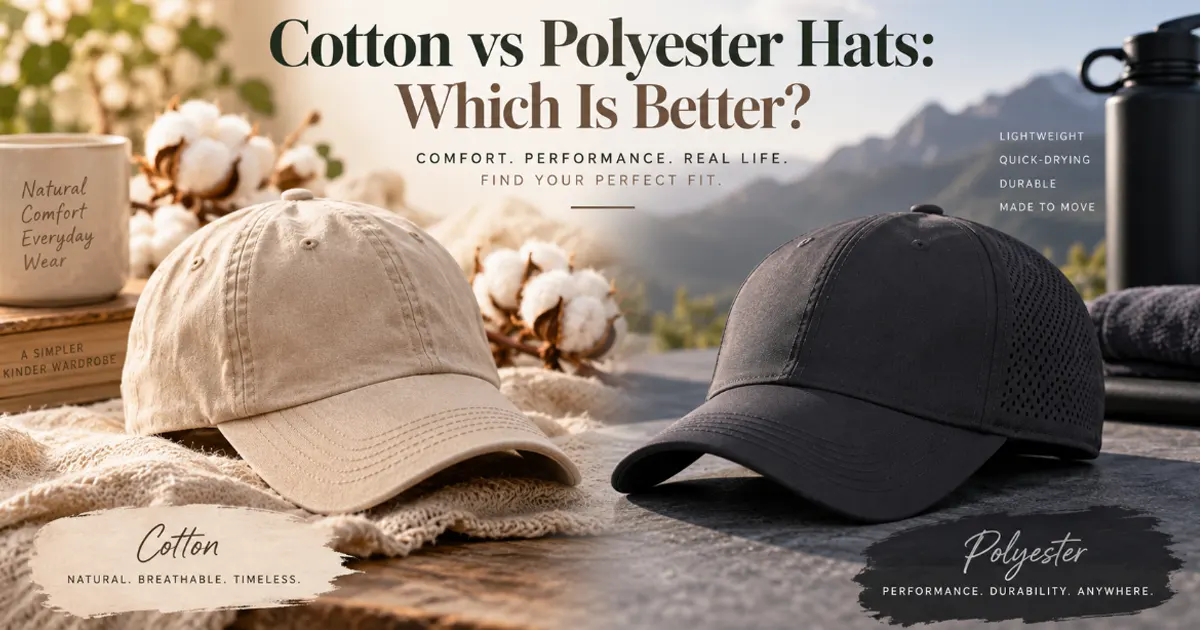
Cotton Breathability
Cotton’s natural fibers let air move easily through the fabric. This means your head stays cooler when it’s hot outside. The material also pulls sweat away from your skin, so you don’t feel sticky. When comparing cotton vs polyester hats for casual summer wear, this makes cotton a great choice.
Polyester Breathability
Polyester is a man-made material. It keeps heat trapped close to your head. Airflow is limited compared to cotton. You might notice that sweat stays on your skin instead of being absorbed. That can feel uncomfortable on warm days. This is one of the key differences in cotton vs polyester hats.
Breathability Verdict
Cotton wins for breathability in tropical weather. The natural fiber keeps you cooler and drier. If you care about the importance of fabric for comfort, cotton beats polyester here. Understanding cotton vs polyester hats helps you pick the right summer hat for your needs. The weather you’ll wear it in matters too.
Key Takeaways
- Cotton hats keep your head cooler and drier in hot, humid weather.
- Polyester hats dry very fast, making them great for active use.
- Tightly woven cotton hats can block up to 98% of the sun’s UV rays.
- Dark colors and tight weaves give you the best sun protection.
- Cotton feels soft and comfortable against your skin all day.
- Polyester hats hold their shape well and resist wear and tear.
- Choose cotton for casual wear in humid tropics.
- Choose polyester for sports and dry heat.
Cotton vs Polyester Hats: Breathability
Cotton Breathability
Natural Fibers
Cotton comes from a plant. That simple fact shapes how it behaves on your head. The fibers have a natural structure full of tiny gaps. Air passes through these gaps with ease. This gives cotton hats outstanding ventilation on a hot day. You feel a light breeze even when the air around you feels still.
Natural fibers also twist and bend in ways that create space between them. That space matters. It lets heat escape instead of building up against your scalp. Synthetic materials lack this built-in structure. They press together tightly and block the movement of air. Cotton does the opposite. It invites air in and lets warmth out.
This is why people have worn cotton headwear for centuries in warm parts of the world. The fabric works with your body instead of against it. Your head produces heat all day long. A hat that traps that heat will make you miserable. A hat that releases it keeps you going.
Sweat Absorption
Sweat is your body’s cooling system. It only works when moisture can evaporate. Cotton helps here too. The natural fibers pull sweat away from your skin and hold it inside the fabric. Your forehead stays drier. The sweat then evaporates from the cloth over time.
You will notice the difference within minutes of putting on a cotton hat. Your skin can breathe. You do not feel that slick, sticky layer between your head and the hat. The material handles moisture without turning clammy right away.
Polyester Breathability
Synthetic Heat Trapping
Polyester is a plastic-based material. It does not have the same open structure as cotton. The fibers pack tightly together. Heat has nowhere to go. It bounces back toward your head. On a warm summer afternoon, this turns your hat into a small oven.
Your body keeps producing heat. The polyester keeps holding it in. You start to feel flushed and uncomfortable. This is the opposite of what you want from breathable materials. The synthetic nature of polyester works against you in tropical conditions.
Limited Airflow
Air needs open pathways to move. Polyester offers very few. The weave is often tight and the fibers do not separate easily. Ventilation suffers as a result. You get little to no cross-breeze across your scalp.
Some polyester hats include mesh panels or vent holes. These help a little. They still cannot match the all-over airflow of a natural fabric. The difference is easy to feel. Put on a polyester cap in the heat and you will know within a minute. Your head warms up fast. The air feels trapped and stale.
Breathability Verdict
Cotton wins this round. The natural fibers allow excellent airflow and absorb sweat. Your head stays dry in hot weather. Polyester traps heat and moisture because of its synthetic makeup. That makes it less comfortable in tropical climates.
If you spend time outdoors in humid heat, pick cotton. The breathability difference is not small. It changes how you feel after an hour in the sun. A cotton hat keeps you cooler and drier. A polyester hat leaves you hot and damp.
This matters for anyone choosing summer headwear. The material you pick decides how your day goes. Cotton gives your head room to breathe. Polyester holds everything in. For tropical weather, cotton is the clear winner on breathability.
Moisture Management
Cotton and Sweat
Moisture Absorption
Cotton loves water. That sounds like a good thing at first. Your skin produces sweat all day long. Cotton fibers pull that sweat away from your forehead and hold it inside the cloth. You stay dry on the surface. This is one reason people trust cotton vs polyester hats for everyday wear.
The fabric can hold a lot of liquid before it feels soaked. That gives you time before the hat starts to bother you. Your skin gets a break from the sticky feeling of trapped sweat. For a slow walk or a relaxed afternoon, this works well.
Damp Feeling
Here is the catch. Cotton holds onto that sweat. Once the fabric is full, it stays wet for a long time. The hat gets heavy. It clings to your head. In humid air, the water has nowhere to go. It just sits there.
You may notice the brim sagging or the crown feeling soggy. That damp weight can turn a pleasant outing into a drag. Cotton is hard to dry in tropical humidity. The same fibers that absorbed your sweat now refuse to let it go.
Polyester and Moisture
Moisture Resistance
Polyester works the opposite way. It is a hydrophobic, man-made fabric. That means it repels water instead of soaking it up. Its moisture regain capacity is only 0.4%. In plain terms, the material barely absorbs any water at all.
Sweat stays on the surface and moves away from your skin. It does not sink into the cloth. This is why so many active hats use polyester. The material pushes moisture out instead of pulling it in.
Synthetic materials like polyester and nylon are top choices because they pull sweat away quickly and dry fast. Many brands use advanced blends, such as COOLmax, to improve airflow and keep you cooler for longer. Mesh panels add extra breathability for high-intensity workouts.
Mesh panels or laser-cut eyelets help heat escape so your head stays cool. Good ventilation keeps airflow steady, making a big difference in hot or humid conditions.
Quick Drying
Speed is where polyester shines. Look at how fast each fabric dries in tropical conditions.
| Fabric Type | Drying Time (35°C/80% RH) |
|---|---|
| 100% Polyester | 15 minutes |
| Polyester-Cotton Blend | 22 minutes |
| 100% Cotton | 45 minutes (pure) / 38 minutes (blend comparison) |
The gap is huge. Polyester dries in about a third of the time cotton needs. Some polyester/spandex blend hats dry up to 4 times faster than traditional cotton. A soft-touch interior sweatband stays sweat-resistant. Laser-perforated side and back panels add maximum breathability. These hats wick sweat away and keep your head dry and cool.
That fast drying matters in humid heat. A wet hat never gets the chance to weigh you down. The moisture leaves before you notice it.
Moisture Verdict
So who wins? It depends on what you value. Cotton wins for sweat absorption. It pulls moisture off your skin and keeps you dry at first. Polyester wins for quick drying. It resists moisture and sheds water fast.
Think about your summer plans. A slow stroll through a garden calls for cotton. A sweaty hike or a long run calls for polyester. The moisture-wicking properties of polyester keep active wearers comfortable. The moisture-wicking properties of cotton serve casual wearers well too, just in a different way.
Neither fabric is perfect. Cotton gets heavy when wet. Polyester can feel slick when sweat cannot absorb. Your climate and activity level decide which trade-off you accept. For pure sweat absorption, cotton takes the prize. For fast drying in humid air, polyester runs ahead.
Sun Protection for Sun Hats
UPF Ratings
Cotton UPF
Cotton does not start out as a strong UV blocker. A standard cotton bucket hat might only reach UPF 5–10. That lets through 10–20% of UV radiation. That is not real protection. That is just a fashion choice. But cotton can improve a lot with the right build. Unbleached cotton performs better than bleached cotton. A dense weave turns weak cotton into a solid shield. Weathered cotton can even reach UPF 50+. That blocks about 98% of the sun’s rays.
Polyester UPF
Polyester has a natural advantage here. Its fiber structure blocks UV rays on its own. Tightly woven polyester often hits UPF 30–50+. Shiny polyester blends also score high. One study found that 33 out of 43 polyester samples reached UPF 50+. Only 2 out of 14 cotton samples hit that mark. So polyester starts stronger. But the weave still decides the final score.
Weave and Color
Tight Weaves
Weave tightness is the single biggest factor for UV protection. Denser fibers create a physical barrier. They stop UV rays from passing through. Loosely woven fabric lets sunlight slip between the threads. Heavy canvas blocks more UV than a loose knit. This rule applies to both materials. A tight weave helps cotton and polyester alike. For cotton sun hats, a dense weave is essential. Without it, you get almost no protection.
Dark Colors
Color matters too. Dark colors absorb more UV rays than light colors. A black or navy hat soaks up sunlight before it reaches your skin. A white or pastel hat reflects some light back. But it also lets more UV through. Thicker and darker materials typically offer better UV protection. So if you want maximum defense, pick a dark shade with a tight weave.
Sun Protection Verdict
Tightly woven cotton sun hats win for tropical weather. Here is why. A dense cotton weave blocks UV rays effectively. It also stays breathable in humid heat. That combination is hard to beat. Polyester can match the UPF rating. But it traps heat and sweat. In tropical conditions, that becomes a problem fast. So for sun hats in hot, humid places, go with tightly woven cotton. Choose a dark color for extra defense. This gives you strong UV protection and all-day comfort. Your skin and your head will thank you.
Comfort
Cotton Comfort
Softness
Cotton feels gentle the moment you put it on. The fibers have a natural softness that sits lightly against your forehead. You won’t notice scratchy edges or stiff seams. Cotton twill, in particular, offers a soft, natural hand-feel with breathable comfort. That matters when you wear a hat for hours under the sun.
Polyester hat fabric is not as soft as cotton. Cotton fabric hats are soft and gentle on the skin. Your skin stays calm instead of irritated. This softness makes a real difference during long summer days. You forget you’re even wearing a hat.
Lining Benefits
A good lining takes cotton comfort further. The lining soaks up sweat before it drips down your face. It adds a cushion between your skin and the hat’s outer shell. This keeps your forehead dry and reduces friction. You get a cooler experience on sunny days.
Cotton hats with a soft lining work well for casual outings, sports events, or everyday wear. The adjustable sizing and durable construction make them both functional and fashionable. You can wear one all afternoon without wanting to take it off.
Polyester Comfort
Lightweight Feel
Polyester hats feel light on your head. The material doesn’t weigh you down. This lightweight and breathable quality appeals to people who want minimal bulk. You might barely notice the hat is there at first.
But lightness alone doesn’t equal comfort. The fabric doesn’t absorb sweat. Moisture stays trapped against your skin. That slick feeling builds up over time. You start to notice the hat more, not less.
Potential Irritation
When sweat can’t absorb, your skin reacts. You may feel itching or chafing along the hairline. The trapped moisture softens your skin and makes it more sensitive. Polyester twill has a smooth and structured feel, but it holds shape better than it handles moisture. That structure can rub against your forehead in unpleasant ways.
Some people develop redness after wearing polyester hats for long periods. The lack of airflow compounds the problem. Your head stays warm and damp. That combination rarely feels good.
Comfort Verdict
Cotton wins for comfort in tropical weather. The soft fibers feel kind to your skin. A lining adds sweat absorption and cushioning. You stay dry and cool instead of sticky and irritated.
Polyester hats are lightweight, but they fall short when sweat can’t absorb. The trapped moisture creates discomfort that builds hour by hour. For humid heat, cotton keeps you comfortable from morning to evening. Your head stays happy, and so do you.
Durability
Cotton Durability
Shape Retention
Cotton hats lose their shape over time. The natural fibers stretch and sag after repeated wear. You might notice the brim drooping or the crown losing its structure. This happens faster in humid conditions. Moisture weakens the fibers and speeds up the breakdown process. A cotton hat that looked crisp last summer may look tired this year.
Washing makes things worse. Cotton shrinks in hot water and stretches when you pull it wet. You need to handle these hats with care. Reshaping them while damp helps, but the results don’t last forever. The durability of cotton depends heavily on how you treat it.
Care Needs
Cotton hats demand attention. You should hand wash them in cold water. Hot water damages the fibers and causes shrinkage. Air drying works best. A dryer will shrink the fabric and warp the shape. You may need to reshape the brim by hand while the hat dries.
Storage matters too. Stuffing the crown with paper helps it hold its form. Stacking heavy items on top will crush the structure. All this effort adds up. The durability of cotton hats requires ongoing maintenance from you.
Polyester Durability
Structural Integrity
Polyester hats hold their shape remarkably well. The synthetic fibers resist stretching and sagging. Heat and humidity don’t break them down the way they do cotton. You can wear a polyester hat all summer and it will look the same in September. The structure stays intact through repeated use.
These hats bounce back after washing too. The fibers spring back to their original form. You won’t see drooping brims or collapsed crowns. This structural integrity gives polyester a clear edge for long-term wear.
Long-Term Wear
Polyester resists abrasion better than cotton. The fibers handle friction from daily use without showing wear. You can fold a polyester hat into a bag and pull it out ready to wear. It won’t wrinkle or crease permanently. The material also resists fading from sunlight.
The durability of polyester hats shines in tough conditions. They handle rain, sweat, and sun without breaking down. You get more wears before replacement becomes necessary. That makes them a practical choice for frequent use.
Durability Verdict
Polyester wins for durability. The material holds its shape in heat and humidity. It resists wear and tear far better than cotton. You don’t need to baby a polyester hat. Toss it in a washing machine and it comes out fine.
Cotton requires careful handling to maintain its durability. The fabric sags, shrinks, and needs gentle washing. This doesn’t make cotton a bad choice. It just means you trade convenience for other benefits. When comparing cotton vs polyester hats for durability, polyester takes the prize. Your choice depends on what matters most to you.
Style and Use Cases
Cotton Styles
Casual Hats
You reach for cotton caps when you want comfort without fuss. Classic baseball caps and bucket hats dominate this space. Both styles suit lazy afternoons, weekend markets, and backyard barbecues. The soft fabric feels gentle against your skin. You can wear one for hours without adjusting it constantly.
Bucket hats shine in hot, humid conditions. Many designs use breathable cotton with moisture-wicking sweatbands. That combo keeps your forehead dry while you move around town. A wide-brimmed sun hat with a 3-4 inch brim also works well here. It shields your face and neck during long hours outside.
Dry Tropical Climates
Dry heat changes the game. Your sweat evaporates fast, so cotton’s slow drying time matters less. The fabric pulls moisture off your skin and releases it into the air. You stay cool without that heavy, soggy feeling. This makes cotton caps a smart pick for desert towns and savanna regions.
A cotton bucket hat or baseball cap handles dry tropical summers beautifully. The natural fibers let air flow freely. You get ventilation where you need it most. Pair one with light clothing and you’re set for a comfortable day.
Polyester Styles
Active Hats
Polyester caps cater to movement. Boonie hats and visors lead the pack for sports and outdoor adventures. These styles often include mesh panels and laser-cut eyelets. Heat escapes through those openings instead of building up. You stay cooler during runs, hikes, and bike rides.
Quick-drying synthetic material helps near water too. It keeps you dry and protected from UV reflections off lakes or pools. If you sweat hard or get caught in rain, polyester sheds moisture fast. The hat stays light on your head.
Humid Tropical Climates
Humid heat tests any hat. Polyester caps resist moisture and dry quickly here. A wet hat never weighs you down because the water leaves fast. This makes polyester a solid choice for rainy tropical weather. The material holds its form even when soaked.
For active lifestyles in humid places, polyester and cotton caps both have merits. But polyester wins when you need fast drying and shape retention. It handles sweat, rain, and repeated wear without breaking down.
Style Verdict
The best choice depends on your activity level and climate. Casual wear in dry heat calls for cotton caps. Sports and humid conditions favor polyester caps. Think about what you’ll do and where you’ll go. That answer points you to the right fabric every time.
Conclusion
Cotton wins when the air is hot and wet. It lets air flow, soaks up sweat, and stays soft all day. Polyester still works well for active use in dry heat. It dries quickly and holds its shape. For humid tropics, pick tightly woven cotton sun hats or lined bucket hats. For active dry heat, choose polyester boonie hats or mesh caps. We are a hat manufacturer. We offer customization for businesses and individuals. Think about your climate and how active you are. That choice guides your cotton vs polyester hats decision. Your summer comfort depends on picking the right fabric. Weigh each material against your needs. You will find the best hat materials for your weather.
FAQ
Which fabric keeps your head cooler in humid heat?
Cotton wins here. Its natural fibers let air flow freely and pull sweat off your skin. Polyester packs its fibers tight, so heat bounces back toward your scalp. In humid tropical weather, you will feel the difference within minutes of putting the hat on.
Does polyester dry faster than cotton?
Yes, much faster. In tropical humidity, polyester dries in roughly a third of the time cotton needs. That fast drying keeps a wet hat from weighing you down. If you sweat hard or get caught in rain, polyester sheds the moisture before you notice it.
Can a cotton hat really block UV rays?
It can, with the right build. A loose cotton hat may only reach UPF 5–10. A dense weave changes that. Unbleached, tightly woven cotton can climb to UPF 50+, which blocks about 98% of the sun’s rays. Weave tightness matters more than the fiber itself.
Do dark colors protect better than light ones?
Yes. Dark colors absorb more UV rays before they reach your skin. White and pastel hats reflect some light, but they also let more UV through. For maximum defense, pair a dark shade with a tight weave. That combo gives you the strongest sun protection.
Which material feels softer against your forehead?
Cotton takes this one. The natural fibers feel gentle the moment you put the hat on. A soft lining adds cushioning and soaks up sweat before it drips. Polyester feels light at first, but trapped moisture can cause itching or chafing along your hairline over time.
Which hat holds its shape longer?
Polyester holds its shape remarkably well. Synthetic fibers resist stretching, sagging, and humidity. Cotton tends to droop and shrink, especially after washing. You can machine wash a polyester hat and pull it out ready to wear. Cotton needs cold hand washing and careful reshaping while damp.
What hat style works best for humid tropics?
Pick tightly woven cotton sun hats or lined bucket hats. They breathe well, soak up sweat, and block UV rays when the weave is dense. A wide brim of 3–4 inches also shields your face and neck. This setup keeps you comfortable through long, sticky afternoons.
What about active use in dry heat?
Polyester boonie hats and mesh caps shine here. Dry heat lets your sweat evaporate fast, so cotton’s slow drying matters less. Polyester still wins on quick drying and shape retention. Mesh panels and laser-cut eyelets let heat escape during runs, hikes, and bike rides.