
A snapback gets its name from the adjustable snaps at the back. The rest of the cap can take many forms: five or six panels, a tall or low crown, a firm or soft front, a flat or curved brim, and fabric or mesh at the back. These features can overlap. A five-panel cap with a curved brim and mesh back can also be a snapback.
If you are choosing a style for your brand, those terms help you describe the cap you actually want. This guide shows what each one means, how the choices fit together, and what to look at before you approve a design.
How Are Snapback Hats Classified?
Think of a snapback as a set of choices rather than a fixed list of styles. Each description answers a different question about the cap:
| Design choice | Common options | What it changes |
| Panel construction | Five panels; six panels | Front seams and crown layout |
| Front shape | A-frame; more conventional front | Front angle and visual profile |
| Crown profile | High; mid; low | How tall or close-fitting the crown looks |
| Crown structure | Structured; unstructured | How firmly the front holds its shape |
| Brim | Flat; curved | The cap’s outline from the front and side |
| Back construction | Full fabric; mesh-back trucker | Back appearance and air openings |
| Material | Twill; blends; corduroy; foam front and others | Surface, hand feel and visual finish |
You can make the same panel shape in different fabrics, and the fabric may change how firmly the crown stands. Treat the table as a way to narrow down a design, then use the actual cap to judge its feel and fit.
5-Panel vs 6-Panel Snapback Hats
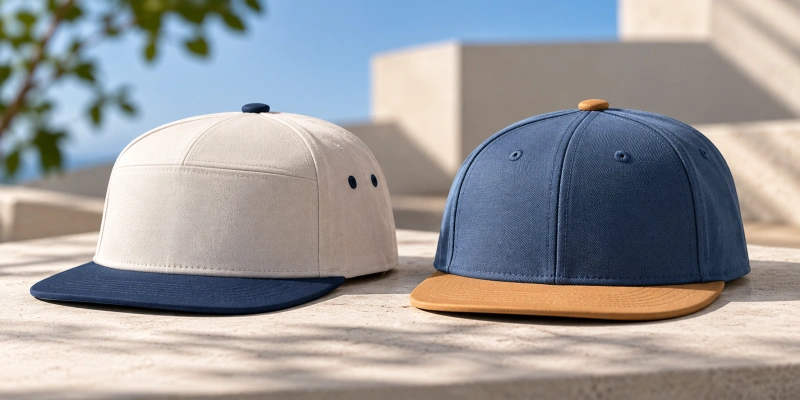
Panel count tells you how the crown pieces are arranged. A typical five-panel snapback has a broad front area without a full vertical center-front seam. This can give a graphic or patch a visually uninterrupted background. A conventional six-panel crown brings two front panels together at a center seam and tends to read as a more rounded baseball-cap shape. Both can use the same kind of adjustable snap closure.
A center seam can cross the area where you want a logo, but it does not prevent embroidery. It may affect the placement of fine lettering or a design that needs strict symmetry. On a five-panel cap, check the front angle and how much the fabric curves. A broad front is useful only if the finished artwork sits well on that particular shape.
Put the same artwork at the intended size on both front views. That comparison will tell you more than the panel count alone.
What Is an A-Frame Snapback?
An A-frame snapback has a pinched or raised-looking front and an adjustable snap closure. Many A-frame styles sit within five-panel families, but the name points to a particular front shape. A five-panel cap does not automatically have that shape, and a tall crown alone does not make it an A-frame.
The exact front pattern varies by maker. If you need to match a reference, compare the pinch and front angle from more than one view. An interior photo or physical sample can show seam details that a front photo hides.
When seam placement affects your logo, ask for the pattern or an inside view before you sign off on the cap.
High, Mid and Low-Profile Snapbacks
Crown profile describes the apparent height and depth of the cap on the head. A high crown presents a taller, more upright front. A mid profile sits between that pronounced look and a closer silhouette. A low-profile crown sits nearer the head and usually looks less imposing. These are useful visual terms, but they are not fixed universal inch measurements.

A taller front draws more attention to the top of the cap and may give a bold mark a stronger setting. A lower crown keeps the overall shape quieter. But a profile label does not tell you the head opening or usable logo area. The front angle, depth, and support all affect how tall the cap looks.
Compare front and side views on the same wearer or fit form. You can pair a high crown with a curved brim, and a low crown can still have a firm front.
Structured vs Unstructured Snapbacks
Structure describes the support inside the crown. A structured snapback uses reinforcement in the front to hold a defined shape when it is off the head. An unstructured version uses a softer front that follows the wearer more readily and gives a relaxed outline. HENGXING can make both constructions, with the details depending on the chosen style and specification.
A firm front keeps its outline when you put the cap down or display it on a shelf. A soft front may crease or drape, which changes how a large or rigid decoration looks. Try the artwork on the construction you plan to use; both can work well when the design suits the fabric and support.
A low crown can be structured, while a taller one can have lighter support. Crown height and firmness are separate choices.
Flat Brim vs Curved Brim Snapbacks
Brim shape changes the outline of a snapback without changing its closure or panel count. A flat brim creates a broad, straight presentation often associated with streetwear and team merchandise. A pre-curved brim makes the silhouette feel more casual or athletic. Either shape can be paired with a five- or six-panel crown.
For example, a high-crown cap with a curved brim still has the tall front you selected. The bend in its brim changes the mood of the cap without flattening that silhouette.
If the curve matters, show the brim from the front and side. “Curved” can describe anything from a gentle bend to a pronounced arc; brim length and stiffness also change the look.
Trucker Snapbacks and Mesh-Back Styles
A trucker snapback combines a mesh-back trucker construction with an adjustable snap closure. “Trucker” points to the back and overall cap design; “snapback” points to the fastening system. Some trucker hats use other closures, and many full-fabric snapbacks have no mesh at all.
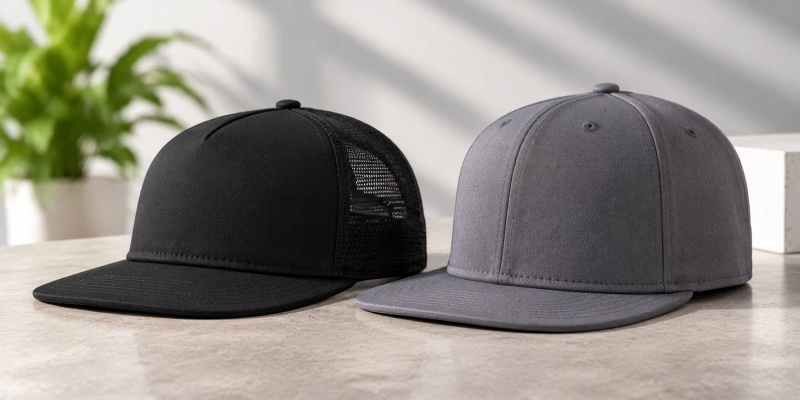
The front may use fabric or foam, while mesh covers some or all of the side and rear panels. The size of the openings and the other materials affect how the cap feels. If airflow matters to your project, compare the actual mesh and complete cap.
That makes a five-panel, curved-brim trucker with a snap closure a perfectly ordinary combination.
Can These Snapback Styles Be Combined?
Yes. A design brief becomes clearer when it names each choice instead of asking for a single vague “type.” These combinations show how the labels work together:
| Possible specification | What the combination tells you |
| Six-panel + curved brim + snap closure | Rounded, center-seam front with a curved visor and adjustable snap |
| High crown + curved brim + snap closure | Taller front silhouette; the brim does not need to be flat |
| Low profile + curved brim + snap closure | Closer crown profile with a casual visor shape |
| Five-panel + mesh back + curved brim + snap closure | Broad front, trucker-style mesh rear and adjustable snap |
The table describes possible specifications, not a list of fixed models. Check front, side and back views when comparing caps. A front photo can show crown and brim shape, but only a rear view can confirm the snap closure.
Which Snapback Style Is Best for Custom Branding?
Start with the size and shape of your artwork. A wide wordmark may look cleaner on an uninterrupted front. If you want a six-panel shape, check how the mark crosses or avoids its center seam. A tall front gives a large design a different visual weight from a low crown; a soft front changes how a stiff patch or dense embroidery sits.
There is no standard maximum logo size that fits every snapback. The front shape, seam position and decoration method set the practical limits. Flat or raised embroidery and patches may all be possible, but this choice belongs with the artwork and the chosen cap, not with the style name alone.
Once you have a preferred shape, HENGXING’s custom snapback hats page shows the wider range of development options.
How to Choose the Right Snapback Style
To write a useful brief, first choose the silhouette: tall, balanced, or close to the head. Add the panel layout and front shape, then say whether the crown should hold its shape or drape. Finish with the brim, back panels, and snap closure.
Include a front and rear photo or a reference cap, plus the artwork at its intended position. State the end use and the shape you want to keep. This gives your supplier enough context to suggest a workable construction and make a sample you can evaluate.
Use that brief to discuss your custom snapback specification with HENGXING, then approve the finished shape and branding on a physical sample.
FAQs
Is a Five-Panel Hat the Same as a Snapback?
No. Five-panel describes how a crown is constructed; snapback describes its adjustable rear closure. A five-panel hat can have a snap closure, but it can also use another fastening system.
Is an A-Frame Hat a Snapback?
It can be. A-frame describes the front silhouette or construction, depending on the maker’s naming convention. It becomes an A-frame snapback when it also has a snap closure. Confirm the actual front pattern from the sample if seam details matter.
Do All Snapbacks Have Flat Brims?
No. A snapback can have a flat or curved brim because its name comes from the adjustable closure at the back.
Is a Trucker Hat a Snapback?
Some are. A trucker hat with mesh back panels and a rear snap closure is both a trucker and a snapback. Mesh alone does not establish the closure type.
What Is the Difference Between High-Crown and Low-Profile Snapbacks?
A high crown has a taller, more upright visual profile. A low-profile crown sits closer to the head. These are relative shape descriptions, not a universal measurement or a guarantee of fit.
Can Snapbacks Be Structured or Unstructured?
Yes. A structured crown holds a more defined front; an unstructured crown feels softer and follows the wearer more readily. Either can use an adjustable snap closure.
Which Snapback Front Is Better for Embroidery?
It depends on the design. A broad front can suit a wide graphic; a center seam may call for a different placement. Compare the finished artwork on your candidate cap shapes.