
A sweat mark does not mean you have to soak the whole cap. Start at the sweatband and the visible stain, check the finished cap’s care instructions, and keep moisture away from any brim insert, support, or decoration you cannot verify. The safest approach is a small, controlled treatment: test a hidden area, work gently with a cleaner compatible with the cap, remove its residue, and let the inside dry completely.
If the mark has been there for a while, expect to reassess it after drying. A pale ring may be removable surface residue; yellow or dark discoloration may also involve body oils, transferred dye, or aged material. No single treatment can be assumed safe for every baseball cap or guaranteed to return an old stain to its original color.
Before You Treat the Stain: Check the Cap
Read the care label first. Then look at the underside of the brim, the front panels, the sweatband, and every patch, print, or leather detail. A cotton exterior does not tell you what is inside the brim or how an adhesive-backed logo responds to moisture. If the insert is unknown, keep the brim dry and limit cleaning to the affected fabric. A fragile vintage cap, loose coating, or damaged stitching deserves extra caution.
Check whether a print or size label sits on the sweatband. Pressing cleaner into one area can affect another layer beneath it. If the instructions prohibit wet cleaning, or if a valuable cap has an unknown construction, follow the specified care route or consult a qualified cleaner. For a broader inspection of the finished cap before any full wash, see the guide on how to wash a baseball cap below.
Why Sweat Stains and Salt Marks Show Up?
The sweatband touches your skin, so it is often the first place to show a buildup of sweat and body oils. Moisture can then reach the nearby seam or front panel. As a wet area dries, a light border may remain at the edge of the mark. White, powdery-looking marks can be salt residue, but appearance alone cannot prove the cause of every stain.
That distinction matters when you clean. A fresh surface mark may lift with a damp cloth; an older yellow patch or greasy band can remain after the visible salt is gone. Clean the band and the adjacent mark in small sections, then judge the result only after the fabric has dried. Repeated wetting without removing cleaner can leave a new ring.
How to Remove Sweat Stains Step by Step?
Use a clean, light-colored cloth, another cloth for removing residue, a dry towel, and, only when the care information allows it, a mild cleaner compatible with all contacted materials. Avoid assuming that a cleaner suitable for the outer shell also suits the sweatband, trim, and dyes.
1. Blot Fresh Sweat or Salt Marks
First, remove loose surface dust with a dry, soft cloth so it does not spread when dampened. If the stain is fresh, press a clean cloth lightly dampened with water against the sweatband and visible edge. Lift the cloth and check for transferred color or soil; use a clean portion for each pass. Work in a small area rather than wetting the entire crown. Do not rub across embroidery, a raised logo, or a patch edge.
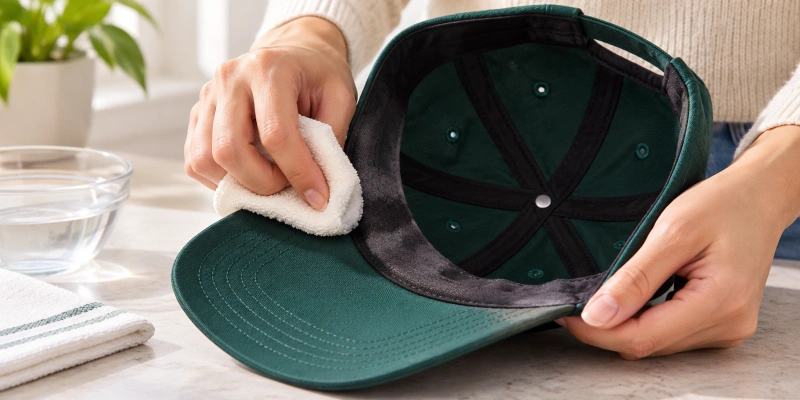
2. Test a Mild Cleaner on a Hidden Area
For a mark that needs more than water, follow the cap’s care instructions when choosing a cleaner. Apply a little diluted, compatible mild cleaner to a hidden area with a light-colored cloth. Check the cloth and fabric for dye transfer, a darker water mark, a changed finish, or a lifting patch edge.
Let the test area dry before deciding to continue. If anything changes, stop using that cleaner. A successful small test does not establish that the whole cap can be soaked.
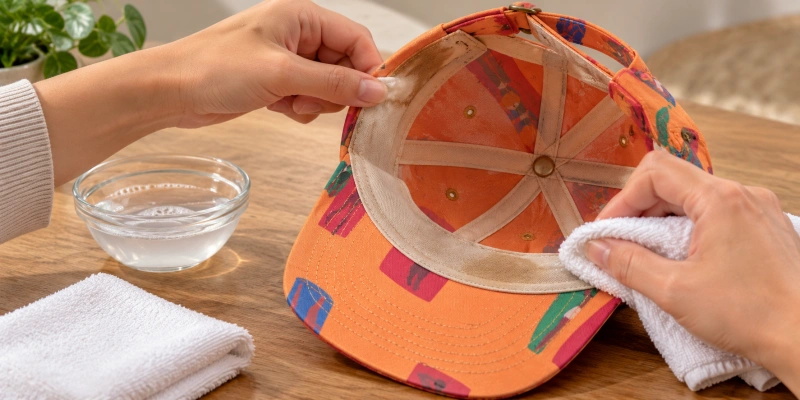
3. Treat Set-In Sweatband Stains Gently
Touch the tested cloth to the stained section of the sweatband and its adjacent seam. Blot or make short, gentle passes, changing to a clean area of cloth as soil lifts. Use only enough moisture to reach the affected fabric, and keep it from running into a questionable brim or bonded decoration. For a visible ring on the shell, work toward the center and avoid making a large wet halo.
If the first pass improves only part of a set-in sweat mark, do not scrub harder or add several products in succession. Remove what you can, dry the cap, and inspect it in even light. A second careful pass may be reasonable if the label and first test still support it. Stop if color begins to transfer or the fabric, stitching, or trim changes.
4. Remove Cleaner and Let the Area Dry Fully
With a second cloth lightly dampened with clean water, blot away cleaner from the treated section. Repeat gently with a clean part of the cloth if residue remains, without flooding the brim. Press a dry towel against the area to absorb moisture; do not wring or squeeze a supported front panel flat.
Return the crown to its intended shape and let air circulate the sweatband and inner front. Check these inner areas by touch before wearing or storing the cap.
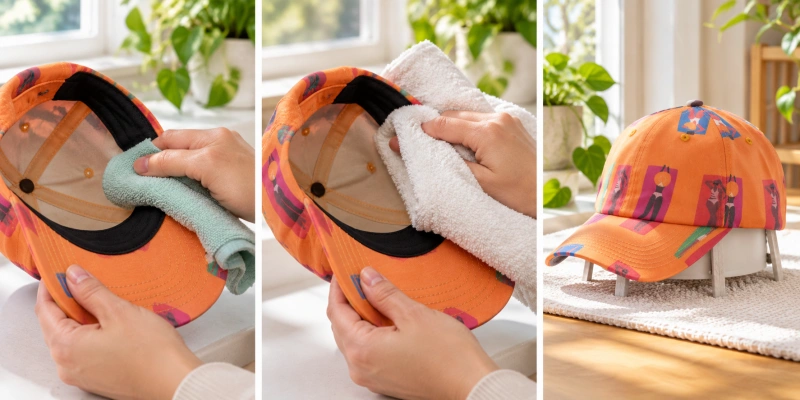
How to Handle Salt Rings and White Sweat Marks?
If you see a pale ring where sweat dried, begin with a small, water-dampened cloth at the sweatband and edge of the mark. After a hidden-area test, use a compatible mild cleaner only if water alone does not lift the residue. Remove the cleaner with a separate damp cloth and allow the entire treated area to dry before deciding whether the ring remains. Spreading the wet area or leaving detergent in it can create another visible border.
A white mark that persists after gentle cleaning is not necessarily removable salt. It could be dye loss, a finish change, or another residue; those causes cannot be confirmed by color alone. Do not apply an acidic or alkaline home mixture on that assumption. If the surface feels damaged or the color appears lighter after drying, stop treatment.
What Not to Use on a Sweat-Stained Cap?
Avoid untested bleach, strong stain removers, baking-soda mixtures, prolonged saturation, and hard brushing. They can create risks for dyes, the sweatband, a moisture-sensitive brim, prints, coatings, and adhesives. This is a precaution, not a claim that every such product is always prohibited: the finished cap’s care information must support a treatment before you use it. Never combine household cleaning chemicals.
Do not treat a whitening recipe for plain cotton fabric as a recipe for a finished cap. Even a white crown can have a colored embroidered logo, a different sweatband material, or a hidden insert. A stubborn stain is a reason to pause and identify those parts, not to increase the concentration or contact time by guesswork.
Dark Caps vs. White Caps
On a dark cap, inspect the testing cloth for dye transfer and look for a faded edge after the test spot dries. If either appears, stop that cleaner. On a pale cap, a yellow area may stand out more, but stronger chemistry can still discolor the shell or colored logo. Clean the affected sweatband first and compare the dry result before touching a broader area.
For decisions specific to white fabric, colored decoration, and persistent yellowing, see how to clean a white baseball cap.
Do You Need to Wash the Whole Cap?
A localized sweatband stain does not automatically call for a full wash. If the entire cap is heavily soiled, decide from its care label and construction whether more extensive cleaning is allowed. The presence of sweat stains alone says nothing about machine washability. Do not infer a safe wash method from the crown fabric or from the result of one spot test.
For full-cap cleaning, drying, and the separate question of machine or dishwasher use, read how to wash a baseball cap. Keep this stain treatment local unless that broader care check supports a full wash.
When to Stop and Seek Specialist Advice?
Stop if the cloth picks up dye, a patch edge lifts, the brim softens, a coating cracks, or the stain spreads after a controlled test. Also pause if gentle cleaning and complete drying leave the same mark. An older stain may have altered the material rather than sitting on its surface, and repeated aggressive treatment may worsen its appearance.
For a valuable vintage cap, an unknown stain, visible mildew, or fragile materials, ask a qualified cleaner whether the specific cap can be treated. Do not promise yourself complete restoration of set-in yellowing. If the cleaner cannot identify the brim and decoration or the care information is absent, describe that uncertainty before approving any treatment.
How to Reduce Future Sweat Buildup?
After wear, let the sweatband and inner front dry completely before storage. When a fresh mark appears, a cautious damp-cloth blot may keep it from building up, provided the care instructions allow moisture and the fabric has passed a hidden-area test. Keep the band free of cleaner residue and avoid stacking a damp cap where air cannot circulate. Clean when visible soil warrants it; there is no single schedule that suits every cap.
FAQs
Can You Use Bleach on Sweat Stains?
Only consider it if the finished cap’s care information explicitly permits the specific treatment. A white shell is not proof that a colored logo, sweatband, brim insert, or adhesive can tolerate bleach. Without that confirmation, use the controlled method above or ask a qualified cleaner.
Can Baking Soda Remove Sweat Stains?
Some home-care advice uses baking soda, but the available information does not establish a baking-soda mixture as safe for every finished cap. It may leave residue or require rubbing and moisture that other components cannot tolerate. Do not use an untested recipe as the default response to a stubborn mark.
Can You Machine Wash a Cap With Sweat Stains?
Sweat stains do not determine whether the cap can go in a machine. Check the instructions for the finished cap and its brim, support, sweatband, and decoration. The broader baseball cap washing guide explains that decision; this page covers targeted stain treatment.
For Brands: Build Care Requirements Into the Cap Specification
If you order branded caps, state the intended care route while selecting the shell, brim insert, front support, sweatband, logo method, patches, and label. Ask the supplier to flag components that limit cleaning. Review the finished decorated sample and agree on any testing method and acceptance criteria before making a washability or stain-resistance claim. A fabric swatch alone does not establish care instructions for the complete cap.
When planning custom baseball caps, include the desired care wording in your specification and request supporting evidence for any performance statement.