
A baseball cap is made from more than its visible outer fabric. The crown may use cotton twill, polyester, nylon, a wool blend, denim, corduroy, canvas, or another selected textile. A cap can also contain front-panel support, a brim insert, a sweatband, seam tape, a rear closure, and other trims.
These components may use materials different from the crown fabric. If you are buying caps for a brand, the useful question is not simply “Cotton or polyester?” It is how the fabric and construction work together to deliver the fit, shape, and logo finish you want.
Baseball Cap Materials at a Glance
| Material | Typical Look or Feel | What to Check |
| Cotton twill | Familiar woven surface; can feel firm or soft | Weight, finish, crown support, and color |
| Washed cotton | Softer, worn-in appearance | Shade variation and approved wash finish |
| Polyester or blend | Range of smooth or textured constructions | Actual fabric and tested performance |
| Wool or wool blend | Dense, seasonal look | Fiber content, feel, and care label |
| Nylon | Light, smooth hand feel | Coating, structure, and claimed protection |
| Mesh | Open construction and visible ventilation | Panel location, backing, and logo area |
| Denim/corduroy | Distinctive weave or raised texture | Wash, wale, weight, and decoration |
| Canvas | Firm plain-weave character | Weight, flexibility, and fit |
These are starting points, not fixed performance grades. The same fiber can be woven, finished, and supported in different ways. HENGXING lists these material options across its custom cap range; confirm the fabric and construction available for the specific pattern you choose. If you already know your preferred look, the custom baseball caps collection is where you can discuss an actual style and sample.
Cotton Twill and Washed Cotton
Cotton twill is a woven fabric with a diagonal surface pattern. It is common in everyday baseball caps because it can be developed in different weights and finishes. A cotton crown can hold a defined shape when paired with suitable front support or take on a softer outline in another construction.
If you want a firm front for logo decoration, compare structured baseball caps; for a more relaxed shape, look at unstructured baseball caps. Fiber content alone does not determine the cap’s construction.
Washed cotton undergoes a finishing process intended to create a softer, lived-in appearance. A washed cap may suit a lifestyle range, but “washed” does not describe a universal color, shrinkage level, or process. Request fabric swatches and a finished sample, especially when several colors must look consistent as a collection. Ask how normal shade variation will be managed across the order rather than approving the look from a digital image alone.
If you are considering a low crown, compare low-profile baseball caps as a separate fit decision. Low profile describes crown height; it does not automatically mean the cap is made from washed cotton or has an unstructured front.
Polyester and Cotton-Polyester Blends
Polyester can be used for caps with a smooth finish, a lighter hand feel, or a more technical-looking surface, depending on the specific fabric. It can also be blended with cotton to balance the appearance and handling characteristics of the two fibers. “Polyester baseball cap” is a broad material description: one polyester twill can feel very different from a lightweight woven fabric or a mesh panel. Ask for the actual fabric construction and composition rather than judging by the fiber name alone.
Selected polyester fabrics may support quick-drying, ventilated, or water-resistant designs. Those properties must be specified and verified for the proposed fabric; polyester itself is not a measured performance claim. If the cap is intended for sports, outdoor use, or uniforms, ask which test results, finishes, and care instructions apply.
A taller crown can also be made from several materials, so high-crown baseball caps are a style choice to evaluate alongside the fabric, not a polyester category.
Wool and Wool Blends
A wool baseball cap can give a collection a denser, seasonal look. Blends can change hand feel, cost, structure, and care requirements, so ask for the exact fiber content before using “wool” on a product label. A substantial fabric may suit a more defined silhouette, but the crown pattern and support still determine the finished shape. If you want that upright presentation, review structured baseball caps using the specific wool or wool-blend sample you plan to use.
Do not treat “woolly” or a wool-like surface as proof of wool content. Commercial caps sometimes use blends that look and feel similar while containing very different fiber percentages. Confirm the composition on the material specification sheet and the final care and content label, especially if your caps will be sold in multiple markets.
Nylon
Nylon is often considered when you want a lightweight, smooth fabric for a cap. Its hand feel and packability depend on the fabric weight, weave, finishing, and overall crown and brim construction. A nylon baseball cap is not automatically waterproof. If water resistance, UV protection, or another technical performance requirement matters, specify the requirement and request evidence for the exact material and finished design.
For travel or outdoor programs, assess how the fabric behaves in a physical sample: does the crown collapse as expected, and does the brim return to the shape you need? A nylon shell paired with a stiff brim will not behave like a fully soft cap. Also test the proposed logo decoration on the fabric, because a smooth, lightweight surface can respond differently to embroidery, patches, or printing.
Mesh: Full-Mesh and Mesh-Back Caps
Mesh has an open construction that allows air to move through the fabric. It can be used in selected panels or across more of the crown. A mesh-back cap places mesh behind a different front panel and is often part of a trucker-style design; a full-mesh cap uses a different construction and may provide less uninterrupted fabric area for a large front graphic. Do not use “mesh baseball cap” as a complete specification.
If the cap will be worn in strong sunlight, our baseball cap sun protection guide explains why the front bill, solid fabric panels, and open mesh should be evaluated separately.
Ask which panels use mesh, what its fiber composition is, how large the openings are, and how the logo decoration will be applied. A monogram or small emblem may require a patch or another stable decoration area rather than direct stitching into open mesh. The actual pattern and artwork should determine the method. Mesh provides visible ventilation, but the cap’s overall comfort still depends on fit, sweatband design, and conditions of use.
Denim
Denim baseball caps use a recognizable diagonal weave and can be finished for a clean, washed, or distressed appearance. These finishes can change shade and surface character, so approve the exact effect on a physical sample. Denim may be used for a defined or more relaxed crown, depending on the pattern and front support. If you want a softer denim look, review unstructured baseball caps as a construction option rather than assuming every denim cap will drape the same way.
For a repeat retail program, ask how the approved wash, color, and logo contrast will be maintained across the order. Dark embroidery thread may have insufficient contrast on similarly colored denim, while a patch can provide a separate decoration surface. The best choice depends on the actual fabric, artwork size, and front-panel layout.
Corduroy
Corduroy has raised lengthwise ribs called wales. They give the cap a textured, often retro appearance and can make a logo look different from the same artwork on smooth twill. A corduroy baseball cap may work with a structured front, but the wale width, fabric weight, and surface finish should be confirmed. HENGXING lists corduroy within its broader material range; confirm the current sample and available color selection for your specific style.
Before approving embroidery, check whether small text remains legible over the ribs and whether a patch sits evenly. Do not specify a precise wale count based only on a reference photo. If material texture is central to the design, request a close-up fabric swatch as well as a finished cap.
Canvas and Suede-Look Materials
Canvas is a plain-weave fabric that can create a firmer, workwear-style appearance, depending on its weight and finish. Ask how the selected fabric feels and behaves in the chosen crown: a heavier canvas can change how the cap sits, while a lighter canvas may behave differently. The logo method, front support, and brim should be evaluated as a combination. Canvas is among the materials HENGXING lists for custom caps, subject to the selected pattern.
The term “suede baseball cap” requires more careful wording. HENGXING has historical product examples using suede or suede-like materials, but that does not establish whether a current stock fabric is genuine suede, synthetic suede, or another surface material. If this finish is important to you, request the current material specification, composition, and physical sample before describing it on a retail label.
What Other Materials Are Inside a Baseball Cap?
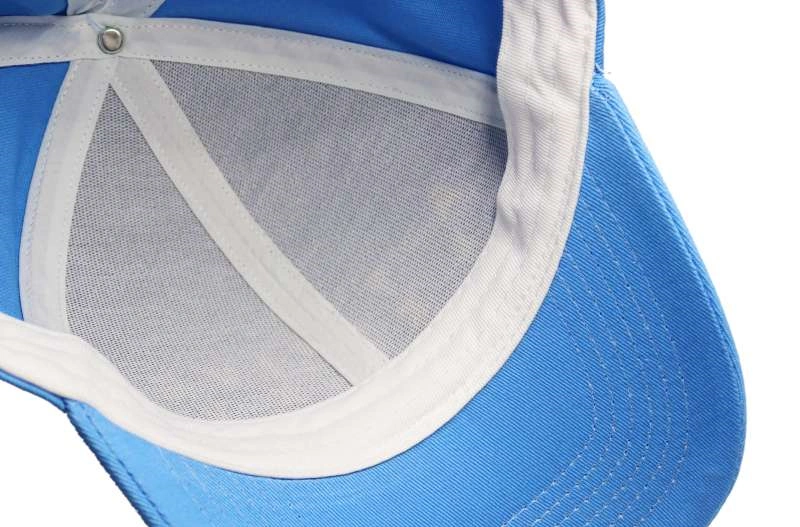
The outer fabric is only part of a cap. A structured front may contain support material, while the brim contains an insert that helps determine stiffness and curve. Around the inside edge, the sweatband affects how the cap sits against the forehead; seam tape and labels finish the interior. The closure may add plastic, metal, fabric, or elastic components. Eyelets, a top button, and patches can introduce additional materials.
These components do not have a standard composition across all caps. HENGXING can review brim stiffness, sweatband details, closures, and inside branding as part of a custom specification, but exact insert materials, fiber blends, and technical grades must be confirmed for the selected style. If you want the names and functions of each component, read our guide to the parts of a baseball cap; this article focuses on choosing the materials used throughout the cap.
You may hear buckram mentioned as front-crown support. It is not the same as the insert inside the brim. If your design depends on an especially firm front or flexible visor, examine the relevant component in the proposed sample rather than assuming the term “structured” describes both.
How Fabric Affects Cap Structure and Logo Decoration?
Materials do not work in isolation. A 5-panel baseball cap and a 6-panel baseball cap can use similar fabrics yet present a logo differently because their front seams and crown patterns differ. The same cotton twill can also look firmer on a supported crown and softer on an unstructured one. Treat panel count, profile, support, fabric, and brim construction as related specifications, then verify the finished combination.
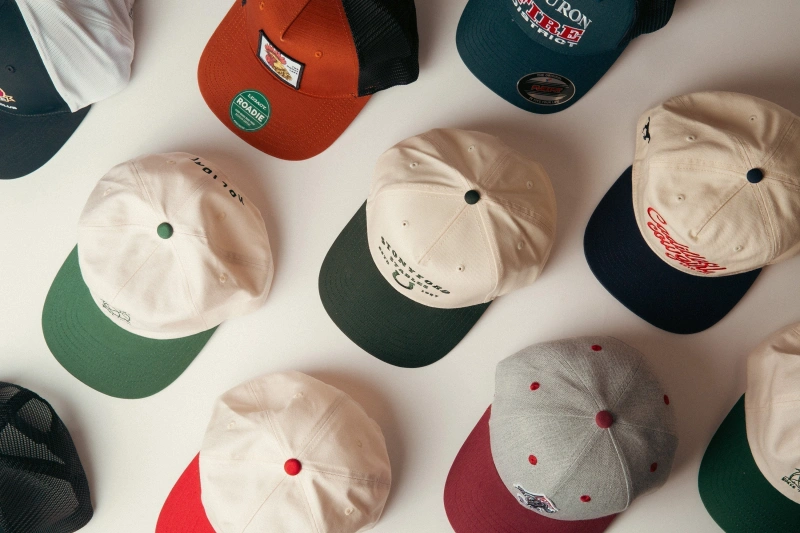
Flat embroidery, 3D puff embroidery, patches, printing, and heat transfer all require a suitable surface and appropriate artwork. Small lettering may require a different approach from a bold graphic. Open mesh, raised corduroy wales, and thin, smooth fabrics each create different application constraints.
Instead of choosing a process by material name alone, send the artwork at its intended finished size and check a decorated sample. Our embroidered baseball caps page can help you review cap-specific logo options without turning this material guide into a stitching manual.
How to Choose a Material for a Custom Order?
Start with the intended wearer and sales context. A lifestyle cap may prioritize hand feel and wash character; a uniform order may prioritize color consistency and care requirements; an outdoor product may have specific, measurable performance requirements. Then compare material samples alongside the intended cap shape and decoration. Use the following questions to create a clear supplier brief:
- What cap style, panel count, and crown profile do you want? Which parts must hold their shape?
- What fabric composition, texture, weight, and finish should the cap have? Do you have a physical reference?
- What claims will be made about water resistance, drying performance, UV protection, or sustainability, and what evidence is required?
- Which colors, logo decoration method, placement, labels, and packaging must remain consistent across the order?
- What order quantity, target markets, delivery dates, and repeat-order requirements should the sampling process account for?
Request a current swatch, finished sample, and relevant test information before approving claims on packaging. Compare the sample under the conditions in which it will be used, and keep its material and decoration specifications with the order record. For custom baseball caps, HENGXING can review fabric, cap construction, and artwork together, with available combinations confirmed for the selected style.
FAQ
What Are Baseball Caps Usually Made Of?
Many baseball caps use cotton twill, polyester, or blends for the crown, but wool blends, nylon, denim, canvas, corduroy, and mesh are also used. A cap may include additional materials in the brim insert, front support, sweatband, closure, and trims. Ask for the fiber composition and component specifications of the actual product instead of assuming that caps with the same appearance are made alike.
Is Cotton Better Than Polyester for a Baseball Cap?
Neither fiber is automatically better. Cotton twill may provide a familiar woven feel, while polyester is available in a wide range of finishes and performance-oriented constructions. Weight, weave, support, finishing, and fit can matter more than the fiber label. Compare swatches and samples based on the look and use you want, then verify any performance claim for the specific material.
Are Wool Baseball Caps Made Entirely of Wool?
Some are made entirely from wool, while others use wool blends or wool-like fabrics with different fiber content. You cannot determine composition reliably from a product name or photograph. Request the material specification and confirm the percentages on the final content label. The blend can change the feel, shape, care requirements, and price of the proposed cap.
Does Mesh Make a Baseball Cap Breathable?
Open mesh allows air to pass through the mesh area, but the cap’s overall ventilation depends on which panels use mesh, the opening size, the front fabric, and how the cap fits. A mesh-back design differs from a full-mesh construction. Review a current sample for your intended use, and avoid inferring a quantified performance result from the word “mesh” alone.
Is a Nylon Baseball Cap Waterproof?
No. Nylon as a fiber does not guarantee a waterproof cap. Fabric weave, coating, seam construction, and finishing all influence water performance, and water resistance is different from a waterproof claim. If the cap must meet a specific requirement, specify the test method and request results for the selected material and finished construction before using that wording in sales copy.
What Is Inside the Brim of a Baseball Cap?
A brim usually contains an insert that helps it hold the intended shape and is covered by the chosen outer and underside materials. The insert’s exact composition and stiffness vary by style. It is separate from the front-panel support used in a structured crown. Specify the shape and flex you want, then confirm the material and finished result on the actual sample.
Which Cap Material Works Best for Embroidery?
The answer depends on fabric stability, surface texture, crown support, and the artwork. A smooth, supported front panel can accommodate some placements more easily, while raised corduroy, lightweight fabric, or mesh may require changes to the design or decoration method. Ask for a decorated sample at the finished logo size. Do not rely on a fixed maximum stitch count or dimension without checking the selected cap.
Choose the Fabric with the Whole Cap in Mind
So, what are baseball caps made of? The outer fabric is the most visible answer, but the support, brim insert, sweatband, closure, and decoration determine how that fabric becomes a finished cap. Choose the material based on the look, fit, and intended use, then test it in the actual crown pattern. Send your preferred cap style, target quantity, material preference, artwork, and destination market to discuss a sample and quotation for your custom baseball caps.