
You grab a hat off the rack, pull it on, and something feels off. The fit pinches, or the shape swallows your face. Then you try another, and suddenly your whole outfit clicks. What makes the difference? The answer lives in the parts of a hat. So what exactly are the crown, brim, panels, and closures? Each piece shapes how a hat sits, works, and looks. The crown covers your head and holds the silhouette. The brim extends outward to shade your eyes. Panels form a cap’s body, and closures secure the fit. Know these components, and you can pick a hat that feels right and looks even better.
Key Takeaways
- The crown shapes a hat’s height and silhouette.
- The brim provides shade and frames your face.
- Panels build a cap’s body and hold its shape.
- Closures secure the fit and adjust to your head.
- Sweatbands and liners add comfort and absorb moisture.
- Match hat parts to your face shape for the best look.
- Check fit and comfort before you buy any hat.
- Understanding hat anatomy helps you shop with confidence.
Hat Anatomy Overview
Four Core Parts of a Hat
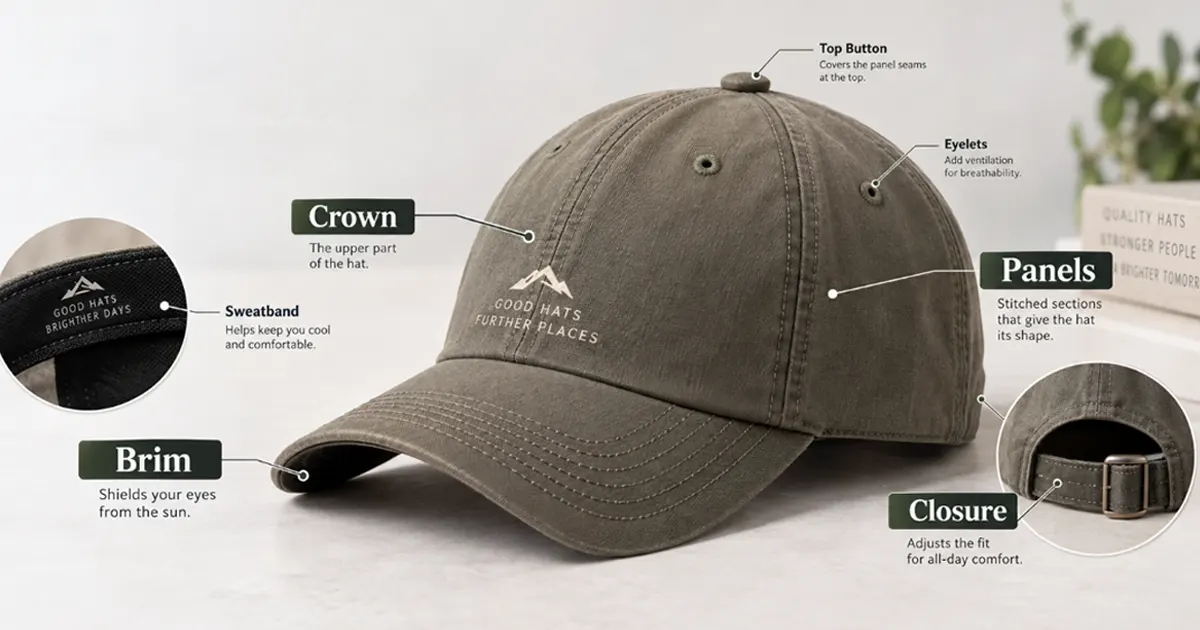
Every hat you pick up shares the same basic blueprint. Four core parts do the heavy lifting:
- The crown is the top portion above the brim that sits on your head. Its uppermost peak is the tip, and it often carries pinches or dents along the front, back, and sides.
- The brim is the ledge protruding from the base of the crown. Wider brims shade your face, ears, and neck. The underside is the underbrim, and makers often finish the edge with binding in leather, silk, or grosgrain ribbon.
- The sweatband, also called the inner band, circles the inside just above the underbrim. It holds the fit snug and keeps the hat shape intact. Leather and synthetic leather-like materials are common here.
- The lining is the optional interior layer. Soft fabrics such as satin, velvet, synthetic mesh, cotton, or silk add comfort and a finished look.
Caps follow a slightly different path. They swap the brim for a bill and build the body from panels and closures instead.
Why the Anatomy of a Hat Matters
Learning this vocabulary pays off the moment you shop. You can judge fit before you reach the register. A sweatband that grips too tight will give you a headache by noon. A lining that traps heat will ruin a summer walk. You can also spot durability. Stitching along the brim edge, the quality of the inner band, and the firmness of the crown all tell you how long a hat will last.
Style decisions get easier too. The shape of the top portion defines a hat’s personality. A teardrop crease suits a square face, while a classic dress hat style flatters oval or long faces. Brim width balances your proportions. Narrow brims run about 5 to 6.5 centimeters, medium widths land between 7 and 9 centimeters, and large brims stretch past 9.5 centimeters. Once you know these ranges, you can match a hat to your face instead of guessing.
How Hat Parts Work Together
No component operates alone. Each one supports the others, and the mix changes everything about hat structure. Compare two everyday styles side by side:
| Feature | Baseball Cap | Fedora |
|---|---|---|
| Top section | Rounded crown, no crease | Pinched crown with dents |
| Front projection | Stiff bill | Wide, shaped brim |
| Body construction | Sewn panels | Single felt or straw body |
| Fit mechanism | Closure at the back | Sized sweatband |
A baseball cap relies on its panels for shape and its closure for fit. A fedora leans on a blocked crown and a sized inner band. Swap one part and the whole hat changes character.
This is why the anatomy of a hat rewards close attention. The crown sets height and silhouette. The brim controls shade and drama. The sweatband and lining decide comfort. Panels and closures handle structure and adjustability on caps. Together they form a system, and a weak link shows up fast. A gorgeous wide brim means nothing if the inner band slips. A perfect crown loses its charm when the lining itches.
Think of it like a house. The crown is the roof, the brim is the eaves, and the sweatband is the foundation. Pull any piece out of balance and the whole thing feels wrong. Get them working together, and you forget you are even wearing it.
The Crown: Shape and Structure
What Is the Crown?
The crown is the top portion resting on your head. It gives the hat its overall shape and height. The crown sets the silhouette. Material choice matters. Felt crowns hold creases well. Straw crowns stay rigid in summer heat. The crown shape defines how the hat transforms your look.
A hat can do what many accessories can’t. It changes the entire silhouette in one move. That’s why the crown shape matters so much.
Common Crown Profiles
Dress hats and caps use different profiles. A fedora uses an indented style. This adds structure without stiffness. A boater uses a flat shape. This gives a crisp, graphic look. A cloche uses a rounded shape. This gives a feminine feel.
Caps also vary by profile. A snapback uses a high-profile panel. This creates a bold edge. A trucker uses a structured panel. This gives a rugged look. A dad hat uses a low-profile build. This gives a relaxed silhouette.
Teardrop and Center Dent
The teardrop profile shapes into a teardrop when viewed from above. The rear forms a distinct C curve. This appears often on cowboy hats. It creates a classic, rugged look. A center dent has a single crease running down the middle. The dent runs one to two inches deep. The profile shows up on trilby styles. It suits many face shapes naturally.
Flat and Round Crowns
A flat top crown has a cropped surface. You see this on top hats and pork pies. It creates a sharp, graphic silhouette. The round style is the most common option. It has a smooth dome. This fits most heads naturally. It appears on gambler hats and bucket hats.
Crown Height and Fit
Crown height affects both look and comfort. Low crowns sit close to the head. They create a subtle silhouette. Medium crowns balance height and comfort. They suit many face shapes. High crowns sit above the forehead. They create a bold silhouette.
The crown shape influences fit on different head shapes. A round oval head needs a different crown shape than a long oval head. Matching the crown shape to your head helps distribute pressure evenly.
Common crown shapes include tall and short variations. Working with common crown shapes helps you choose the right profile. Consider your face shape too. A square face benefits from soft rounded silhouettes. A heart face works with medium brims. A long oval face needs wider brims for balance.
When trying options, check a few things. Make sure it sits low enough to touch your ears. Treat pressure points as a shape problem. Use wider brims for larger frames.
The Brim: Shade and Style
What Is the Brim?
The brim is the horizontal outer edge of a hat that projects outward from the crown. It frames your face and creates shade. The underside of this projection is the underbrim. You see it when you tilt your hat or look up from below. Makers often finish the underbrim with binding in leather, silk, or grosgrain ribbon for a polished look.
For baseball caps, the stiff front part is called the bill or visor. It shades your eyes during play. A curved bill on a cap works differently than a wide brim on a sun hat. The cap bill offers focused eye protection. A wide brim on a straw hat covers your whole face and neck.
Brim Types and Shapes
Brims come in many shapes. Each one changes how a hat functions and feels. A cowboy hat uses a wide, curved brim for sun and rain protection. A trilby uses a short, narrow brim for a sharp, stylish look. A fedora often uses a medium brim with a slight snap. The shape you pick depends on your needs and your personal style.
Flat and Curved Brims
A flat brim runs straight and level. It creates a bold, modern silhouette. You see this on some caps and boater hats. A curved brim bends downward or upward. It follows the natural curve of your head. This shape offers more shade and a softer look. A straw hat with a curved brim feels relaxed and beach-ready.
Downturned and Upturned Brims
A downturned brim angles toward the ground. It hides your eyes and adds mystery. A floppy sun hat often uses this shape. An upturned brim angles away from your face. It opens up your features and feels cheerful. A bucket hat uses a downturned brim. A cowboy hat often uses an upturned edge at the sides.
Brim Size and Sun Protection
Brim size directly affects how much sun protection you get. The brim provides indirect protection through shade beyond the skin directly covered by the hat’s materials. Hats, regardless of brim size, can fail to achieve adequate UV protection for the face. The maximum predictive protection factor is about 76% reduction in UV exposure based on angles of UV exposure.
Health organizations recommend wide-brimmed hats for real sun safety. Here is what they suggest:
| Organization | Recommended Hat Style | Brim Length Recommendation |
|---|---|---|
| American Academy of Dermatology (AAD) | Wide-brimmed hat | Not specified; advises covering neck and ears |
| Skin Cancer Foundation (SCF) | Wide-brimmed hat | At least 3 inches |
| American Cancer Society (ACS) | Wide-brimmed hat or Legionnaire-style hat | At least 2 to 3 inches |
| UK/Australian Standards (BS 8466:2006; AS/NZS 4399:2017) | Wide-brimmed hat or Legionnaire-style hat | At least 7 cm (2.75 inches); 360-degree circumferential brim |
A baseball cap alone does not offer much UV protection to the cheeks. A circumferential brim of at least 2.75 inches likely accounts for added ear protection and additional nose and neck protection. Focus on crown coverage, a circumferential brim of at least 2.75 inches, and materials with minimal disruption rather than relying on UPF claims alone.
Panels: Building Blocks of Caps
What Are Panels?
Panels are the fabric sections sewn together to form the body of a cap. Picture each panel like a slice of a pie. Every piece shapes a portion of the dome. A hat without panels would look flat and formless. The number of panels changes how the final piece sits on your head.
Panels are most common in baseball caps and similar styles. You will not find them on a fedora or a beanie. A fedora uses a single piece of felt. A beanie stretches over your head. A cap relies on panels for its structure. Cut the panels right, and it holds its shape. Cut them wrong, and it collapses. No other style of hat uses panels quite like this.
The panels also influence fit. A piece with more panels follows the curve of your head more closely. Fewer panels create a looser shape. The stitching between panels adds strength. It also adds visual lines that define the design’s character.
Six-Panel vs. Five-Panel Caps
A six-panel cap uses six fabric sections. This is the classic baseball cap design. It creates a rounded, structured dome. The front two panels often join together. They form a smooth surface for logos or embroidery. This style sits high on the head. It gives a bold, sporty look.
A five-panel cap uses five sections. This design creates a flatter dome. The front panel is one large piece. It gives a clean canvas for designs. Five-panel caps often have a lower profile. They sit closer to the head. You see this style on trucker hats.
The panel count changes more than looks. A six-panel cap holds its shape better over time. The extra seam adds structure. A five-panel piece packs flatter. It folds easier for travel. What do you need? Sturdy shape? Try six panels. Relaxed fit? Go with five.
Panels and Ventilation
More panels mean more seams. More seams mean more chances for airflow. This is why makers think carefully about panel count. A cap with solid fabric panels traps heat. That works fine for cold weather. But for summer, you want breathability.
Some pieces use mesh panels between the front panels. The mesh replaces the solid fabric in the back sections. This design lets air flow through. It keeps your head cool. The mesh also adds a sporty look.
The key parts of a baseball cap include panels, the bill, and the closure. Panels form the body. The bill shades your eyes. The closure secures the fit. Each part works together. But panels do the heavy lifting for shape and structure.
When you choose a cap, look at the panel count. Feel the fabric between the panels. Check for mesh if you need ventilation. Good panel design feels light and comfortable. Poor design feels heavy and hot.
The panel count also affects wear over time. A six-panel piece keeps its shape through many wears. The seams hold the structure. A five-panel piece softens with age. It molds to your head. Both work well. Pick what you prefer.
Closures: Securing the Fit
What Is a Closure?
The closure is the mechanism at the back of a cap that secures it to your head. It sits at the rear opening and brings the two sides together. This small part decides how snug or loose your cap feels. It also controls how easily you can adjust the fit throughout the day.
A good closure disappears into your routine. You put the cap on, set the tightness once, and forget about it. A bad one slips, pinches, or leaves a gap. That tiny strip of plastic or metal shapes your whole experience.
Closure Types
Different closures serve different needs. Some prioritize a clean look. Others prioritize adjustability. Here is how the main options compare:
- Fitted caps provide a clean, seamless appearance and see use in professional sports. You must select the correct size for a comfortable fit, so a wrong size becomes an instant con.
- Flexfit caps combine that clean look with an elastic sweatband that stretches to fit various head sizes. You get comfort without an adjustable strap.
- Snapback caps feature a structured front, an adjustable plastic snap closure, a flat brim, and a high-profile crown. They are popular for streetwear and team merchandise, and their firm front panels work well for large embroidered logos.
- OTTO FLEX® hats emphasize superior comfort, stretchability, anti-odor, moisture-wicking, and anti-bacterial sweatbands. The description implies quality that lasts for years.
- OTTO COMFY FIT® caps offer stretchability, adjustable closures, and performance sweatbands. They carry claims of high durability and rank as the most comfortable option.
Fitted and Flexfit
A fitted cap comes in one size. You check your measurement and commit. The payoff is a smooth back with no strap or gap. The risk is simple: wrong size, wrong feel. Flexfit solves that problem. An elastic sweatband stretches across a range of head sizes. You keep the clean look and gain flexibility.
Snapbacks and Adjustable Straps
A snapback uses a plastic snap closure at the back. You pop it open, set the size, and snap it shut. The structured front holds its shape. That firm panel makes snapbacks a favorite for large logos and team merchandise. An adjustable strap works the same way. You thread the strap through a buckle or slide and lock it down.
Buckle and Velcro Closures
Metal buckle straps give you a classic, secure hold. You thread the strap and cinch it tight. Hook-and-loop closures, often called Velcro, offer the fastest adjustment. You press the two sides together and you are done. Stretch-fit bands skip the hardware entirely. The fabric itself expands and contracts.
Closures and Adjustability
Your closure choice affects fit, comfort, and adjustability every time you wear your cap. A fitted cap locks in one size. A snapback lets you loosen or tighten on the fly. A Flexfit stretches with you. Think about your day. Do you need a set-and-forget cap? Go fitted or Flexfit. Do you share caps or adjust often? A snapback or strap gives you that freedom.
The closure also changes the cap’s personality. A plastic snap reads casual and sporty. A metal buckle feels more classic. A clean fitted back looks polished. Pick the closure that matches how you live. Your head will thank you.
Inner and Finishing Parts
Sweatband and Liner
The sweatband is a strip of material inside the hat that touches your forehead. It soaks up sweat and helps the hat stay on. Terry cloth is one of the best fabrics for absorbing sweat. It works well even in cold weather, unlike other fabrics that let sweat pool and cool your skin. A good sweatband keeps your hat comfortable all day.
The liner is the inside layer of a hat. It makes the hat more comfortable and protects it. Soft fabrics like satin, velvet, or cotton feel gentle on your head. A quality liner also keeps oils and moisture away from the hat’s inside. Together, the sweatband and liner shape how the hat feels when you wear it.
Underbrim and Decorative Elements
The underbrim is the bottom side of the brim. You see it when you tilt your hat or look up. Makers often cover it with leather, silk, or grosgrain ribbon. This detail adds a finished look and protects the edge from wear.
Decorative elements like hat bands and bows wrap around the crown for style. A hat band can turn a plain straw hat into a standout piece. On a fedora, a ribbon hat band adds classic elegance. These touches show craftsmanship and personal taste.
How Finishing Parts Affect Comfort
Finishing parts affect comfort, durability, and appearance. A moisture-wicking sweatband dries fast and controls heat. It stays breathable, soft, and hypoallergenic. It does not soak up sweat, so you avoid sogginess. Here is how different liners compare:
| Liner | Sweat Absorption | Wearability | Longevity |
|---|---|---|---|
| SweatHawg Headband X2 | Hyper-absorbent; minimizes sweat effects | Smooth, lightweight; stays on during intense activities | Known for grip; supposed to last long |
| SWEATSOpad Hard Hat Sweatband | Excellent absorber; prevents dripping | Comfortable in extreme weather; hook-and-loop closure | Remarkable durability; hand wash and hang dry |
| No Sweat Hard Hat Sweatband | Patented SweatLock Technology locks sweat inside | Soft, lightweight, hypoallergenic | Disposable; some users report up to 5 days |
A straw hat with a poor sweatband will slip and feel uncomfortable. A straw hat with a quality band stays in place. The same logic applies to any style. These small parts decide whether you reach for a hat again or leave it on the shelf.
Hat Parts Across Styles
Baseball Cap vs. Fedora
The parts of a hat appear in every style, but each style transforms them. Take a baseball cap and a fedora. The cap uses panels to build its crown. A baseball cap crown has five or six fabric sections sewn together. A fedora uses one continuous piece of felt. The crown shape differs completely. A fedora crown sits taller and often carries pinches or dents.
The brim also varies. A fedora has a brim that runs all the way around. A baseball cap uses a stiff bill in front only. Closures differ too. A fedora uses a sized sweatband. A baseball cap uses a snap or strap at the back.
Beanies and Bucket Hats
Beanies skip many parts. No brim, no closure. Just a soft crown that stretches over your head. The crown shape stays simple and close-fitting. A bucket hat has a soft, downturned brim that circles your head. The crown sits loose and rounded. Both styles show you can remove parts and still have a comfortable design.
Materials and Part Variation
The material you pick changes how each part behaves. Hat materials like straw and felt create different results. A straw crown stays rigid. You cannot dent or pinch a straw crown. A cowboy hat in straw keeps a wide, straight brim. A trilby hat in straw feels crisp and lightweight. The brim stays flat.
Felt changes everything. A felt crown holds a dent perfectly. Steam it, press it, and the shape stays. A cowboy hat in felt can take a curved brim. The brim bends and holds its curve. A trilby hat in felt lets you snap the brim down. The crown shape works with the material.
Straw behaves differently from felt. A straw brim stays stiff and straight. A felt brim bends and flexes. A cowboy style uses both materials. The straw version works for hot days. The felt version works for cooler weather. A trilby style works in straw or felt. A cowboy design changes character with each material. The crown shape depends on what the material can hold. Understanding hat materials helps you choose wisely.
Your Ultimate Hat Guide
Fit and Comfort Priorities
Fit comes first. A hat that looks great on a shelf means nothing when it pinches your forehead or slides around. Start with the sweatband. It should hug your head without leaving marks. If you feel pressure points after a minute, size up. The crown should sit low enough to touch your ears. A gap between the crown and your head signals a poor hat fit.
Comfort depends on more than size. Check the lining. A soft cotton or satin liner feels gentle against your skin. A rough liner will itch by midday. Look at the sweatband material too. Terry cloth absorbs moisture well. Synthetic blends dry faster. Pick based on your climate and how much you sweat.
Before you buy online, measure your head. Wrap a soft tape measure around your head just above your ears. Keep the tape level and snug. Write down the number in inches or centimeters. Compare it to the brand’s size chart. Every maker sizes differently, so measure your head each time you shop a new brand. This one step prevents most returns.
Weight matters as well. A heavy felt hat tires your neck after hours of wear. A lightweight straw hat feels breezy in summer. Hold the hat in your hand. If it feels heavy now, it will feel heavier on your head. Balance matters too. A wide brim shifts the center of gravity. Make sure the crown fits snugly enough to keep everything steady.
Style and Face Shape
Your face shape guides every style choice. The right crown height and brim width balance your features. The wrong combo fights them. Here is how the main face shapes match up:
| Face Shape | Recommended Hat Styles | Why It Works |
|---|---|---|
| Round | Fedora or trilby with a wide brim; tall top hat or high-crown hat; cloche; beanie pulled low | A round face has similar length and width. Angular styles with a low crown and wide brim elongate the face. |
| Oval | Fedoras; sun hats; wide-brimmed hats; almost any style | An oval face has balanced, symmetrical features. It can wear almost any hat style. |
| Square | Fedora with a rounded crown; bucket hat; wide-brimmed sun hat | A square face has strong, angular features. Rounded lines soften the angles and balance the face. |
Crown height changes your silhouette. A high crown adds length. A low crown keeps things subtle. Brim width shifts proportions too. Narrow brims run about 5 to 6.5 centimeters. Medium widths land between 7 and 9 centimeters. Large brims stretch past 9.5 centimeters. A wide brim adds drama. A narrow brim feels sharp and modern.
Closure type matters for caps. A fitted cap gives a clean look. A snapback lets you adjust on the fly. A Flexfit stretches with your head. Think about how you wear your hat. Do you set it once and forget it? Go fitted. Do you share caps or adjust often? Pick a snapback or strap.
Learning how to choose a hat comes down to two things. Know your face shape. Know your comfort needs. Then match the parts to both.
Trying On Hats
Always try before you buy when you can. Start with the sweatband. It should feel snug but not tight. Press two fingers between the band and your forehead. If they fit easily, the hat is too loose. If they barely squeeze in, the hat is too tight.
Next, test the brim. Look straight ahead. Can you see the edge of the brim in your upper vision? A brim that dips too low blocks your view. A brim that sits too high offers little shade. Find the angle that shades your eyes without hiding the world.
Walk around the store. Shake your head gently. Does the hat stay put? If it shifts, the fit is wrong. Check the crown too. It should not press against your skull. It should not float above your head either.
Check a mirror from several angles. Turn your head left and right. Look at the profile. Does the crown height suit your face? Does the brim width balance your shoulders? Small changes make a big difference.
If you shop online, read the return policy first. Measure your head at home. Compare your number to the size chart. Order two sizes when you are unsure. Send back the one that does not work. This ultimate hat guide exists to save you time and money. Use it every time you shop. With these tips, you can walk into any store and pick a hat with confidence.
Conclusion
You now know the parts of a hat. The crown sets the shape and height. The brim gives shade and frames your face. Panels build a cap’s shape and hold logos. Closures lock in the fit with snaps or straps. Sweatbands and liners add comfort and soak up moisture. Learning the anatomy of a hat changes how you shop. You notice quality construction. You check fit before you buy. You pick shapes that flatter your face and match your style. As a manufacturer, we offer a wide variety of hats and support customization services to meet your specific needs. This anatomy gives you real buying power. Understanding this anatomy means walking into any store with confidence. You know exactly what to look for in every style.
FAQ
What is the crown of a hat?
The crown is the top portion that rests on your head. It sets the height and silhouette. A fedora crown often carries pinches or dents. A baseball cap crown stays rounded and smooth. Material matters too. Felt holds a crease well, while straw stays rigid.
How do I know if a hat fits properly?
Start with the sweatband. It should hug your head without leaving marks. Press two fingers between the band and your forehead. If they slide in easily, the fit is too loose. The crown should sit low enough to touch your ears.
Which brim width works for my face shape?
A round face benefits from a wide brim and a low crown. That combo elongates your features. A square face looks better with rounded crowns and softer lines. An oval face can wear almost any style. Narrow brims run about 5 to 6.5 centimeters. Medium widths land between 7 and 9 centimeters.
How much sun protection does a brim offer?
A baseball cap bill shades your eyes but leaves your cheeks exposed. The Skin Cancer Foundation recommends a brim of at least 3 inches. A circumferential brim of at least 2.75 inches adds ear, nose, and neck protection. Wide brims beat UPF claims alone.
What is the difference between a five-panel and six-panel cap?
A six-panel cap uses six fabric sections. It creates a rounded, structured dome. The front two panels form a smooth surface for logos. A five-panel cap uses one large front piece. It sits lower and packs flatter. Six panels hold shape better over time.
Which closure type should I pick?
A fitted cap gives a clean, seamless back. You must know your exact size. A snapback lets you adjust on the fly. A Flexfit stretches across a range of head sizes. Think about your day. Do you set it once and forget it? Go fitted. Do you adjust often? Pick a snapback.
How do sweatbands and liners affect comfort?
The sweatband touches your forehead and absorbs moisture. Terry cloth works well in cold weather. A quality liner keeps oils away from the fabric. Soft satin or cotton feels gentle on your skin. A rough liner will itch by midday. These small parts decide whether you reach for that hat again.