
A beanie is a close-fitting, brimless hat designed for warmth, comfort, style, or a combination of all three. While early versions were made from felt and other woven fabrics, most modern beanies are knitted from materials such as acrylic, wool, cotton, polyester, or blended yarns.
Today, beanies come in many different shapes, fits, and constructions. Some sit close to the head, while others have a relaxed or slouchy profile. Certain styles are designed for cold weather and outdoor use, while others are created mainly for fashion, streetwear, or everyday casual wear.
Understanding the different types of beanies makes it easier to choose the right style for your needs. In this guide, we’ll explore the most popular beanie styles, explain how they differ in fit, warmth, materials, and appearance, and help you decide which type of beanie is right for you or your brand.
Key Takeaways
- Beanies have many different styles, and each style has a unique look and purpose.
- Cuffed beanies have a folded band that adds warmth and a neat look.
- Slouchy beanies give off a laid-back, casual feel with extra fabric at the back.
- Fisherman, watch cap, and skull cap styles fit close to the head for active use.
- The material you pick changes how warm, how long it lasts, and how comfy it is: acrylic is cheaper, wool is warm, and cotton lets your head breathe.
- Use a tape to measure around your head so your beanie fits well: most adults need one that fits 21.5 to 22.5 inches.
- Wash your beanie by hand and let it air dry to keep its shape and warmth.
- Custom beanies with embroidery or patches help brands show off their logo.
What Is a Beanie
Close-Fitting, Brimless Design
A beanie is a snug, brimless cap that hugs the head. It has no visor and no bill. Instead, the fabric stretches over the skull and often covers the ears. That simple shape gives the hat its cozy feel and its clean look. People reach for one when the temperature drops. They also wear one when they want to add a casual touch to an outfit. The snug fit keeps the hat in place, even on a windy day.
The name itself has a fun story. One popular idea traces the word to “bean,” an old slang term for the head. The diminutive suffix “-ie” turns “bean” into “beanie.” That slang shows up in U.S. baseball talk. The term “bean” for head dates to 1905, and the verb “bean,” meaning to hit someone on the head, appears by 1910. The word “beanie” itself first shows up in 1940 in U.S. baseball slang. So the next time someone asks what is a beanie, you can tell them it may literally mean “little head.”
The term “beanie” comes from the slang “bean” meaning “head,” with the “-ie” suffix added, first recorded in 1940 in U.S. baseball slang.
Other explanations exist too. Some people point to the small cloth-covered button on the crown, which is about the size of a bean. Others link the word to medieval university hats called “bejaunus” or “beanus,” which later became college beanies. No single answer wins, but the head-slang theory has the strongest support.
From Felt to Knit: Origins of the Beanie
Early beanies were not knitted at all. They started as felt or cloth caps. Those materials gave the hat a firm shape and a smooth surface. Workers, students, and athletes wore them for practical reasons. The felt version held its form well, but it did not stretch much. That limited how well it fit different head sizes.
Over time, makers switched to knitting. Knitted beanies stretch to fit, trap air for insulation, and come in endless patterns. That shift made the hat far more versatile. A knit cap can be thin for mild days or thick for deep cold. It can be cuffed, slouchy, or snug. This flexibility turned a simple felt cap into a wardrobe staple. Today, knitted beanies deliver essential warmth and style in one package.
Types of Beanies at a Glance
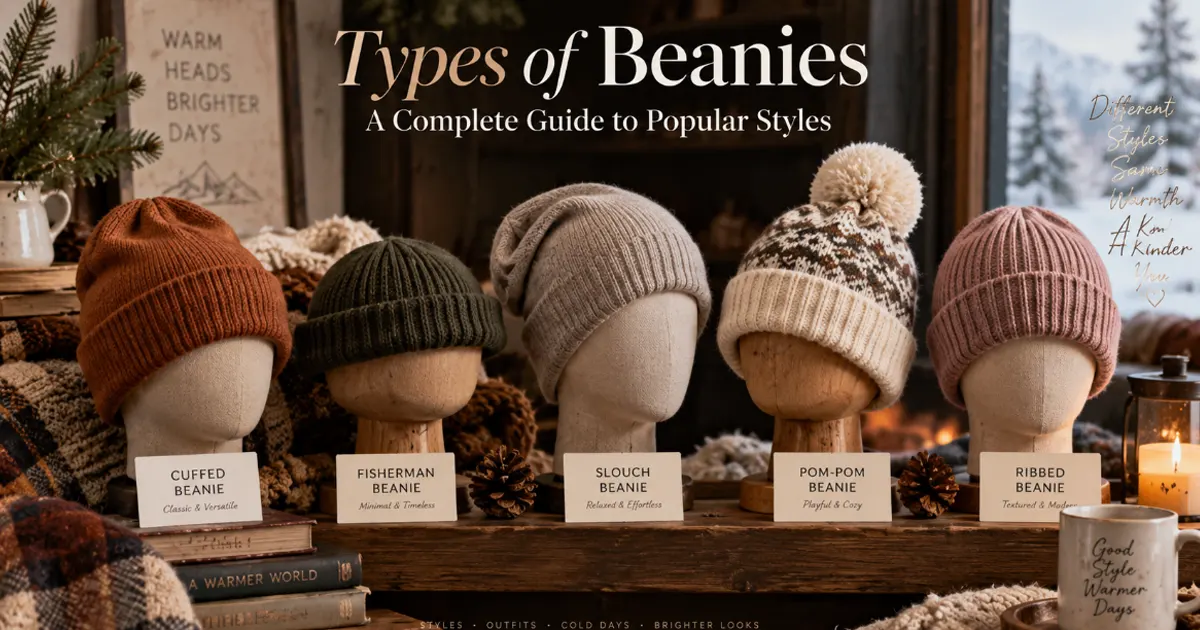
Beanies come in many shapes and styles. Each one serves a different purpose. Some beanies keep you warm on the coldest days. Others add a touch of fashion to your outfit. The main types of beanies include cuffed beanies, slouchy or cuffless styles, fisherman beanies, watch caps, skull caps, pom-pom beanies, ribbed beanies, and performance beanies. Each type offers a different fit, look, and level of warmth. Some beanies sit tight against the head. Others have extra room for a relaxed feel. Knowing these differences helps you pick the right one for your needs. No matter which beanie you choose, it helps to understand what makes each style special.
Cuffed Beanies
Cuffed beanies feature a folded band at the bottom. That fold, or cuff, adds extra thickness around the forehead and ears. It also helps the hat stay in place. Standard cuffed beanies have a visible cuff height of 7 cm (2.76 in). That measurement gives the hat a neat, tidy look. The double layer of fabric over the ears provides extra warmth. Many people choose them for their clean appearance and snug fit. They work well for casual wear and outdoor activities. The cuff also allows you to adjust the fit slightly. You can roll it up higher for a shorter look. Or you can let it sit lower for more coverage. These hats remain one of the most popular styles for good reason. They balance warmth and style in a simple package. The structured fold keeps the hat from sliding around. This type of beanie fits most head sizes comfortably. The cuff adds a finished edge that many people like. Men and women alike reach for this style.
Slouchy and Cuffless Styles
Slouchy styles skip the cuff. They have extra fabric that gathers at the back or top of the head. That extra material creates a relaxed, effortless look. The wearer does not seem like they are trying too hard. Slouchy beanies are comfortable and versatile headpieces once you know how to style them. Even a small amount of extra fabric produces that easygoing appearance. You can pull them down over the ears for warmth. Or you can push them back for a looser fit. They pair well with casual outfits like jeans and sweaters. Cuffless beanies work in a similar way. They lack a fold at the bottom, so they sit naturally on the head. The key difference from cuffed styles is the extra fabric in slouchy styles. That extra length gives them their signature drape. People who want a laid-back vibe often reach for these hats. This beanie style works great for everyday wear. They add a touch of personality to any outfit. The relaxed fit makes them a go-to choice for off-duty days.
Fisherman, Watch Cap, and Skull Cap Styles
These three styles share a close fit and practical roots. The fisherman beanie has a long history. Scottish fishermen in the 17th century wore them first. Portuguese fishing communities, especially the Povoan culture, also adopted the style. These caps stayed put in harsh winds. They kept fishermen warm during long hours at sea. Watch caps come from naval tradition. Sailors standing watch on cold, damp decks wore them for warmth. The U.S. Navy officially adopted the watch cap in the early 20th century. It became standard-issue cold-weather gear. The table below shows the historical timeline:
| Era | Style | Origin / Community | Naval or Maritime Association |
|---|---|---|---|
| 17th–19th Century | Fisherman Beanie | Scottish fishermen (17th c.) and Portuguese fishing communities (notably Povoan culture) | Worn at sea for warmth, wind resistance, ear coverage, and cushioning under fishing gear |
| 18th–Early 20th Century | Watch Cap | Naval tradition; sailors standing watch on cold, damp decks | Directly tied to naval culture; officially adopted by the U.S. Navy as standard-issue cold-weather gear in the early 20th century |
Skull caps fit even tighter than fisherman beanies. They hug the head closely and do not have extra length. People wear them for warmth under helmets or for a low-profile look. These types of beanies suit active use. They trap heat without adding bulk. These caps and watch caps offer more coverage. They often cover the ears and sit lower on the forehead. All three styles share a practical, no-fuss design. The close fit provides comfort and warmth. Each style brings its own history and purpose to the table. The style often uses thicker yarns for extra insulation. Watch caps have a tighter knit that blocks wind. Skull caps provide a minimalist option for those who want a little warmth from their beanies.
Comparing Beanie Styles
Fit and Shape Differences
Fit separates one style from another more than any other factor. Cuffed beanies sit snug against the skull. The folded band adds a double layer around the forehead and ears. That fold measures about 7 cm (2.76 in) on a standard cuff. Slouchy styles work the opposite way. They carry extra fabric that gathers at the back or top. The wearer gets a relaxed drape instead of a tight hug. Fisherman beanies, watch caps, and skull caps all fit close. The skull cap hugs tightest of all. It leaves no extra room and sits low on the head.
Shape also changes how a hat frames the face. A tall cuff adds height. A short cuff keeps things neat. A slouchy beanie softens the silhouette and draws the eye upward. A watch cap covers the ears and sits low on the forehead. That low profile suits cold, windy days. A skull cap works under a helmet without adding bulk. So the shape you pick decides both the look and the level of coverage.
Warmth and Climate Suitability
Warmth depends on fabric weight, knit density, and how much skin the hat covers. Cuffed beanies use a double layer for extra warmth. Watch caps are wind-resistant, developed for naval use. Fisherman beanies offer warmth and wind resistance. Skull caps provide light coverage for active use. Slouchy beanies offer versatile comfort.
Style and Use Case Matching
Use case ties everything together. A cuffed beanie fits casual wear, outdoor work, and everyday errands. A slouchy style pairs well with jeans and sweaters for a laid-back look. Fisherman beanies carry a rugged, maritime feel. Watch caps bring a clean, practical edge. Skull caps suit runners, cyclists, and anyone wearing a helmet. Beanies in pop culture often push one style into the spotlight for a season. That attention rarely changes the basics, though. Fit, warmth, and comfort still drive the choice.
Think about where the hat will live. A commuter in a cold city wants a cuffed or ribbed beanie. A hiker wants a watch cap that stays put in wind. Someone who mostly wants style may reach for a slouchy or pom-pom option. Match the hat to the job, and it will earn its place in the rotation.
Beanie Materials Explained
Acrylic and Polyester Blends
Acrylic is the most used material in budget beanies. It gives you the best value and lasts a very long time. Acrylic does not pill, keeps its shape, and can last for years of normal wear. That mix makes it the top pick for everyday winter beanies. Polyester blends work in much the same way. They hold color well and dry fast. These synthetic beanies also cost less than natural fiber choices. A shopper with a tight budget can find a good hat without spending much.
Synthetic beanies do have some downsides. They may feel less breathable than wool. Some people notice a little scratchiness on the skin. Still, modern blends make that feel softer. A polyester-cotton mix adds comfort without losing durability. For most casual wear, acrylic and polyester beanies give solid performance at a friendly price.
Wool and Cotton Options
Wool beanies bring natural warmth and breathability. Merino wool feels soft on the skin. It controls temperature well, so the wearer stays warm without getting too hot. Wool also fights odors on its own. That makes it a great pick for hiking or long outdoor trips. Lambswool gives similar benefits at a lower cost. These beanies work well in cold climates where insulation matters most.
Cotton beanies work better for mild weather. They feel soft and breathable. Cotton does not trap heat the way wool does. That makes it a poor choice for deep winter. A cotton beanie shines in spring or fall. It pairs well with casual outfits. Cotton also takes dye easily, so it comes in many colors. The downside is shrinkage. A cotton beanie may lose its shape after a few washes. Careful handling keeps it looking fresh.
Recycled and Performance Fabrics
Recycled fabrics are gaining ground in the beanie market. Makers spin old plastic bottles into polyester yarn. The result looks and feels like new material. These beanies appeal to eco-conscious buyers. They reduce waste and use less energy to produce. Performance fabrics take things further. They wick moisture away from the skin. Some add antimicrobial treatments to fight odor. Others include stretch fibers for a snug fit during activity.
These technical beanies suit runners, skiers, and cyclists. They stay put during movement. They dry fast after sweat or snow. A performance beanie may cost more than a basic acrylic one. The extra features justify the price for active users. For everyday wear, a simple acrylic or wool beanie does the job. The table below compares the main material types.
| Material | Warmth | Durability | Best Use |
|---|---|---|---|
| Acrylic | Warm | Very high | Everyday winter wear |
| Wool | High | Good | Cold climates, outdoor |
| Cotton | Low to medium | Low to medium | Mild weather, style |
| Recycled/Performance | Varies | Good | Active sports, eco-friendly |
Custom Beanies for Brands
Embroidery and Patch Options
Brands love custom beanies because they turn a simple hat into a walking billboard. Embroidery gives the cleanest look. A stitched logo sits flat on the knit and survives years of wear. Flat embroidery handles up to 6 thread colors. That range covers most team logos and company marks. A design with more colors needs unlimited color embroidery. This method handles logos with more than 6 colors without losing detail.
Patches offer another path. A woven or leather patch sews onto the cuff or front panel. Patches work well when a logo has fine text or tiny shapes. They also let a brand swap designs without re-stitching the whole hat. 3D puff embroidery adds raised texture, but it limits the palette to 1–3 colors. That trade-off matters for bold, simple marks.
| Embroidery Technique | Maximum Color Options |
|---|---|
| Flat embroidery | Up to 6 thread colors |
| 3D puff embroidery | 1–3 colors |
| Unlimited color embroidery | Unlimited colors (for logos with more than 6 colors) |
Pom-Poms, Colors, and Labeling
Color choice drives the look of a custom order. Suppliers stock a wide range. The Dri Duck 3523 Coleman Cuffed Beanie comes in 10 colors. The New Era NE908 Core Classic Cuff Beanie and NE902 Sideline Beanie each come in 6 colors. The New Era NE903 Ribbed Tailgate Beanie offers 5 colors. A brand with a tight palette can match its exact shade. A brand that wants variety can stock several options.
Pom-poms add a playful touch. They suit youth lines, winter promotions, and gift sets. Woven labels and tagless prints handle branding on the inside. A small flag label on the cuff works well too. These details make a hat feel finished.
Choosing Materials for Custom Orders
Material choice shapes cost, comfort, and durability. Acrylic beanies cost the least and hold up for years. They suit high-volume orders and giveaway events. Wool beanies feel warmer and breathe better. They fit premium lines and outdoor brands. Recycled fabrics appeal to eco-conscious buyers. Performance knits work for sport and activewear lines.
Brands should match the fabric to the season and the audience. A ski resort wants wool or a technical blend. A coffee shop wants a soft acrylic beanie in its signature color. Order size also matters. Larger runs lower the unit price. Small runs limit color and material choices. A brand should confirm the stitch count, thread colors, and label placement before production starts. That step prevents costly surprises.
Choosing the Right Beanie Style
By Target Market and Climate
The best beanie fits the wearer’s climate and what they do each day. Cold places need cuffed or Jacquard styles. These hats add more warmth around the ears and forehead. Milder winter weather works well with midi or skully styles. They give lighter cover and stop you from getting too hot on warmer days.
Different activities need different features. Hikers need beanies that cover the ears with materials that breathe but still hold heat. Runners need a light, snug hat made of fabric that pulls sweat away. That fabric handles sweat while keeping warmth in. Cyclists want thin performance beanies that fit under a helmet and stay firmly in place. Skiers and snowboarders care about both warmth and style. A knit beanie works well off the slopes. A thin thermal beanie goes under the helmet for on-slope use.
Weather also helps guide the choice. Cool weather suits a relaxed, loose style with knitted fabric for just enough warmth. Cold weather calls for thicker options like merino beanies with double cuffs or ribbed textures. Pulled down over the ears, these hats give full protection. Hair type matters too. Slouchy or cuffed beanies suit long hair. Snug or rolled cuff styles work for short hair. Stretchy beanies that flatten curls get swapped for looser knits for curly hair.
By Fit, Material, and Use
A great beanie should feel good right away. Premium beanies stretch through the knit itself. They skip tight elastic bands that press on the forehead and ears. The best beanies stay in place without feeling too tight. They sit naturally on the head and keep their shape after repeated wear.
Material quality directly affects comfort for sensitive skin. Acrylic is durable, lightweight, and warm. It is a popular choice for everyday wear. Wool can feel scratchy and may trigger allergic reactions in some people. Most people find acrylic beanies a comfortable option.
Construction matters for long-term durability. Seam placement, knitting techniques, and finishing methods decide how comfortable a hat feels. A well-constructed beanie keeps its shape. It resists stretching out and avoids pressure points. Popular styles include cuffed versions for extra warmth around the ears, ribbed options for texture and flexibility, fisherman styles worn above the ears, and minimalist designs without logos. A buyer should try different fits to see what works best for their head shape and daily activities.
By Branding and Budget Requirements
Brands picking custom beanies must match the hat to their audience. A ski resort wants wool or technical blends for warmth. A coffee shop wants soft acrylic in its signature colors. Larger orders lower the unit price. Smaller runs limit color and material options.
Branding goals shape style choices. A cuffed beanie gives a flat surface for embroidery. That works well for logos with fine details. Slouchy styles suit a more relaxed brand image. Pom-poms add a playful touch for youth lines and winter promotions. Woven labels and tagless prints handle branding on the inside.
These beanies for all seasons must fit the target market. Acrylic beanies cost less and last for years. They suit high-volume orders and giveaway events. Wool beanies feel warmer and work for premium lines. Recycled fabrics appeal to eco-conscious buyers. Performance knits work for sport and activewear lines. The right beanie earns a place in the customer’s rotation. Quality and craftsmanship give brands a competitive edge with buyers who care about materials.
Beanie Fit and Care Tips
Measuring for the Correct Fit
A proper fit starts with a simple measurement. Grab a soft tape measure and wrap it around the head. Place it just above the ears and across the mid-forehead. Keep the tape snug but not tight. That number tells the whole story. Most adults have a head size that falls within a common range, which typically corresponds to a Medium size. Many one-size beanies fit standard head sizes, with smaller and larger options available.
Sizing labels vary by brand, so check the chart before buying. A general one-size beanie fits most heads. Adult S/M covers smaller head sizes. Adult L/XL handles larger sizes. Shoppers who fall between sizes should size up for a looser feel.
A well-sized beanie sits comfortably without leaving deep marks on the forehead. It should stay put during light movement. If it slides down over the eyes, it is too big. If it squeezes the temples, it is too small. Trying on different styles helps narrow down the best option.
Washing and Storing Your Beanie
Knit beanies need gentle care to keep their shape and warmth. Hand washing is the safest method. Fill a basin with cool water and a small amount of mild detergent. Let the beanie soak for a few minutes. Gently squeeze the suds through the fabric. Avoid twisting or wringing, which can stretch the knit. Rinse with cool water until the soap is gone.
Drying matters just as much. Lay the beanie flat on a clean towel and reshape it by hand. Air drying preserves the fibers and prevents shrinkage. Never put a knit beanie in a dryer. Heat breaks down the yarn and causes beanies to lose their fit. Store beanies folded in a drawer or on a shelf. Hanging them can stretch the crown over time. With proper care, a quality beanie delivers comfortable wear for many seasons.
Conclusion
Beanies come in many styles, not just one. They go from classic cuffed to relaxed slouchy to rugged fisherman. Each type serves different needs. Cuffed beanies give a clean space for brand logos. Slouchy beanies feel more casual and follow trends. Pom-pom beanies add seasonal fun. Fisherman beanies have a simple, short shape. Performance beanies handle cold weather.
Learning about beanie types, materials, and fit helps you make a good choice. This applies to personal use, gifts, or branding. A first-time buyer can start with a classic cuffed beanie. It is versatile and a safe choice. So look at the different styles, find one that fits, and wear or customize your beanies with confidence.
FAQ
What is the difference between a cuffed beanie and a slouchy one?
A cuffed style has a folded band that adds warmth around the ears. A slouchy style skips that fold and carries extra fabric at the back. The cuff gives a snug, tidy look. The slouch gives a relaxed drape. Both work for everyday wear.
Which beanies keep the head warmest in deep winter?
Cuffed and watch cap styles trap the most heat. A thick cuff creates two layers over the ears. A watch cap uses a tight knit that blocks wind. Wool and wool-blend beanies add natural insulation. Slouchy and cotton options suit milder days better.
Do beanies fit every head size?
Most one-size beanies fit standard head sizes. Adult S/M covers smaller heads. Adult L/XL handles larger heads. The average adult fits a medium. Shoppers between sizes should size up.
Are acrylic beanies good for sensitive skin?
Yes. Acrylic is durable, lightweight, and warm. Wool can feel scratchy and may trigger allergic reactions. Most people find acrylic beanies a comfortable option.
How do you wash knit beanies without ruining them?
Hand wash in cool water with mild detergent. Gently squeeze the suds through the fabric. Never twist or wring the knit. Rinse until the soap is gone. Lay the beanie flat on a towel and reshape it by hand. Air dry only.
Can you put beanies in the dryer?
No. Heat breaks down the yarn and causes shrinkage. A dryer also ruins the fit and shape. Always air dry knit beanies flat. This step preserves the fibers and keeps the hat warm for many seasons.
What is the best beanie style for running or cycling?
Performance beanies work best for active use. They wick moisture, dry fast, and stay put during movement. Skull caps fit under helmets without adding bulk. Runners and cyclists should pick a thin, snug design made of technical fabric.
Why do brands choose custom beanies for promotions?
Custom beanies turn a simple hat into a walking billboard. Embroidery handles up to 6 thread colors for clean logos. Patches work for fine text. Acrylic keeps costs low for large giveaway orders. Wool suits premium lines. These beanies earn repeat wear.