
Hats appeal to everyone. But choosing between a stiff, structured cap and a soft, relaxed one is tough. How do you decide between a structured vs. unstructured hat? It comes down to how the hat is built. Structured hats keep a firm shape because they have stiff material inside. Unstructured hats are soft and mold to your head. This difference changes how they fit, how they look, and how your logo shows up.
Corporate events often need structured caps, which keep bold logos sharp and clear. Music festivals prefer unstructured ones for a chill, easygoing feel. This article explains the good and bad points of each. It helps you pick a hat that fits your style, comfort, and where you plan to wear it.
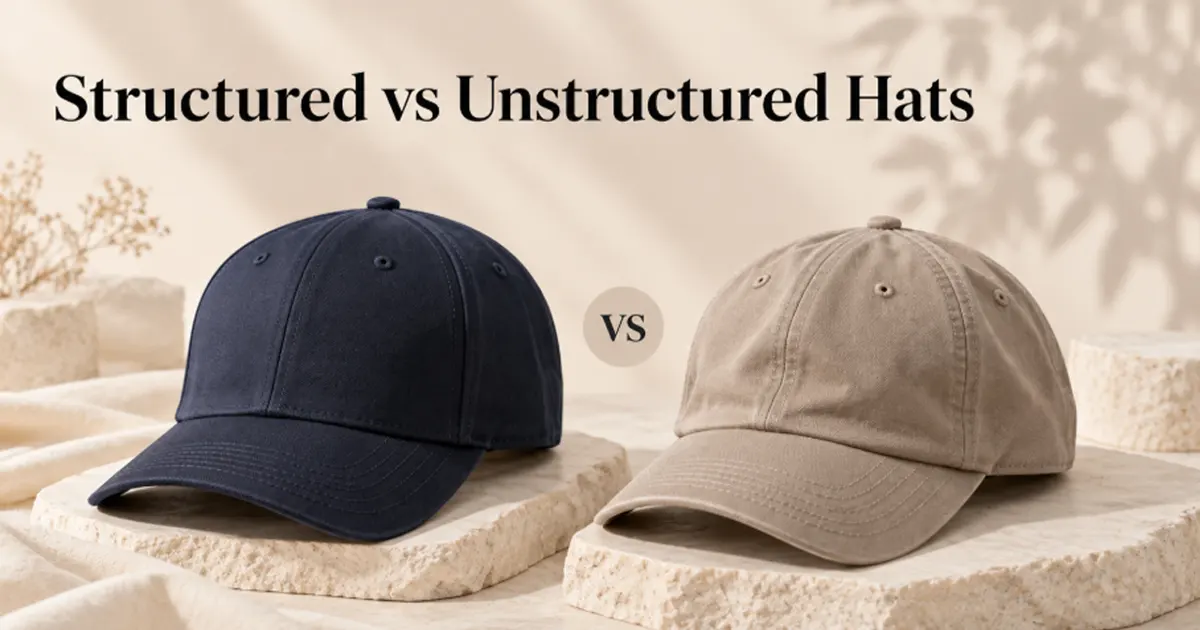
Key Takeaways
- Structured hats have a stiff material called buckram inside the front panels. This keeps the hat’s shape tall and firm.
- Unstructured hats have no buckram. They are soft and shape to your head for a relaxed, comfortable fit.
- Pick a structured hat when you want to look professional. It fits well for business events, sports teams, and strong logos.
- Pick an unstructured hat for casual days. It feels light, breathes well, and packs easily for travel.
- Structured hats need to be stored carefully on a rack or in a box. Unstructured hats can be folded flat without damage.
- Unstructured hats fit bigger heads better because the soft fabric changes shape to fit you. Structured hats require an exact size.
- Hand wash structured hats to keep their shape. You can machine wash unstructured hats using a gentle cycle.
- Your choice depends on the occasion. Structured hats show authority. Unstructured hats show a relaxed style.
Structured vs Unstructured Hat: The Core Difference
Before you look at the details of each style, you need a clear idea of what makes them different. The structured vs unstructured hat question comes down to one simple thing: what is inside the crown. That one choice changes everything about how the hat looks, feels, and works.
The Role of Buckram in Structured Hats
Structured hats use a hidden helper called buckram. This stiff fabric is sewn or glued behind the front two panels of the crown. Think of buckram as cotton fabric dipped in a plastic-like bath. That process makes it rigid and hard to bend. Once makers put this material into the front panels, it creates a firm wall that keeps its shape even when you place the hat down on a table.
This support acts like a permanent press for your cap. The front panels never droop or fall, no matter how many times you wear them. You get a smooth, clean surface that stands up straight and looks sharp from morning to night. That stiffness also makes a perfect base for embroidery. Logos and designs stitch neatly onto the firm front, giving sharp, professional results every time.
The key building difference is the use of buckram – a stiff fabric sewn or glued behind the front two panels of the crown. Structured hats use this to keep a rigid, upright shape even when off the head.
The Soft Build of Unstructured Hats
Unstructured hats go the other way. They leave out the buckram completely. The crown uses only the normal hat fabric, whether that’s cotton, canvas, or another soft material. Without that stiff backing, the front panels stay flexible and easy to shape. When you put the hat on, it fits your head shape naturally, giving a low-profile look that sits close to your skull.
This soft build gives a totally different feel. The hat is light and airy because no extra layers add weight or heat. You can fold it, stuff it in a bag, or pack it flat for travel without worrying about lasting damage. The loose, relaxed look works great for casual trips where you want comfort more than style.
| Feature | Structured Hat | Unstructured Hat |
|---|---|---|
| Front stiffness | Rigid, holds shape | Soft, collapses easily |
| Internal material | Foam or similar stiff material | No rigid material |
| Appearance | Firm, neat, stands upright | Relaxed, casual, molds to head |
| Comfort | Less flexible | Lightweight, breathable, comfortable for all-day wear |
The front of an unstructured hat doesn’t have the same stiff material inside, so it tends to collapse or bend more easily. Without the stiff panels, the cap is lighter and more breathable, letting it shape to your head for all-day comfort without feeling tight or heavy. That flexibility makes unstructured hats the top pick for anyone who values ease and relaxation in their headwear.
Exploring Structured Hats
Structured hats are different because of their stiff front panel. That panel has hidden support, usually buckram, which gives a clean, shiny shape. When you put one on a table, it stays up. When you wear it, the top keeps its shape instead of falling flat against your head. This build gives you a neat, professional look that works for many events.
Defining Structured Hats and Their Key Features
Think of a structured cap as the fancy suit of hats. It has bones, structure, and purpose in every panel. The front two panels have that stiff buckram material we talked about earlier. This support creates a smooth, flat surface that stands tall on your head.
| Design Feature | What It Means for You |
|---|---|
| Crown Support | Firm, keeps shape even when you take it off |
| Front Panels | Reinforced with buckram or stiff fabric |
| Shape Retention | Keeps structure when removed |
| Typical Styles | Baseball caps, snapbacks, fitted hats |
The crown sits higher than unstructured styles. You get a bigger, clearer shape that frames your face. This shape works especially well for bold logos and embroidery. The stiff front gives embroidery a solid base, so stitches stay clean and sharp. If you want your brand or favorite team to stand out, this style delivers.
Pros and Cons of Structured Hats
Structured hats bring several clear benefits to your closet:
- Shape retention: The stiffer, more supportive fabric lets the hat keep its shape easily. You get a crisp look every time you wear it.
- Fit support: The reinforced crown gives more front panel support. This helps the hat sit more firmly and evenly on your head.
- Durability in fit: The lack of flexibility means the fit stays the same over time. Unlike softer hats that may change shape, your structured cap keeps its original size.
The secure, snug fit makes these hats great for windy days. You won’t worry about your cap flying off during a breezy walk or a boat ride. The steady shape also means you look put-together from morning to night.
However, structured hats have downsides too. They need careful storage. Throw one into a packed suitcase, and you might crush the crown. You’ll need a hat rack or box to keep them nice. They also feel less breathable than unstructured options. The extra stiff layers trap more heat, which can make your head sweat on hot summer days.
Popular Styles and Use Cases
Several classic styles fall under the structured umbrella. Many familiar snapbacks use a structured front, high crown, and flat brim, but the defining feature is the adjustable plastic snap closure; softer crowns and other brim profiles also exist. Streetwear brands and fashion-forward people love them. The high-profile front panel holds 3D puff embroidery and large logos better than most other builds.
To see how crown support fits with the rest of the design, compare structured and unstructured snapbacks alongside crown profile, panel layout, and brim shape.
Fitted caps have no closure at all. They come in exact sizes for a snug, smooth fit with a rounded crown. Professional sports teams wear them as official uniforms. The tailored look feels more polished than adjustable closures.
Trucker hats combine a foam front panel with mesh back panels. The mesh keeps your head cool, making these perfect for outdoor wear and hot climates. They’ve stayed mostly the same because they work so well for breathable hats.
The 5-panel cap offers a flat crown and shallow, low-profile fit. Skate and streetwear brands like this style. Its smooth front surface works great for large designs.
When you look for the best structured hats, think about what matters most to you. Do you want a bold logo display? Choose a snapback. Need a polished uniform look? Go fitted. Want breathability with structure? Pick a trucker hat. Each style serves a different purpose, but all give that crisp, clear shape you expect from a structured cap.
Exploring Unstructured Hats
Unstructured hats skip the stiff buckram layer entirely. That one change creates a completely different experience. The crown sits low on your head and molds to your unique shape. You get a soft, relaxed look right from the first wear. The front panel has no rigid backing, so it curves gently against your forehead. This creates a lower profile compared to structured styles. The hat feels broken-in from day one, like you’ve owned it for years. That effortless aesthetic is exactly what makes these hats so popular for casual settings.
The materials also play a big role. Without the extra stiffening layer, the fabric stays lighter and more breathable. You can wear one all day without feeling heat build-up on your scalp. The lack of structure means you can fold the hat and stuff it in a bag or pocket. It springs back into shape when you take it out. This packability makes unstructured hats the perfect travel companion. They fit easily into a backpack for a weekend trip or a beach day.
Defining Unstructured Hats and Their Key Features
So what makes an unstructured hat unique? It comes down to the soft front panel. This panel has no buckram or foam inside. It bends and flexes with every movement. The crown sits closer to your head, which gives a lower, more streamlined silhouette. You don’t get the tall, boxy shape that structured hats have. Instead, the hat follows the natural curve of your skull. This creates a lived-in, easygoing vibe that works perfectly for low-key occasions.
The lack of rigid support also changes how the hat feels. You get a lightweight accessory that doesn’t weigh you down. The fabric breathes better because there’s no extra layer trapping heat. Many unstructured hats use soft cotton or washed canvas for an even more relaxed texture. These materials soften over time, making the hat even more comfortable with each wear. The result is a hat that feels like a natural extension of your outfit rather than a stiff accessory.
Pros and Cons of Unstructured Hats
The biggest advantage is comfort. If you have a larger head, these hats are a game-changer. The soft fabric contours to your skull without creating pressure points. You don’t get that tight, pinched feeling that structured hats sometimes cause. The lack of buckram means the hat fits your head, not some standard mold. This makes them ideal for all-day wear at concerts, beach trips, or long days running errands. You can wear one from morning to night without needing to take it off for relief.
Another pro is the packability. You can fold an unstructured cap flat and toss it in your bag. It takes up almost no space. When you need it, just pull it out and put it on. The hat will look good without any fuss. This makes them perfect for travel or for keeping a spare hat in your car.
But they have trade-offs. Wind can be a problem. Unstructured caps only get a “Fair” rating for wind resistance. On a breezy day, your hat might lift off or shift around. The soft fit means less grip on your head in gusty conditions. You might need to hold it or choose a different style for windy outings.
Also, the flatter profile can shorten your face visually if you pull the hat down low. The crown sits close to your head, so it doesn’t add height on top. This can make your face look rounder or shorter depending on your head shape. The trade-off is shape retention. Some unstructured hats age beautifully and develop a great character. Others just collapse and look tired. The good ones look effortless. The bad ones look worn out.
Popular Styles and Use Cases
Dad hats are the classic example of an unstructured cap. They have a curved brim and a soft, broken-in look. The crown sits low and relaxed. People wear them for everyday errands, outdoor concerts, and weekend hangouts. The simple design works with almost any outfit. You can pair one with jeans and a T-shirt for a laid-back vibe.
Bucket hats are another unstructured favorite. These have a wide, downward-sloping brim that offers sun protection. The slouchy crown sits loosely on your head. They’re ideal for summer outdoor events, beach trips, and festivals. The unstructured design keeps them light and breathable in hot weather.
Beanies also fall into the unstructured category. Knit fabric has no internal structure at all. The hat molds perfectly to your head shape. They’re perfect for cooler weather and cozy, relaxed looks. You can wear one with a winter coat or a casual hoodie.
When you look for the best unstructured options, consider your lifestyle. If you need a hat for daily casual wear, a dad hat or camp cap is a solid choice. If you want sun protection for summer, go with a bucket hat. For cold weather, a beanie is the way to go. Each style brings the same soft, comfortable feel that makes unstructured hats so popular.
Structured vs Unstructured Hats: A Direct Comparison
Now you know about each style alone. It’s time to compare them side by side. This section is your quick guide to the structured vs unstructured hat question. It looks at the key differences in three main areas. Use it to weigh your options before you make your final choice.
Comparing Shape and Fit
The shape of a hat changes how it looks and feels on your head. Structured hats stand tall and proud. The buckram lining in the front panels keeps the crown rigid and stiff. You get a high, clear shape that stays even when you set the hat on a table. The front panel stays smooth and flat. That makes it perfect for bold logos and detailed embroidery.
Unstructured hats go the other way. They have no extra support in the front panels. The crown stays soft and flexible. When you take one off, it flops into a relaxed pile of fabric. When you put it on, it molds to your head shape. The fit adapts to you instead of forcing your head into a fixed shape. This makes unstructured caps a great choice if you have a larger head or an unusual shape.
The table below shows how these two types compare on key features.
| Comparative Factor | Structured Hats | Unstructured Hats |
|---|---|---|
| Front Panel Structure | Rigid and stiff due to buckram lining | Soft and flexible with no internal support |
| Silhouette | Keeps a high, clear shape even when off | Flops when not worn; fits to head shape |
| Brand Perception | Professional, traditional, bold, and athletic | Casual, relaxed, modern, and approachable |
| Best Use Cases | Team uniforms, corporate branding, workwear | Lifestyle brands, merchandise, casual wear |
| Embroidery Suitability | Great for 3D puff and large, detailed logos | Best for flat embroidery and simpler designs |
The fit differences matter for daily use. A structured hat gives you a snug, steady fit every time. You always know how it will sit on your head. An unstructured hat changes a little each time you wear it. It settles into a new position based on how you pull it down. Some people love that natural feel. Others prefer the predictable fit of a structured cap.
Comparing Style and Formality
Style and formality are where these two types really split. Structured hats send a clear message. They say professional, traditional, bold, and athletic. You see them on sports teams, in corporate branding, and on workwear. The stiff front panel grabs attention. It shows authority and polish. If you need to look neat for a business event or a team uniform, a structured hat is the right pick.
Unstructured hats tell a different story. They say casual, relaxed, modern, and approachable. You see them on lifestyle brands, merchandise, and everyday casual wear. The soft crown looks effortless. It doesn’t try too hard. That laid-back feel works great for off-duty moments like weekend errands or outdoor concerts.
| Structured Hats (More Appropriate) | Unstructured Hats (Less Appropriate) |
|---|---|
| Sports teams, branded uniforms, promo merch | Casual wear, travel, outdoor events |
| Professional and polished look; shows authority | Softer, relaxed style |
| Fits formal or uniform dress codes | May not fit formal or uniform dress codes |
| High-visibility situations | Lifestyle brands |
| Best for custom embroidery and logos | Less room for bold logos |
The choice comes down to your setting. A structured hat fits formal or uniform dress codes. It works for high-visibility situations where you want to stand out. An unstructured hat fits casual settings where comfort matters more than polish. Think about where you will wear the hat most often. Let that guide your choice.
Key Takeaway: Choose a structured hat for a bold, uniform look that makes a statement. Pick an unstructured hat when comfort, a relaxed style, and a broken-in feel are your main priorities.
Comparing Comfort and Functionality
Comfort is where the two styles really differ. Structured hats offer a steady fit for active situations. The snug crown stays in place when you move around. You can run, play sports, or work outdoors without worrying about your hat shifting. The trade-off is less breathability. The extra stiff layers trap heat, which can make your head sweat on warm days.
Unstructured hats shine in the comfort area. The soft fabric breathes better because there is no extra layer inside. You can wear one all day without feeling hot or tight. The hat molds to your head for a custom fit that structured hats cannot match. This makes them great for long days at concerts, beach trips, or just running errands.
Travel convenience is another big difference. The table below shows how each type stacks up.
| Hat Type | Packability | Travel Convenience |
|---|---|---|
| Unstructured | Highly packable; can be folded, stuffed into bags or pockets without damage; springs back to shape. | Great for travel; easy to carry and store; no need to worry about keeping its shape. |
| Structured | Less packable; bulkier; likely to get creases or dents when crushed; needs careful packing (e.g., in a box or worn). | Less convenient for travel; need extra care to avoid damage; not recommended for on-the-go use. |
Durability is not decided by whether a hat is structured or unstructured. It comes down to the quality of materials and how well it is made. A structured hat made from tough wool or thick polyester holds its shape in demanding places like job sites. A good unstructured hat made from premium cotton twill softens and breaks in over time like a nice pair of jeans. Both can last for years if you pick quality materials.
Expert Insight: If you want a bold, raised logo that really stands out, always go with a structured hat. It gives you the solid base you need for a professional, clean finish. For unstructured styles, it’s best to use flat embroidery or flexible patches that work with the hat’s natural shape, not against it.
Choosing the Right Hat for Your Needs
You’ve learned about the differences. Now it’s time to make a choice. The structured vs unstructured hat question comes down to three things: occasion, style, and fit. Hats serve different purposes. Some need to look sharp. Others need to feel comfortable. This section helps you pick the right one for your life.
Matching Hat Type to the Occasion
The event should guide your choice. Structured hats fit settings that need a polished look. Think about corporate golf tournaments. A structured rope cap keeps its shape all day. It looks clean in photos and video content. Sports teams and corporate branding events also call for structured hats. They send a message of authority.
Unstructured hats belong in relaxed settings. Beach outings, company picnics, and casual errands all work well with a soft cap. The cap molds to your head and stays comfortable for hours. You don’t worry about keeping it perfect. You just enjoy the day.
| Hat Type | Recommended Occasions |
|---|---|
| Structured | Corporate branding, sports teams, golf tournaments |
| Unstructured | Beach outings, company picnics, everyday errands |
The audience matters too. Millennials and Gen Z shoppers often prefer unstructured hats. They like the relaxed feel. If you’re buying for a younger crowd, go soft. If you’re buying for a team or a corporate event, go structured.
Logo display also plays a role. Structured hats give you a larger, crisper area for your logo. That matters for uniforms and giveaways. Soft caps work better for everyday use where comfort matters more than visibility.
Aligning with Your Personal Style
Your wardrobe tells you what to pick. Think about the clothes you wear most often. That answer points you toward the right style.
A structured cap works best with streetwear. Snapbacks pair perfectly with oversized hoodies, baggy jeans, and varsity jackets. The flat brim matches the visual weight of chunky sneakers. The stiff front panel creates a sharp look. If you prefer a clean, sharp aesthetic, this is your pick.
An unstructured cap fits a preppy or relaxed wardrobe. Dad caps pair well with knitwear, unstructured blazers, and vintage clothing. The soft crown matches washed denim and casual summer outfits. If you lean toward a more effortless, bohemian, or athletic look, go unstructured.
Flat brims lean streetwear. Curved brims look classic. Your outer layer also matters. Denim jackets pair well with dad caps. Bomber jackets pair better with structured caps. Hats should respond to what you’re wearing.
Color coordination keeps your look together. Stick to a neutral palette for versatility. Black, white, and beige hats work with almost anything. Bold colors should complement your outfit. Seasonal matching helps too. Bright colors suit spring and summer. Darker tones work better for fall and winter. If you wear a bold outfit, use a neutral cap to balance the look.
Most people’s faces are not perfectly symmetrical. Caps look best when you adjust them. Tilt the cap to the side. Push it down on your brow. Or tilt it back on your head. Glasses, large earrings, and hair volume also affect how the cap sits.
Finding the Perfect Fit for Your Head Size
Fit makes or breaks a cap. A good fit feels comfortable and stays in place. Here’s how to get it right.
Start by measuring your head. Use a soft measuring tape. Wrap it around your forehead about one inch above your eyebrows. Record the measurement. Then match it to the sizing chart for the style you want.
Structured hats require a more precise fit. They are rigid and sturdy. The recommended range sits between 21.5 and 23.5 inches. If your head falls within that range, you’ll get a snug, defined fit. If you’re on the edge, try the cap on before buying.
Unstructured hats are more forgiving. They are soft and flexible. The recommended range goes from 21 to 24 inches. That extra room makes a big difference. If you have a larger head, unstructured caps are often the safer bet. The flexible fit accommodates sizes that structured hats can’t handle.
Customer reviews confirm this. One buyer named Jim said an unstructured cap was the first cap he owned in 60 years that fit right out of the box. Another customer, Clint H., called his unstructured cap the best fit he could ask for. These stories show why unstructured caps work well for larger heads.
Adjustable closures also help. Many unstructured hats come with straps or snaps. These let you fine-tune the fit. Structured caps with adjustable backs offer some flexibility too, but the rigid front panel limits how much the design can adapt.
Caring for Your Structured and Unstructured Hats
Care depends on more than whether a hat is structured or unstructured. The shell fabric, brim insert, front support, sweatband, embroidery, patches, adhesives, labels, and hardware can all affect the suitable cleaning method. A structured crown may be more sensitive to crushing, but an unstructured cap is not automatically machine washable.
Follow the finished hat’s care instructions first. If you do not know how its components respond to water, clean a small inconspicuous area and use gentle spot cleaning rather than assuming that the whole cap can be soaked.
Avoid twisting the brim, pressing down on a supported front, or using unnecessary heat. After a permitted wash, return the crown gently to its intended form and support it while it air-dries. Store the cap only after the inner panels and sweatband are dry.
For practical steps and method-specific cautions, read how to wash a baseball cap. If the crown or brim is already deformed, cleaning alone may not restore it; consult a separate shape-restoration guide when available.
Conclusion
The structured vs unstructured hat question comes down to shape. Structured styles hold a rigid, polished form. Unstructured hats offer a soft, adaptable fit that molds to your head.
Your choice depends on personal style, comfort priorities, and primary use case. Think about where you’ll wear the hat most often.
Here’s my simple recommendation. Choose a structured cap when you want a consistent, professional look for specific occasions. Pick an unstructured style when you value all-day comfort and versatility for casual wear.
As a professional hat manufacturer, we understand hat construction deeply. We offer custom services for both styles. Whether you need a perfectly structured cap for your brand or a soft, unstructured cap for a relaxed line, we can bring your vision to life.
FAQ
Can you machine wash a structured hat?
Only if the finished hat’s care instructions permit it. Machine agitation, pressure and heat can affect the front support, brim, or decoration, but construction and care requirements vary by product. If machine washing is not approved or the components are unknown, use gentle targeted or hand cleaning. See our baseball cap washing guide for the checks to make before cleaning.
Do unstructured hats fit larger heads better?
Yes, they do. The soft fabric has no rigid backing, so it molds to your unique head shape. The recommended range goes up to 24 inches, giving you more room than structured styles.
Which hat type works best for bold logos?
Structured hats give you the best canvas for big embroidery. The stiff front panel holds 3D puff designs and detailed logos cleanly. The surface stays flat and smooth, so your design looks sharp.
How do you keep a structured hat from losing shape?
Store it on a hat rack or in a sturdy box with the crown facing down. Always handle it by the brim. Never toss it into a packed bag without support.
Are unstructured hats good for windy days?
Not really. They rate only Fair for wind resistance. The soft crown doesn’t grip your head tightly. On breezy days, you might need to hold your cap or choose a structured style instead.
Can you wear a structured hat for casual occasions?
Absolutely. A structured cap works for casual settings too. Just pick a softer fabric or a curved brim. The key is matching the style to your outfit and the vibe of the event.
Which hat type is better for travel?
Unstructured hats win for travel. You can fold them flat, stuff them in a bag, and they spring back into shape. No need for special boxes or careful packing.
How long do these hats last with proper care?
There is no reliable lifespan difference you can assign from crown structure alone. Fabric, components, workmanship, wear frequency, cleaning, and storage all matter. Follow the finished hat’s care instructions and avoid crushing or storing it while damp.