
To find your child’s hat size, grab a soft measuring tape. Place it about 3/4 to 1 inch above the eyebrows and about 1/4 to 1/2 inch above the ears, wrapping around the widest part of the head. Keep it snug but not tight. That number, in inches or centimeters, guides you to the right fit on the kids hat size chart below.
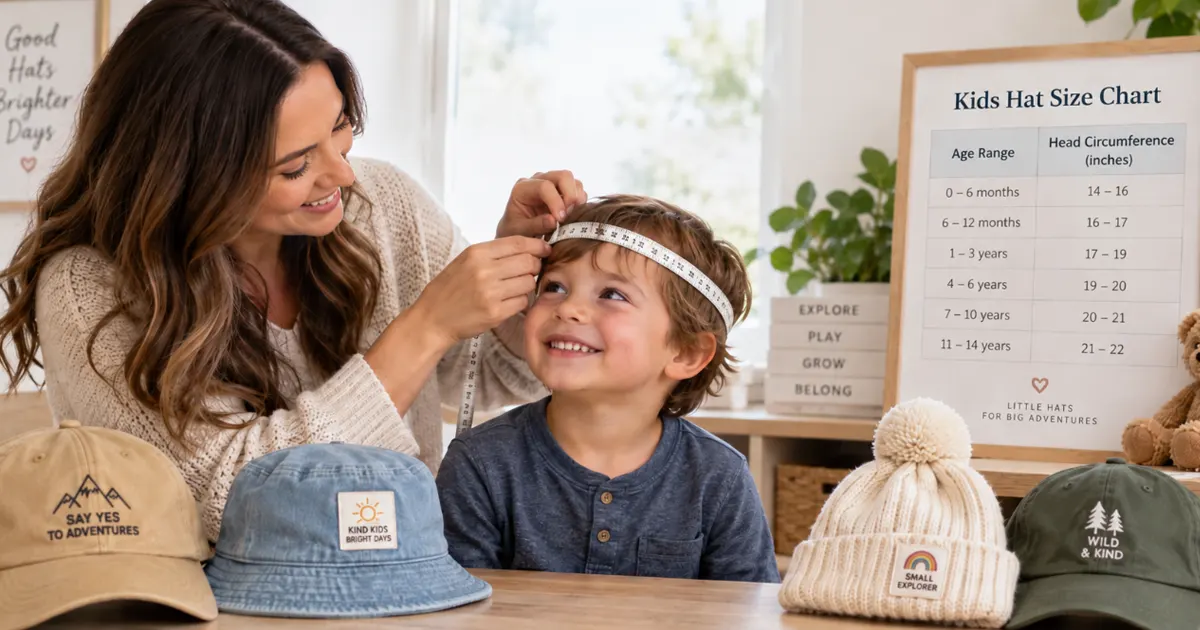
This simple task takes minutes at home. For reference, a newborn’s average head measures about 13 3/4 inches (35 cm). The chart uses common age ranges, yet every child grows differently. You should remeasure every 6–12 months to ensure a proper hat sizing. This youth hat size chart helps you track changes. Use the hat size chart each season for a comfortable fit.
Key Takeaways
- Measure your child’s head with a soft tape one inch above the eyebrows and ears.
- Keep the tape snug but not tight for an accurate measurement.
- Use the hat size chart as a guide, but trust your child’s actual measurement.
- Choose the larger size when a child’s measurement falls between two sizes.
- Remeasure every six months for infants and every twelve months for older kids.
- Check for red marks or slipping to know if the hat fits correctly.
- Adjustable hats like snapbacks or beanies grow with your child.
- Account for hair style and season when measuring for hat size.
How to Measure for Hat Size
Getting the right hat size starts with one simple action: measuring the head correctly. You do not need fancy equipment or professional help. With the right tool and a little patience, you can get a child’s head measurement that guarantees a comfortable fit.
Gather the Right Tools
Soft Measuring Tape
A flexible measuring tape makes this job easy. Pediatricians specifically recommend a Pediatric Head Circumference Measuring Tape because it bends easily around a child’s rounded head shape. This tape must be marked in centimeters for the best results. Inch tapes are not recommended; the tape must be marked in centimeters. Stiff rulers do not conform properly. They cannot curve around the head properly, so they produce wrong numbers. Pick up a soft tape from any pharmacy, craft store, or online retailer. You likely already own one in a sewing kit.
String and Ruler Alternative
No measuring tape at home? No problem. Grab a piece of non-stretchy string and a standard ruler. Wrap the string around the head the same way you would use a tape. Mark the spot where the string meets its end. Lay the string flat against the ruler and read the length. This method works just as well when you stay careful. Just avoid stretchy materials like yarn or elastic bands. They give false readings.
Step-by-Step Measurement Process
Follow these steps to measure your child’s head with confidence:
- Gently position the starting end of the tape just above the eyebrows, aligning with the prominent bony ridge of the forehead.
- Wrap the tape around the head, encircling it above the ears.
- Continue wrapping across the widest part at the back of the head.
- Ensure the tape sits horizontal and snug but not overly tight.
- Mark where the tape or string meets, then record the number in centimeters.
Position the Tape 1 Inch Above Eyebrows
Placement matters more than you might think. The tape should rest about one inch above the eyebrows and about 1/4 to 1/2 inch above the ears. This spot matches where a hat naturally sits during wear. If you place the tape too low, you get a smaller number than reality. Too high, and you overshoot the true size. The prominent bony ridge on the forehead serves as your guide. Line the tape up with that ridge and you have the correct starting point.
Keep Tape Level and Snug
You want the tape flat and parallel to the floor. Many parents accidentally tilt the tape backward or forward, which skews the result. Check the tape in a mirror before recording anything. The snugness matters too. Pull the tape until it touches the skin gently, but never dig in. Pediatric guidelines stress this point repeatedly. Keep the tape comfortable, not constricting. Also, do not slip your fingers underneath the tape while measuring. That extra space creates an inaccurate number.
Record the Circumference
Once the tape sits correctly, note the measurement. Write it down immediately. Do not rely on memory, especially if you plan to shop later. Most manufacturers list sizes in both inches and centimeters. Recording both units helps you compare across different brands. The number you capture becomes your reference point for every future hat purchase.
Tips for Accuracy
Double-Check the Measurement
One measurement rarely tells the whole story. Measure twice, or even three times, until you get the same result twice. If two attempts differ, reposition the tape and try again. Children wiggle, so a calm moment makes all the difference. Pick a time when your child sits still, perhaps during a favorite show or after a meal. Repeat the process until consistent numbers appear. This habit prevents ordering the wrong size.
Use Centimeters for Precision
Centimeters offer finer detail than inches. A difference of half an inch might seem tiny, but it changes the fit noticeably. Most youth hat size charts display both units. Still, manufacturers often base their sizing on centimeters. Using the metric side of the tape gives you a more accurate head measurement. You will also find it easier to match numbers against the kids hat size chart.
The measuring tape should feel snug but not tight. Pulling too tightly can result in selecting a hat size that feels restrictive during wear. A proper measurement reflects how the hat should comfortably rest on the head during normal use.
One more consideration: hairstyle. Thick or curly hair adds volume that affects the reading. Measure your kid’s head with their hair styled exactly as they would wear it under a hat. If your child has voluminous curls or a thick mane, include that extra bulk in the numbers. You might even size up from the standard measurement for the most comfortable fit. This step prevents surprises when the hat arrives.
When you follow these steps, you get accurate measurements every time. The process takes only a few minutes. The payoff arrives when your child wears a hat that actually fits without fussing or adjusting. A proper hat circumference means fewer returns, less frustration, and a happier kid overall.
Kids Hat Size Chart by Age
Now that you have an accurate head measurement, you can match it against the chart below. These numbers represent average head sizes for each age range. Your child might land slightly above or below these figures, and that’s completely normal. Use this kids hat size chart as a starting point, then trust your own numbers for the final decision.
Infant Sizes (0–12 Months)
Baby heads grow faster during the first year than at any other time in life. The total growth reaches about 10–12 cm across those twelve months. That rapid change means you will likely buy several hat sizes in a single year.
Newborn (0–3 Months)
Newborns typically measure around 13 3/4 inches (35 cm) in head circumference. During these first three months, growth happens at roughly 2 cm per month. That pace explains why a hat that fits at birth might feel tight by week eight. Check the fit often during this stage. A soft, stretchy beanie works well because it adapts as your baby grows.
3–6 Months
Between three and six months, the growth rate slows to about 1 cm per month. The average head size at six months is about 42.4 cm (16.7 inches), and during this three-month period, growth averages about 1 cm per month. Many parents find that hats purchased at three months still fit at five months. The chart below shows the percentile distribution for 6-month-old boys, which gives you a sense of the normal range.
At six months, the average head circumference measures 42.4 cm. The median value for boys sits at 43.4 cm, while the 5th percentile falls at 41.1 cm and the 95th percentile reaches 45.6 cm. This spread shows just how much variation exists among healthy infants.
6–12 Months
From six to twelve months, growth slows further to about 0.5 cm per month. The average head size moves from roughly 42.4 cm (16.7 inches) at the start of this period to about 45 cm (17.7 inches) by the first birthday. By twelve months, most babies reach 46–47 cm on average. This youth hat size chart range covers a lot of ground, so always measure rather than guess.
Toddler Sizes (1–3 Years)
Toddler head growth continues steadily but at a slower pace. You will not need new hats as frequently as you did during infancy. Still, checking every few months helps you catch size changes early.
12–18 Months
Most toddlers in this age range have head circumferences that fall between the 12-month average of about 45 cm (17.7 inches) and the 24-month median of 48.25 cm (19 inches). The transition from baby to toddler sizing happens here. Many brands shift their sizing labels during this period, so pay attention to the actual numbers rather than the age printed on the tag.
18–24 Months
According to WHO growth standards, the median head circumference for boys at 24 months is 48.25 cm (19 inches). That number gives you a solid reference point when shopping for a two-year-old.
2–3 Years
By age two and a half, the median for boys climbs to 48.93 cm. Most children in this bracket need hats sized at 19 inches (48 cm) or slightly larger. The growth between two and three years measures only a few centimeters total. A well-fitted hat from last winter might still work this season, though you should verify the fit before assuming.
Child Sizes (4–12 Years)
School-age children experience slower, steadier head growth. You might only replace hats once a year during this stage. The numbers below reflect typical ranges for each age group.
4–6 Years
Children aged four to six may have head circumferences that vary; it’s best to measure directly. Many youth hat size chart options start at this range. Adjustable closures become especially useful here because they extend the life of each hat.
6–8 Years
This group typically needs hats that fit their measured head circumference. Growth continues gradually, so a hat purchased at age six might still fit at seven.
8–12 Years
Older children usually wear hats sized according to their individual measurement. Some kids in this range approach adult small sizes. This hat size chart for youth becomes less about age and more about individual measurement as children approach their teen years.
Remember that every child grows on their own timeline. These averages help you narrow down options, but your tape measure gives you the truth. When your child’s measurement falls between two sizes, choose the larger option for comfort and room to grow.
The numbers in this kids hat size chart reflect population averages from growth standards. Your child might not match these figures exactly, and that’s fine. Use your recorded head measurement as the deciding factor. A hat circumference that matches your child’s actual size will always beat one that matches their age.
Ensuring a Proper Fit
You have your child’s head measurement and the chart in hand. Now comes the moment of truth: trying the hat on. A proper fit goes beyond matching numbers. You want a hat that feels good enough for your child to forget they are wearing it. The right fit keeps them protected, comfortable, and happy through every activity.
Check for Snug Fit
No Red Marks or Discomfort
After your child wears the hat for a few minutes, check their forehead and temples. Red marks or indentation lines signal a hat that fits too tightly. That tightness does more than annoy. It restricts airflow around the head, which can cause overheating. A hat that rubs against the temples also creates skin irritation over time. Your child might not complain verbally, but you will notice them tugging or scratching. Pay attention to those cues. A comfortable hat should leave no trace behind when removed.
Hat Stays Put Without Slipping
A hat that slides forward over the eyes creates a safety hazard. Your child cannot see properly while running or playing. A hat that slips backward exposes their face and neck to the sun. The ideal hat stays put through active movement. Test it by having your child shake their head gently. The hat should remain in place without needing constant adjustment. Also, check the crown depth. An adult-depth crown on a small head feels unstable and tips easily. The hat should sit evenly without feeling off-center.
Adjustable Styles for Growth
Snapback and Velcro Closures
Children’s heads grow steadily, and adjustable hats grow right along with them. Snapback and Velcro closures extend the life of each hat you buy. You can loosen or tighten the fit as your child develops. For toddlers under four years old, Velcro closures offer a safer choice than plastic snapbacks. They have no pinch points that could catch little fingers. When using these styles, ensure the strap lies flat against the head and does not dangle. Always supervise the first few wears to confirm everything feels secure.
Stretchy Beanies and Knit Hats
Stretchy fabrics provide another flexible option. Knit beanies and cotton hats conform to your child’s head shape naturally. They accommodate slight size changes between seasons. This flexibility makes them ideal for infants whose heads grow rapidly during the first year. Look for soft, breathable materials that wick moisture away. A soft sweatband inside the hat reduces irritation and supports all-day wear. These features matter more than you might expect for active kids.
When to Size Up
Leave a Fingertip’s Space
The hat should fit snugly but not tightly, with no red marks after removal.
To check the fit, ensure the hat is snug but not tight. There should be no red marks after removal, and the hat should stay in place during movement. If it feels too tight, size up. If it slides around, size down.
Consider Seasonal Layering
Winter hats need extra room for thick linings and bulkier hair. Size up slightly when shopping for cold-weather gear. Summer hats should fit more precisely since you want ventilation and airflow. Remember that hairstyles change the fit too. Measure with your child’s hair styled as they would wear it under the hat. This approach ensures the ideal hat size works year-round. When your child’s measurement falls between sizes on the chart, choose the larger option. That extra space accommodates growth spurts and keeps the hat wearable longer. A proper fit today means fewer replacements tomorrow.
When to Remeasure
A hat that fits perfectly in spring might feel tight by fall. Children’s heads grow quickly, especially in the early years. You cannot rely on last season’s numbers. Regular remeasuring keeps you ahead of those changes. This habit saves you from buying hats that sit unused in the drawer.
Every 6 to 12 Months
Infants and Toddlers
Baby heads grow faster than you might expect. During the first three months, head circumference increases about 2 cm per month. That pace slows to 1 cm per month between three and six months. From six to twelve months, growth drops to roughly 0.5 cm per month. The first year alone brings an average total increase of 12 cm. That means a newborn hat will not fit a six-month-old. You should remeasure your infant every six months without fail. Toddlers aged one to three grow slowly, with head circumference increasing by about 0.5–1 cm every six months. That slower pace still changes the fit noticeably. A hat from last winter might squeeze by mid-summer. Mark your calendar for a quick measurement check twice a year.
Older Children
Children aged three to five experience slower growth, and it’s best to measure annually. Older kids need a measurement check every twelve months. You can pair this task with a back-to-school routine or a birthday tradition. The numbers shift less dramatically at this stage, but they still matter. A youth hat size chart from last year might not match today’s measurement. Regular checks prevent uncomfortable surprises.
| Age Period | Head Circumference Growth Rate |
|---|---|
| 0–3 months | 2 cm per month |
| 3–6 months | 1 cm per month |
| 6–12 months | 0.5 cm per month |
| First year total | 12 cm average increase |
Signs of Poor Fit
Red Marks or Headaches
Your child might not tell you a hat feels wrong. Their skin will. Check for red marks or pressure lines on the forehead after normal wear. Those marks mean the hat squeezes too tightly. A tight hat can also trigger headaches, especially during active play. Watch for your child rubbing their temples or complaining about their head hurting. These signals point to a hat that has become too small. When you spot them, grab your measuring tape and check the numbers against your hat size chart.
Hat Sliding Over Eyes or Ears
A loose hat creates its own problems. If the brim slides down over your child’s eyes, they cannot see properly. That creates a safety risk during outdoor activities. A hat that slips off the ears leaves them exposed to sun or cold. You might notice your child constantly pushing the hat back into place. Frequent adjustments mean the fit has failed. Take the measurement again and compare it with the youth hat size chart. You will likely need a smaller size or an adjustable style.
A hat that leaves red marks or slides around needs immediate attention. Do not wait for your child to complain. Their behavior and skin tell you everything you need to know.
Seasonal Considerations
Summer vs. Winter Hat Sizing
Seasons change the sizing game. Winter hats need extra room for thick linings and bulkier materials. You might size up slightly for cold-weather gear. Summer hats should fit more precisely. You want ventilation and airflow without extra space. A winter beanie that fits snugly might feel suffocating in July. Keep separate measurements for different seasons if needed. This approach ensures your child stays comfortable year-round.
Changes in Hair Length
Hair growth affects hat fit more than parents realize. A fresh haircut can make a hat feel looser overnight. Growing out bangs or curls adds volume that changes the measurement. Measure your child’s head with their hair styled as they would wear it under the hat. If your child sports voluminous curls, include that bulk in your numbers. You might even size up from the standard measurement. This simple step prevents surprises when the hat arrives. Remember to remeasure after significant haircuts or style changes. Your child’s comfort depends on accurate numbers every time.
Common Fit Issues and Solutions
Even with a correct measurement, you might still face fitting problems. Parents report the same issues repeatedly. A hat that feels fine in the store can behave differently at home. Understanding these common problems helps you fix them quickly.
Hat Too Tight
Red Marks or Discomfort
Red marks on the forehead after removing a hat signal trouble. Those marks mean the hat squeezes too tightly against the skin. Beyond simple discomfort, tight hats create real health concerns. Constant pressure on the scalp can cause discomfort and irritation. Scalp pressure from a tight hat can also trigger headaches. Many children feel immediate relief the moment the hat comes off. If you notice your child scratching their scalp or complaining about itchiness after wearing a hat, take that as a warning sign.
Wearing a hat that is too tight can cause discomfort and skin irritation. It may also restrict airflow, leading to overheating.
Difficulty Putting On or Taking Off
A hat that fights you during removal fits incorrectly. You should slide a hat on and off without wrestling. If you must tug or pull to get it over the ears, the hat runs too small. Children often refuse to wear hats they cannot remove easily themselves. That resistance explains why many parents find hats abandoned in the car or on the playground. Watch how your child handles the hat. Frequent pulling at the brim or trying to yank it off means the fit has failed.
Hat Too Loose
Slipping or Blowing Off
A loose hat creates its own frustrations. The moment your child runs, the hat slides down over their eyes. A gust of wind sends it tumbling across the yard. Parents report this problem constantly. The hat becomes useless because your child cannot see properly or keep it in place. You end up chasing hats instead of watching your kid play. If the hat shifts position during normal movement, you need a smaller size or a style with better grip.
Gaps Around the Forehead
Check for visible gaps between the hat brim and your child’s forehead. Those spaces let sunlight reach sensitive skin and allow cold air to sneak inside. A hat should sit flush against the head without pressing hard. Gaps also mean the hat will rotate or tilt during activity. You might notice your child constantly pushing the hat back into position. That constant adjustment signals a poor fit. Try a different style or size before giving up on the hat entirely.
Between Sizes
Choose the Larger Size
Your measurement lands between two sizes on the chart. This situation happens often. The standard practice says round up to the next size. A slightly roomier hat beats one that squeezes. You can always add padding later, but you cannot stretch a hat that fits too snugly. Sizing up also accommodates future growth spurts. That extra space extends the hat’s useful life by several months.
Use a Hat Insert or Adjustable Strap
Adjustable closures solve the between-sizes problem elegantly. Snapback or Velcro straps let you fine-tune the fit as your child grows. For fitted hats, consider a sizing tape or foam insert. These small strips stick inside the sweatband and take up extra space. You can remove them as your child’s head grows. This approach gives you the best of both worlds: a hat that fits now and adapts later. When you shop, look for youth hat size chart options that include adjustable features. They offer flexibility that fixed sizes cannot match.
Conclusion
You now have everything you need to find the perfect hat size. Start by measuring your child’s head using the correct technique. Match that number against the kids hat size chart above. Then check the fit for comfort. This youth hat size chart gives you a reliable starting point. The hat size chart works best when you pair it with your own measurement. Use the size chart each season to track changes. Every chart helps you narrow down options quickly. Remember to remeasure every six to twelve months. Kids grow fast, and their head size shifts with time. With these tools, you can confidently choose hats that keep your child comfortable and stylish. No more guessing or returns.
FAQ
How often should I measure my child’s head?
You should remeasure every 6 months for infants and every 12 months for older kids. Baby heads grow about 2 cm per month during the first three months. That pace slows down quickly. Regular checks help you catch size changes before hats become uncomfortable.
What if my child’s measurement falls between two sizes?
Choose the larger size. A slightly roomier hat beats one that squeezes. You can add a foam insert or sizing tape later if needed. The extra space also accommodates growth spurts, extending the hat’s useful life by several months.
How tight should a hat fit?
The hat should feel snug but not tight, with no red marks after removal. It should stay in place during active play without slipping over the eyes.
Do hat sizes vary by brand?
Yes, they do. Each manufacturer uses slightly different measurements for their labels. Always compare your recorded numbers against the specific brand’s size chart rather than trusting the age printed on the tag. Your tape measure gives you the most reliable guide.
What if my child has a larger or smaller head than average?
That happens often. The kids hat size chart shows population averages, not rules. Your child might land above or below those figures. Use your actual measurement as the deciding factor. Look for adjustable styles like snapbacks or Velcro closures for more flexibility.
Should I size up for winter hats?
Yes. Winter hats need extra room for thick linings and bulkier materials. Size up slightly when shopping for cold-weather gear. Summer hats should fit more precisely since you want ventilation and airflow. Keep separate measurements for different seasons if needed.
How do I measure a wiggly toddler?
Pick a calm moment, like during a favorite show or after a meal. Distract your child with a toy while you wrap the tape around their head. Measure twice to confirm your numbers match. If your child won’t stay still, try measuring while they sleep.
What signs tell me a hat no longer fits?
Watch for red marks on the forehead after wearing. Notice if your child constantly adjusts or tugs at the hat. Headaches during play signal a hat that’s too tight. A hat sliding over the eyes means it’s too loose. These signs tell you to remeasure and check the youth hat size chart again.